Europe warns of Russia’s hybrid attacks but struggles to counter them
  Former chief election commissioner calls SIR scheme illegal.
  A Corruption Scandal Is Reshaping Brazil’s Presidential Election
  US citizen injured in Illinois after ICE agents mistook him for fugitive, tried to arrest him
  At 10 years old, Smithsonian’s Black museum is undaunted amid pressure from Trump administration
 Election Season Sees Surge in Deepfake Videos and Forged Letters Targeting RSS
As India’s election season heats up, a wave of deepfake videos, AI-generated audio clips, and forged letters are circulating on social media, aiming to spark controversy and undermine the electoral process, prompting concerns about the spread of misinformation and its potential to influence public opinion.
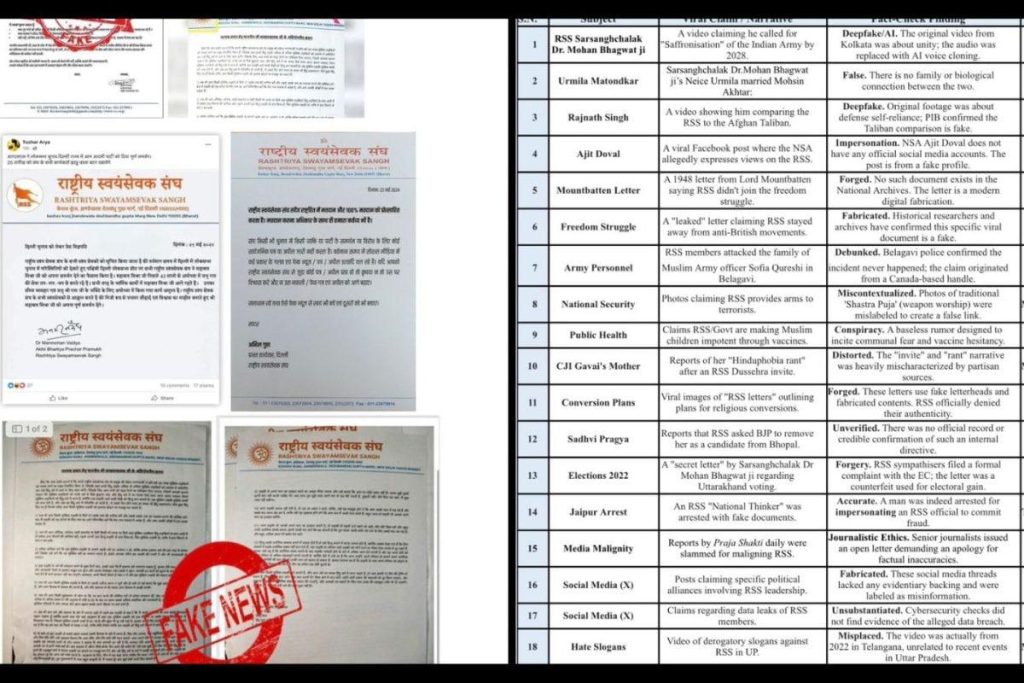
In a concerning development, a wave of fake videos, AI-generated audio clips, and dozens of forged letters on Rashtriya Swayamsevak Sangh (RSS) letterhead have been circulating on social media, aiming to spark political controversy during the election season. These deepfakes and forgeries have raised alarms about the potential for misinformation to influence public opinion and undermine the electoral process. As the country gears up for elections, the spread of such fake content has become a major challenge for social media platforms, fact-checkers, and political organizations.
The fake videos and audio clips are designed to mimic the voices and likenesses of prominent figures, often taking their words out of context or manipulating them to convey a false narrative. These AI-generated content pieces are increasingly sophisticated, making it difficult for the average user to distinguish between what is real and what is fake. The forged letters, meanwhile, are crafted to appear as if they are official communications from the RSS, a prominent socio-cultural organization in India.
The surge in deepfakes and forgeries has prompted concerns about the potential for misinformation to sway public opinion and influence the outcome of the elections. Social media platforms have faced criticism for their role in amplifying false content, and there are growing calls for them to take more effective measures to combat the spread of misinformation.
The RSS has denied any involvement in the creation or dissemination of the fake content, and has urged the public to be cautious when sharing or believing information on social media. Fact-checking organizations and independent media outlets have also stepped up their efforts to debunk false claims and verify the authenticity of information.
As the elections approach, the threat posed by deepfakes and forgeries is likely to escalate, making it essential for social media platforms, fact-checkers, and political organizations to work together to combat the spread of misinformation. The Indian government has also taken steps to address the issue, with the Ministry of Information and Broadcasting issuing guidelines for social media platforms to follow in order to curb the spread of fake news.
The use of AI-generated content for malicious purposes is a relatively new phenomenon, and it poses significant challenges for those seeking to combat it. Experts point out that the technology used to create deepfakes is evolving rapidly, making it harder to detect and mitigate its impact. As a result, there is a growing need for more effective solutions to address the spread of misinformation and protect the integrity of the