Europe warns of Russia’s hybrid attacks but struggles to counter them
  Former chief election commissioner calls SIR scheme illegal.
  A Corruption Scandal Is Reshaping Brazil’s Presidential Election
  US citizen injured in Illinois after ICE agents mistook him for fugitive, tried to arrest him
  At 10 years old, Smithsonian’s Black museum is undaunted amid pressure from Trump administration
 Women’s Quota Debate Intensifies: BJP Faces Mounting Scrutiny Over Internal Gender Gap
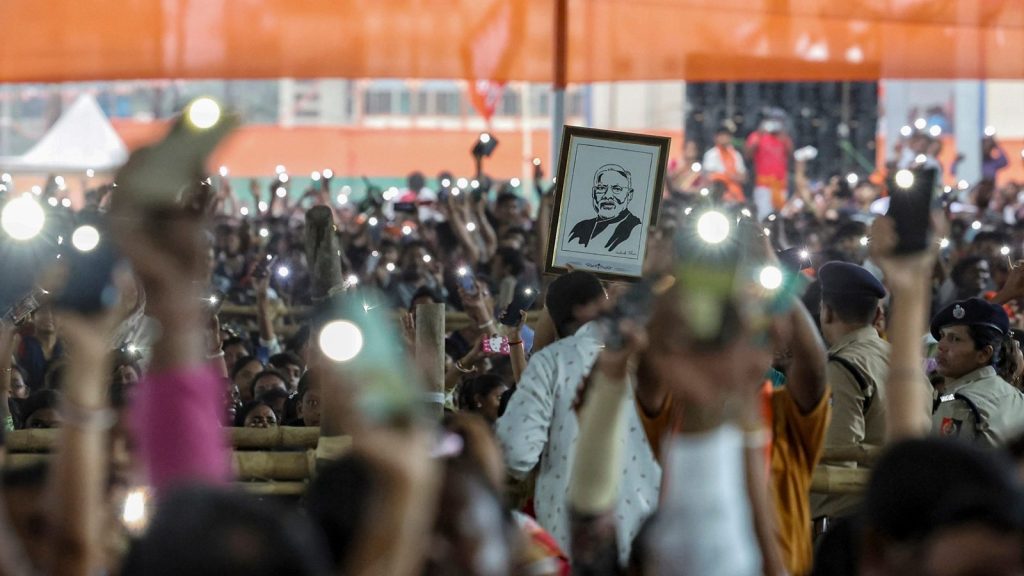
womens quota debate intensifies:
The debate over women’s reservation in India has once again moved to the center of political discourse, but this time it carries a sharper edge for the Bharatiya Janata Party (BJP). While the party has publicly championed the push for greater representation of women through legislative measures, questions are increasingly being raised about the gender imbalance within its own organizational structure and electoral representation.
The contrast between advocacy and internal numbers has become a focal point for opposition parties, political analysts, and civil society groups, all of whom are scrutinizing whether the BJP’s stance on women’s empowerment aligns with its internal practices.
A Renewed Focus on Women’s Reservation
The issue of women’s reservation gained fresh momentum after renewed discussions around implementing quotas in legislative bodies. The proposal to reserve a fixed percentage of seats for women in Parliament and state assemblies has long been debated in India, often drawing broad support in principle but encountering hurdles in execution.
The BJP has positioned itself as a key supporter of the initiative, emphasizing its commitment to empowering women politically and socially. Party leaders have repeatedly highlighted the importance of increasing women’s participation in governance as a step toward inclusive development.
However, the broader debate has also prompted a closer examination of how political parties, including the BJP, are performing in terms of actual representation.
The Internal Gender Gap
Despite its public support for women’s reservation, data suggests that women remain underrepresented within the BJP’s ranks. From party leadership roles to electoral candidates, the proportion of women continues to lag behind expectations.
In recent elections, the number of tickets allotted to women candidates by the BJP has shown only incremental growth. While there has been some progress compared to earlier decades, critics argue that the pace of change is too slow given the party’s strong advocacy for reservation policies.
Within the party’s organizational hierarchy, women also occupy a limited number of top decision-making positions. Although the BJP has prominent women leaders who hold significant portfolios, they remain exceptions rather than the norm.
Opposition Criticism and Political Pressure
Opposition parties have seized on this discrepancy, accusing the BJP of engaging in symbolic politics rather than substantive change. They argue that supporting a women’s quota at the legislative level is not enough if parties do not also reform their internal structures.
Leaders from rival parties have called for greater transparency in candidate selection processes and urged the BJP to set an example by increasing the number of women it fields in elections.
The criticism is not limited to political opponents. Advocacy groups and policy experts have also pointed out that true empowerment requires consistent efforts across all levels of political engagement, from grassroots mobilization to national leadership.
BJP’s Response and Defense
In response to the criticism, BJP leaders have defended their record, pointing to various initiatives aimed at promoting women’s participation. They highlight programs focused on leadership training, grassroots engagement, and social welfare schemes targeting women.
Party spokespersons argue that change cannot happen overnight and that the BJP has made steady progress over the years. They also emphasize that the party’s governance agenda includes numerous policies designed to benefit women, ranging from financial inclusion to health and education initiatives.
Supporters of the party contend that focusing solely on numerical representation overlooks the broader impact of these policies, which they say have improved the lives of millions of women across the country.
Structural Challenges and Broader Trends
The gender gap within the BJP is not unique; it reflects a broader trend across Indian politics, where women remain underrepresented despite making up nearly half the population. Cultural, social, and economic barriers continue to limit women’s entry into politics, affecting all parties to varying degrees.
However, given the BJP’s dominant position in Indian politics and its vocal support for women’s reservation, expectations are higher. Analysts argue that the party has both the opportunity and the responsibility to lead by example.
Addressing the gender gap would require systemic changes, including more inclusive candidate selection processes, targeted support for women leaders, and efforts to challenge societal norms that hinder women’s political participation.
The Road Ahead
As the debate over women’s reservation continues, the spotlight is likely to remain on how political parties align their rhetoric with action. For the BJP, this means navigating the dual challenge of advocating for legislative reform while also addressing internal disparities.
The upcoming electoral cycles could serve as a critical test. Observers will be watching closely to see whether the party increases the number of women candidates and expands their role within its leadership structure.
At the same time, the broader conversation about gender representation in politics is expected to gain momentum, driven by public demand for more inclusive governance.