 German and Russian foreign ministers meet at UN General
  It’s not BRICS or UN, BRICS is supportive of UN: Jaishankar
  Neighbor charged with murder after Georgia DoorDash driver found dismembered
  Trump faces Senate test in Georgia, North Carolina as GOP candidates trail Democrats in survey
 Uttarakhand Chief Minister Pushkar Singh Dhami Unveils Historic Women’s Reservation Bill Initiative in India
**
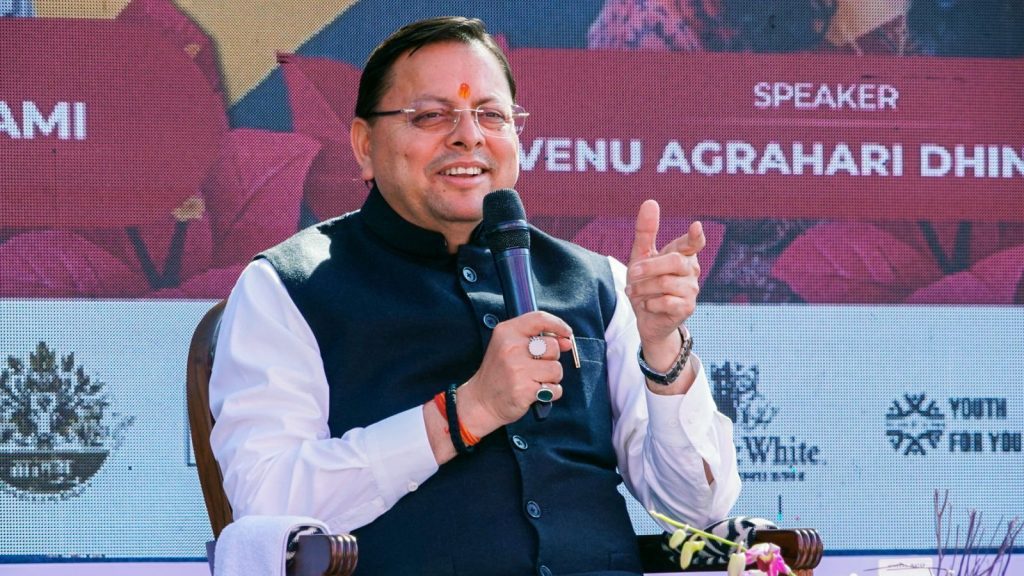
Uttarakhand Chief Minister Pushkar Singh Dhami has sent a significant signal to the nation with his call for the state Assembly to pass a resolution backing the Centre’s women’s reservation initiative, a move that underscores the Union government’s push for greater gender representation in India’s political landscape.
The proposal, aimed at reserving one-third of seats in the Lok Sabha and state legislative assemblies for women, has been a key plank of Prime Minister Narendra Modi’s government.
Updated: April 29, 2026
Uttarakhand Chief Minister Pushkar Singh Dhami has sent a significant signal to the nation with his call for the state Assembly to pass a resolution backing the Centre’s women’s reservation initiative, a move that underscores the Union government’s push for greater gender representation in India’s political landscape.
The proposal, aimed at reserving one-third of seats in the Lok Sabha and state legislative assemblies for women, has been a key plank of Prime Minister Narendra Modi’s government. However, the road to constitutional amendment has been long and arduous, requiring the support of at least two-thirds of state assemblies.
Uttarakhand, a BJP-ruled state, is among the first to publicly back the Centre’s move, reflecting the close ties between the state government and the Union administration. The state’s decision is seen as a crucial step towards building the necessary political consensus to propel the reform forward.
The women’s reservation bill, first introduced in 2010, has faced significant opposition from several state governments, including those ruled by opposition parties. The move by Uttarakhand Chief Minister Dhami, therefore, assumes importance, as it suggests that the BJP-ruled states are solidly behind the Centre’s push for this landmark reform.
Sources within the government have confirmed that the Centre is working closely with several BJP-ruled states to build support for the women’s reservation bill. With several states already expressing their backing, the prospects of a successful passage of the bill seem to be improving.
Supporters of the bill argue that greater representation of women in parliament will lead to more inclusive decision-making and help bridge the gap between lawmakers and women in India. However, opposition parties have expressed concerns about the bill’s potential to create new inequalities and marginalize certain sections of society.
While the Centre’s push for the women’s reservation bill has been welcomed by many, critics have expressed concerns that the move is merely a gesture, rather than a substantive effort to address the root issues plaguing India’s democracy. They argue that mere representation is not enough to bring about meaningful change.
The development has sparked a heated debate in India’s women’s rights movement, with some critics questioning the Centre’s commitment to truly empowering women in politics. Others have hailed the move as a giant leap towards achieving greater gender parity in Indian politics.
As the state Assembly weighs its response to Chief Minister Dhami’s call, the prospects of a successful passage of the women’s reservation bill hang in the balance. If passed, the historic reform will likely have far-reaching consequences for Indian politics, paving the way for greater representation and potentially shifting the nation’s democratic landscape forever.
This move matters, as it marks a significant shift in the Indian polity’s approach towards gender representation. For the first time, the Centre is pushing for constitutional changes that will directly impact the lives of millions of Indian women, empowering them with a greater say in decision-making at the highest level of governance.
The future outlook for this bill depends heavily on the outcome of the state Assembly polls, which were recently concluded. If the results are favorable, it is likely that the Centre will continue to push for the bill’s passage, potentially paving the way for a more inclusive and representative democracy in India.
In the months ahead, India will be closely watching the developments in parliament, where the women’s reservation bill will be taken up for discussion and debate. The Centre will need to navigate complex negotiations with opposition parties, whose backing will be crucial for a successful passage of the bill.
While there are challenges ahead, the momentum generated by the Centre’s push for the women’s reservation bill suggests that India’s politics is undergoing a transformative shift.
Chief Minister Pushkar Singh Dhami's call to action for gender representation in the Uttarakhand Assembly reflects a significant shift in the Indian polity's approach towards empowerment, moving from rhetoric to tangible reforms.
This bold move could signal a turning point in the Centre's push for constitutional changes, as BJP-ruled states like Uttarakhand pave the way for a more inclusive and representative democracy