Europe warns of Russia’s hybrid attacks but struggles to counter them
  Former chief election commissioner calls SIR scheme illegal.
  A Corruption Scandal Is Reshaping Brazil’s Presidential Election
  US citizen injured in Illinois after ICE agents mistook him for fugitive, tried to arrest him
  At 10 years old, Smithsonian’s Black museum is undaunted amid pressure from Trump administration
 From Crackdowns to AI Surveillance: Inside Election Commission’s Strategy to Ensure Violence-Free Bengal Polls
crackdowns surveillance inside election:
As West Bengal gears up for a high-stakes electoral battle, the Election Commission of India (ECI) is rolling out an extensive, multi-layered strategy aimed at ensuring that the polls remain peaceful, transparent, and credible. Known for its history of politically charged and occasionally violent elections, the state has prompted the Commission to deploy an unprecedented mix of traditional enforcement measures and cutting-edge technology, including AI-powered surveillance systems.
The EC’s evolving playbook reflects both lessons from past elections and the growing need to counter new-age challenges such as misinformation, digital mobilization of crowds, and real-time coordination of disruptive activities.
A History That Demands Vigilance
West Bengal’s elections have often been marked by intense political rivalry, with sporadic incidents of violence, intimidation, and clashes between party workers. In previous assembly and local body elections, reports of booth capturing, voter intimidation, and post-poll violence have drawn national attention.
This backdrop has compelled the Election Commission to treat Bengal as a “sensitive electoral theatre”, requiring heightened preparedness and proactive intervention.
Officials acknowledge that while improvements have been made over the years, the risk of localized violence and coercion remains significant, especially in closely contested constituencies.
Massive Deployment of Security Forces
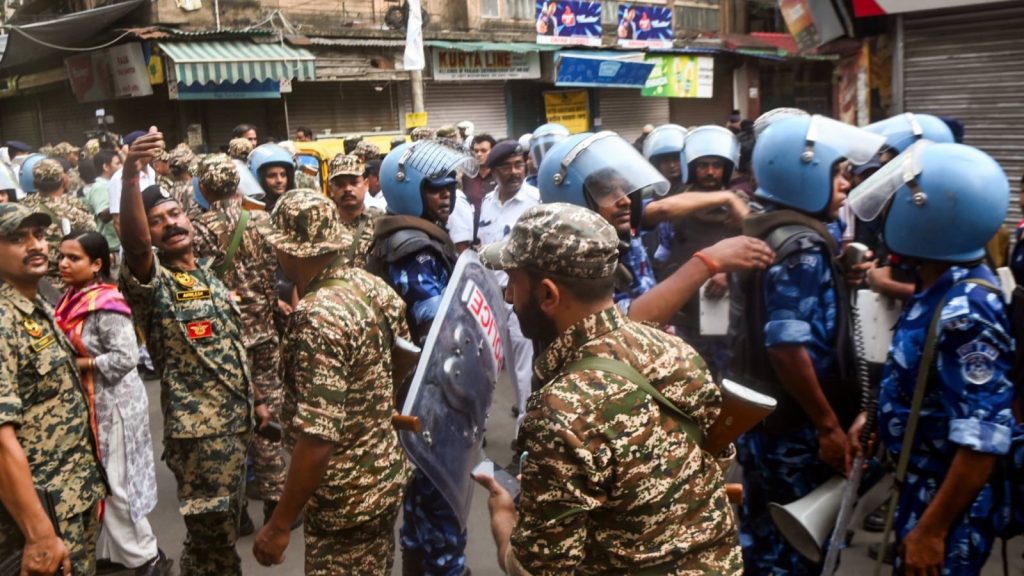
At the core of the EC’s strategy is a robust security apparatus. Thousands of central armed police forces (CAPF) personnel are being deployed across the state, supplementing local police forces.
Key features of the security plan include:
- Area Domination Exercises: Regular patrols in sensitive and hyper-sensitive areas to deter potential troublemakers
- Route Marches: Visible movement of security personnel to build voter confidence
- Quick Response Teams (QRTs): Units stationed strategically to respond rapidly to any incidents
- Vulnerability Mapping: Identification of areas and communities at risk of intimidation or violence
The EC has also emphasized the importance of neutral deployment, ensuring that security forces operate independently of local political influence.
AI-Powered Surveillance: A Game Changer
One of the most notable elements of the EC’s approach this time is the use of AI-powered cameras and analytics tools.
These systems are designed to:
- Monitor crowd movement and unusual activity patterns near polling stations
- Detect potential flashpoints before they escalate into violence
- Enable real-time alerts to control rooms and field officers
- Assist in identifying individuals involved in suspicious behavior
By integrating AI with existing CCTV infrastructure, the EC aims to create a predictive security framework, moving from reactive policing to proactive prevention.
Officials say that this technology will be particularly useful in urban areas and high-density polling locations, where manual monitoring can be challenging.
Webcasting and Live Monitoring
In addition to AI surveillance, the EC is expanding its use of webcasting from polling booths. Thousands of polling stations, especially those categorized as sensitive, will be equipped with live video feeds.
These feeds will be monitored from centralized control rooms, allowing officials to:
- Ensure adherence to polling procedures
- Detect any attempts at malpractice or coercion
- Maintain a digital record of the voting process
This layer of transparency is expected to act as a deterrent against electoral misconduct.
Strict Crackdowns on Violations
The EC has made it clear that it will adopt a zero-tolerance approach toward any violations of the Model Code of Conduct (MCC).
Measures include:
- Seizure of illegal cash, liquor, and inducements
- Strict action against hate speech and inflammatory campaigning
- Monitoring of social media platforms for misinformation and incitement
- Fast-track response to complaints through dedicated helplines and apps
Flying squads and static surveillance teams have been deployed across districts to enforce these measures effectively.
Digital Tools and Voter Empowerment
Beyond enforcement, the EC is also focusing on empowering voters through digital tools.
Applications such as cVIGIL allow citizens to:
- Report violations in real time
- Upload photos and videos as evidence
- Track the status of their complaints
This participatory approach aims to make voters active stakeholders in maintaining electoral integrity.
Coordination with State Machinery
Ensuring peaceful elections requires close coordination between the EC and state authorities. Regular meetings are being held with:
- District magistrates
- Police superintendents
- Nodal officers for various departments
The Commission has also issued detailed guidelines on:
- Transfer and posting of officials to prevent bias
- Training of polling personnel
- Logistics management for polling materials
Addressing Misinformation and Digital Threats
In the digital age, misinformation can spread rapidly and potentially trigger unrest. The EC is working with social media platforms and cybersecurity agencies to:
- Identify and remove fake news and inflammatory content
- Track coordinated disinformation campaigns
- Issue timely clarifications to counter rumors
Special monitoring units have been set up to keep a close watch on online activity during the election period.
Political Reactions and Concerns
Political parties have largely welcomed the EC’s proactive measures but have also raised concerns about implementation.
Some opposition parties have demanded:
- Greater transparency in AI surveillance systems
- Assurance of data privacy and non-partisan use of technology
Meanwhile, ruling party representatives have emphasized the need for strict enforcement to prevent disruptions.
The EC has reiterated its commitment to maintaining neutrality and ensuring a level playing field for all contestants.
Challenges on the Ground
Despite the comprehensive plan, several challenges remain:
- Geographical diversity, including remote and rural areas
- High voter density in urban centers
- Deep-rooted political rivalries
- Logistical complexities in deploying personnel and equipment
Officials acknowledge that while technology can enhance monitoring, human judgment and coordination remain critical.
Learning from Past Elections
The EC’s current strategy reflects lessons learned from previous elections, both in West Bengal and across India.
Key takeaways include:
- The importance of early deployment of security forces
- The effectiveness of live monitoring and transparency measures
- The need for swift action against violations
By combining these insights with new technologies, the EC aims to set a new benchmark for election management.
The Road Ahead
As polling dates approach, the success of the EC’s strategy will depend on its execution at the grassroots level. Continuous monitoring, adaptability, and coordination will be essential in responding to emerging challenges.
Observers note that if successful, Bengal’s elections could serve as a model for future polls in other sensitive regions, demonstrating how technology and governance can work together to uphold democratic values.
AI Insights
The Election Commission’s playbook for West Bengal represents a comprehensive effort to tackle one of the most persistent challenges in Indian democracy: ensuring free and fair elections in politically volatile environments.
By combining strict crackdowns, advanced surveillance technologies, and citizen participation, the EC is attempting to create a secure and transparent electoral process.
While the true test will come on polling day, the measures in place signal a strong commitment to minimizing violence and safeguarding the democratic process.