Europe warns of Russia’s hybrid attacks but struggles to counter them
  Former chief election commissioner calls SIR scheme illegal.
  A Corruption Scandal Is Reshaping Brazil’s Presidential Election
  US citizen injured in Illinois after ICE agents mistook him for fugitive, tried to arrest him
  At 10 years old, Smithsonian’s Black museum is undaunted amid pressure from Trump administration
 Iran Foreign Minister Araghchi Calls S. Jaishankar as Ceasefire Talks Intensify Amid Ongoing US-Iran Conflict
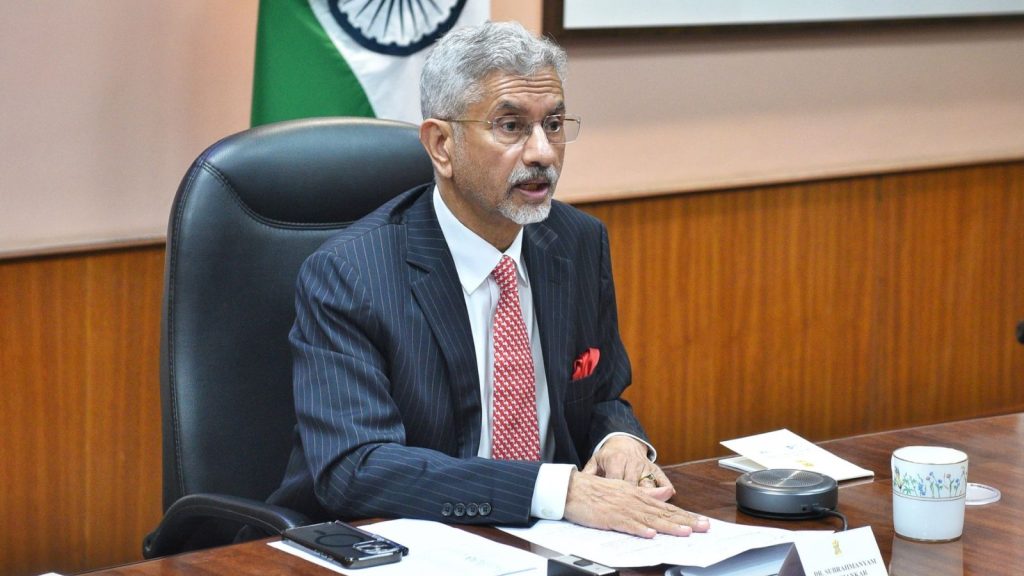
In a significant diplomatic development amid the ongoing and volatile West Asia crisis, Iran’s Foreign Minister Seyed Abbas Araghchi held a detailed telephonic conversation with India’s External Affairs Minister Dr. S. Jaishankar, focusing on the evolving ceasefire situation and broader regional dynamics. The exchange underscores India’s continued engagement with key stakeholders in the region as tensions persist despite fragile attempts at peace.
The call comes at a crucial juncture when efforts to stabilize the region have hit repeated roadblocks, particularly after negotiations between the United States and Iran reached a deadlock. Against this backdrop, Tehran has intensified its diplomatic outreach to multiple countries, including India, in an effort to consolidate support and maintain communication channels during a period marked by uncertainty and escalating geopolitical risks.
Context: A Fragile Ceasefire and Continuing Tensions
The ongoing conflict between Iran and the United States—backed by Israel—has entered a complex phase, with intermittent ceasefire arrangements failing to produce lasting stability. While a temporary ceasefire was announced earlier in April 2026, violations and mutual accusations have continued, exposing the fragile nature of the truce.
The war itself traces back to late February 2026, when coordinated strikes by the US and Israel targeted Iranian military and strategic infrastructure. Iran retaliated with missile and drone attacks, escalating the conflict across multiple fronts in the region. The Strait of Hormuz—a critical global energy chokepoint—became a focal point of confrontation, with Iran restricting maritime movement and the US imposing a naval blockade.
Against this volatile backdrop, diplomatic engagements such as the Araghchi–Jaishankar call acquire heightened significance.
Details of the Araghchi–Jaishankar Conversation
According to official sources and diplomatic briefings, the Iranian foreign minister initiated the call to discuss the latest developments related to the ceasefire, the broader West Asian situation, and bilateral relations between India and Iran.
External Affairs Minister Jaishankar confirmed the interaction, noting that both sides held a “detailed conversation” covering various aspects of the ongoing crisis. The leaders agreed to remain in close contact as the situation evolves, reflecting a mutual understanding of the need for sustained dialogue during a period of geopolitical flux.
The Iranian embassy in New Delhi also highlighted that the discussions included not just ceasefire developments but also regional and international issues, signaling a comprehensive diplomatic engagement rather than a narrowly focused exchange.
India’s Strategic Position and Diplomatic Balancing
India’s role in the unfolding West Asia crisis is particularly nuanced. As a country with deep economic, strategic, and energy ties to both Iran and Western nations, New Delhi has adopted a carefully calibrated approach aimed at preserving its interests while advocating for peace and stability.
India has consistently emphasized dialogue and diplomacy as the preferred path to resolving conflicts. In the current scenario, maintaining communication with Tehran allows India to stay informed about ground realities while also positioning itself as a potential intermediary or stabilizing influence, should opportunities arise.
Furthermore, India’s energy security is closely linked to developments in the Gulf region. Disruptions in the Strait of Hormuz have already contributed to volatility in global oil markets, making it imperative for India to engage actively with regional stakeholders.
Araghchi’s Broader Diplomatic Outreach
The phone call with Jaishankar is part of a wider diplomatic push by Iran. In recent days, Araghchi has traveled to several countries, including Pakistan and Russia, seeking support and exploring avenues to de-escalate tensions.
His visit to Moscow, where he met Russian President Vladimir Putin, underscored Tehran’s efforts to strengthen strategic partnerships. Russia has expressed willingness to play a mediating role, while also reaffirming its support for Iran amid the ongoing conflict.
Similarly, Pakistan has emerged as a key intermediary in ceasefire negotiations, having facilitated earlier discussions between the US and Iran. However, those talks have so far failed to yield a durable agreement, highlighting the complexity of the issues involved.
Deadlock in US-Iran Negotiations
One of the central challenges in achieving a lasting ceasefire is the deep mistrust between the United States and Iran. Recent talks have stalled over core issues such as Iran’s nuclear program, sanctions, and control over strategic waterways.
Reports indicate that the US has maintained a hardline stance, demanding significant concessions from Iran, including curbs on its nuclear activities. Iran, on the other hand, has refused to abandon its uranium enrichment program, citing its sovereign rights and security concerns.
This impasse has resulted in a diplomatic stalemate, with both sides unwilling to make the compromises necessary for a comprehensive peace agreement.
Impact on Global Economy and Regional Stability
The conflict has had far-reaching implications beyond the immediate region. Disruptions in oil supply chains, particularly due to tensions in the Strait of Hormuz, have driven up global energy prices, affecting economies worldwide.
In addition to economic consequences, the humanitarian toll of the conflict has been severe. Thousands of lives have been lost, and civilian infrastructure has suffered significant damage. Neighboring countries, including Lebanon and Iraq, have also been drawn into the conflict, further complicating the regional security landscape.
India, with its large diaspora in the Gulf region and dependence on energy imports, has a direct stake in the outcome of the crisis.
Significance of the India-Iran Dialogue
The Araghchi–Jaishankar conversation reflects the importance of sustained diplomatic engagement in times of crisis. For India, maintaining open channels with Iran is essential not only for protecting its national interests but also for contributing to broader efforts aimed at de-escalation.
For Iran, outreach to countries like India serves multiple purposes: it helps counter diplomatic isolation, builds support for its position, and keeps avenues for dialogue open even as tensions with the US persist.
The discussion on ceasefire developments indicates that both sides are closely monitoring the situation and are willing to engage constructively despite the challenges.
Potential Role of India in Peace Efforts
While India has not positioned itself as a formal mediator, its balanced approach and strong relations with multiple stakeholders place it in a unique position. Should the opportunity arise, New Delhi could play a more active role in facilitating dialogue or supporting multilateral peace initiatives.
India’s emphasis on a rules-based international order and peaceful resolution of disputes aligns with the broader global consensus on the need to prevent further escalation in West Asia.
Challenges Ahead
Despite ongoing diplomatic efforts, the path to a lasting ceasefire remains uncertain. Key obstacles include:
- Deep-rooted mistrust between the US and Iran
- Divergent positions on nuclear policy
- Regional rivalries involving multiple actors
- Continued military posturing and sporadic violations of the ceasefire
These factors make it difficult to achieve a comprehensive and durable peace agreement in the near term.
AI Insights
The phone call between Iranian Foreign Minister Seyed Abbas Araghchi and India’s External Affairs Minister S. Jaishankar highlights the critical role of diplomacy in navigating one of the most complex geopolitical crises of recent times.
As ceasefire efforts continue to face challenges, such high-level engagements provide a platform for dialogue, coordination, and potential de-escalation. For India, the conversation reinforces its commitment to maintaining strategic balance and promoting stability in a region that is vital to its economic and security interests.
For the broader international community, the developments underscore the urgent need for renewed diplomatic momentum to prevent further escalation and pave the way for a sustainable peace in West Asia.