Europe warns of Russia’s hybrid attacks but struggles to counter them
  Former chief election commissioner calls SIR scheme illegal.
  A Corruption Scandal Is Reshaping Brazil’s Presidential Election
  US citizen injured in Illinois after ICE agents mistook him for fugitive, tried to arrest him
  At 10 years old, Smithsonian’s Black museum is undaunted amid pressure from Trump administration
 Bihar Govt Triggers Controversy Removing Sanjay Gandhi’s Name from Prominent Institutions
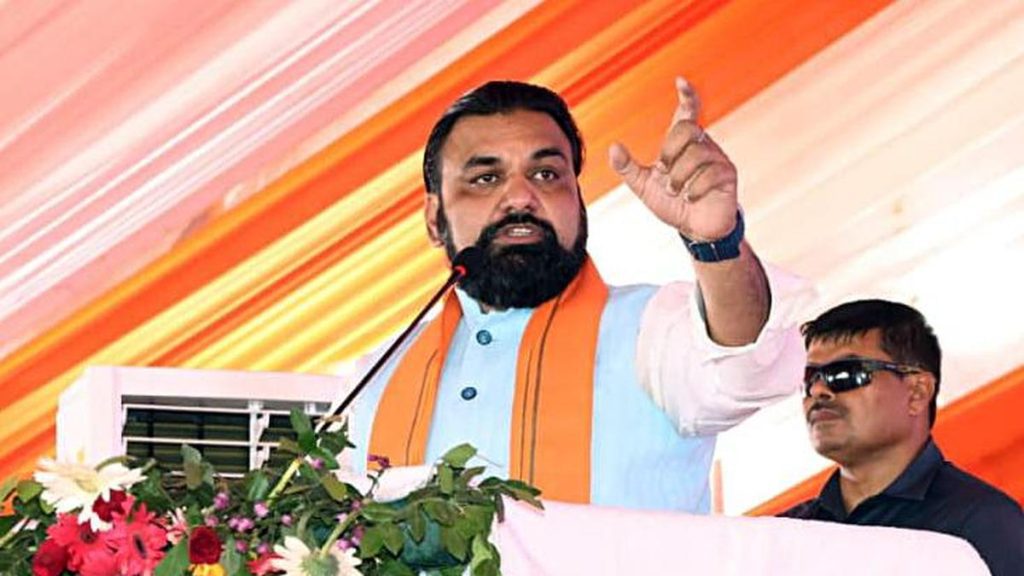
The Bihar Government, led by Chief Minister Nitish Kumar, has triggered a historical revision with its decision to remove Sanjay Gandhi’s name from two prominent institutions in the state.
The move follows a wave of anti-Soviet sentiment sweeping India, drawing parallels to the era when Soviet-style socialist ideals were at the helm of the country’s politics.
Updated: April 30, 2026
The Bihar Government, led by Chief Minister Nitish Kumar, has triggered a historical revision with its decision to remove Sanjay Gandhi’s name from two prominent institutions in the state. The move follows a wave of anti-Soviet sentiment sweeping India, drawing parallels to the era when Soviet-style socialist ideals were at the helm of the country’s politics. Sanjay Gandhi, the son of late Prime Minister Indira Gandhi, played a pivotal role in championing the cause during the Emergency period of 1975-77.
Bihar has long been a stronghold of socialistic ideologies, particularly under the leadership of Lalu Prasad Yadav, who also served as the Chief Minister of the state multiple times. However, the present Nitish Kumar-led government appears to have shifted gears with its current moves, aimed at rewriting the state’s history books. The latest development has come as a response to growing dissent and a fresh assessment of historical landmarks that have been associated with figures perceived to be sympathetic to Soviet-style socialism.
The Patna zoo and the dairy technology institute were established during the Emergency period, a time marked by harsh censorship, media gag orders, and widespread rights abuses. Many Indians at the time, including students and dissidents, actively protested against Sanjay Gandhi’s policies, denouncing them as autocratic and dictatorial. Now, nearly five decades later, the state is revisiting its past, removing the name of a prominent figure whose actions during that time remain highly scrutinised and contentious.
According to a top official, the Bihar government has already begun the process of removing Sanjay Gandhi’s name from the institutions and replacing it with a more neutral or indigenous name. Furthermore, the administration has announced plans to rename the Patna zoo, a move intended to dissociate the facility from the contentious figure. While state officials claim the name change is aimed at ‘rebranding’ the institutions, critics see it as a brazen attempt to revise and distort the state’s history.
As the debate around this move rages on, public reaction in Bihar has been sharply divided. While some see this as a step towards redeeming the state’s history from Soviet influence, others claim it is nothing more than a cynical ploy by the ruling party to distance itself from Lalu Prasad Yadav’s legacy. The opposition has slammed the move as an attack on the state’s socialist heritage.
Historians have expressed surprise over the hasty nature of this decision, citing the need for thorough research and academic validation before making such drastic changes to Bihar’s historical landscape. The hasty removal of the institution’s names is also seen as an overreaction, one that disregards the importance of understanding and preserving historical legacies, both positive and negative.
For many Indians, this move serves as a stark reminder of the dangers of rewriting and sanitising the country’s complex history. By glossing over the complexities and controversies associated with figures like Sanjay Gandhi, we risk erasing a crucial chapter in the nation’s trajectory and undermining our collective ability to draw meaningful lessons from it.
As Bihar gears up to redefine its legacy, we examine the possible implications of this move for India at large. By removing references to Soviet-backed institutions and individuals, the state may be seen as attempting to signal its departure from the socialist ideals that once dominated its politics.
However, the consequences of such actions on public perception and India’s historical record remain uncertain and contentious. Furthermore, a more fundamental question arises: What are the long-term benefits of historical revisionism and the removal of contentious figures’ names from historical landmarks?
It is too early to tell what the future holds, but for Bihar, this move has opened up a Pandora’s box, and it will be interesting to see how this narrative evolves as more chapters of India’s history continue to be rewritten and revisited.
Nitish Kumar's decision to remove Sanjay Gandhi's name from prominent institutions in Bihar marks a significant shift away from the state's socialist heritage, one that could have far-reaching implications for India's complex history. By erasing figures deemed sympathetic to Soviet-style socialism, Bihar is redefining its legacy, but risks losing the nuanced lessons that come from acknowledging the nation's varied ideologies and experiences.