Europe warns of Russia’s hybrid attacks but struggles to counter them
  Former chief election commissioner calls SIR scheme illegal.
  A Corruption Scandal Is Reshaping Brazil’s Presidential Election
  US citizen injured in Illinois after ICE agents mistook him for fugitive, tried to arrest him
  At 10 years old, Smithsonian’s Black museum is undaunted amid pressure from Trump administration
 India’s Enforcement Directorate Seizes Assets 23-Fold in Decade-Long Money Laundering Crackdown
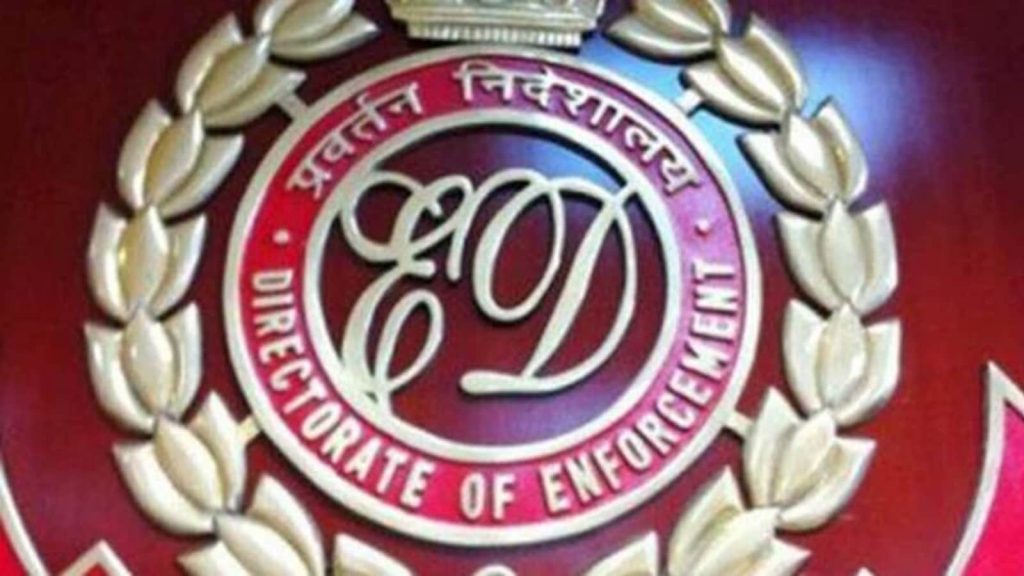
ED raids 30+ locations in Jharkhand, identifies ₹600 crore assets in illegal coal case: Reports - AI News Breaking
indias enforcement directorate seizes:
Money Laundering Crackdown: India’s Enforcement Directorate Ramps Up Actions with Staggering 23-Fold Increase in Seized Assets
Summary: India’s Enforcement Directorate (ED) has witnessed a meteoric rise in its anti-money laundering actions, with the value of attached assets increasing 23 times between 2014-24 compared to 2005-14.
This surge reflects the agency’s expansion in scale and scope, but also raises concerns about the implications on the economy and society.
Updated: May 2, 2026
Money Laundering Crackdown: India’s Enforcement Directorate Ramps Up Actions with Staggering 23-Fold Increase in Seized Assets
India’s Enforcement Directorate (ED) has witnessed a meteoric rise in its anti-money laundering actions, with the value of attached assets increasing 23 times between 2014-24 compared to 2005-14. This surge reflects the agency’s expansion in scale and scope, but also raises concerns about the implications on the economy and society.
Core News: According to official ED data, the total value of attached assets in money laundering investigations has skyrocketed by 23 times in the last decade. This exponential growth highlights the intensification of enforcement under the Prevention of Money Laundering Act (PMLA), which empowers the ED to provisionally seize properties, bank accounts, and other assets suspected to be proceeds of crime.
Impact Analysis: The dramatic escalation in ED’s actions has significant economic and political implications. On the economic front, the increase in asset attachment can have a ripple effect on the broader economy, as seized assets are often tied to businesses, real estate, and other sectors. This can lead to a domino effect, causing a shortage of credit and impacting the overall growth trajectory. From a political perspective, the intensified enforcement may be perceived as a crackdown on corruption, but it also raises concerns about the impact on the rule of law and the potential for abuse of power.
Broader Implications: The exponential rise in ED’s actions raises several red flags, including:
1. Erosion of trust: The increased asset attachment could undermine public trust in institutions, particularly in the financial sector.
2. Regulatory risks: The ED’s expanded powers may lead to a surge in regulatory overreach, potentially stifling legitimate business activities.
3. Potential for abuse: The increased powers of the ED may be subject to exploitation, compromising individual liberties and due process.
4. Global implications: India’s anti-money laundering efforts have broader implications for global finance, as the country’s actions can influence the worldwide fight against illicit financial flows.
Going forward, it is crucial for policymakers to balance the need for effective enforcement with the need to protect individual rights, prevent regulatory overreach, and ensure the integrity of the financial system. The ED’s actions should be subject to robust oversight and accountability mechanisms to prevent potential abuses of power and ensure that the law is enforced fairly and consistently.
With the ED’s asset seizures skyrocketing 23-fold in a decade, we’re witnessing a critical juncture in India’s anti-money laundering efforts – one that raises questions about the trade-offs between cracking down on corruption and safeguarding the rule of law. As the stakes escalate, policymakers must navigate a delicate balance between zealous enforcement and protecting individual liberties.
This is a developing story. More updates will follow as new information becomes available.