Europe warns of Russia’s hybrid attacks but struggles to counter them
  Former chief election commissioner calls SIR scheme illegal.
  A Corruption Scandal Is Reshaping Brazil’s Presidential Election
  US citizen injured in Illinois after ICE agents mistook him for fugitive, tried to arrest him
  At 10 years old, Smithsonian’s Black museum is undaunted amid pressure from Trump administration
 Alphabet, Microsoft, IBM Team Up with Pentagon on High-Stakes AI Project
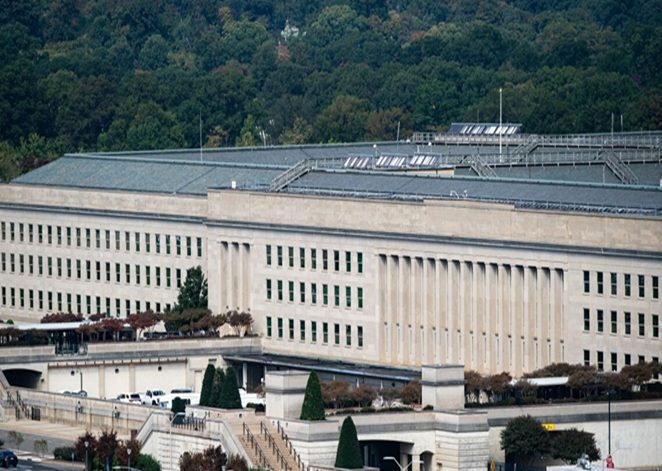
alphabet microsoft team pentagon:
Breakthrough in US AI Defense: Top Companies Partner with Pentagon on Secret Data
In a recent development, seven major Artificial Intelligence (AI) companies have agreed to work with the US Pentagon on a highly classified project.
The collaboration, announced by the US Department of Defense, marks a significant shift in the government’s approach to leveraging AI in defense and security.
Updated: May 2, 2026
Breakthrough in US AI Defense: Top Companies Partner with Pentagon on Secret Data
In a recent development, seven major Artificial Intelligence (AI) companies have agreed to work with the US Pentagon on a highly classified project. The collaboration, announced by the US Department of Defense, marks a significant shift in the government’s approach to leveraging AI in defense and security.
What happened:
According to reports, the Department of Defense has inked partnerships with seven top AI companies, including Google parent Alphabet, Microsoft, and IBM. The agreements, which were announced in classified networks, focus on expanding the use of AI in classified military work. The companies will have access to a secure, classified network, allowing them to contribute their expertise and resources in support of national security priorities.
Background:
The US government has been actively exploring the potential of AI in defense and security for several years. In 2020, the Pentagon launched its Defense Advanced Research Projects Agency (DARPA) AI Next initiative, aimed at accelerating the development and adoption of AI in defense. However, the government’s efforts to work with private companies on these projects have been met with varying degrees of success.
One notable example is the case of Anthropic, a US-based AI company that was initially approached by the Pentagon to work on a classified project. However, the company’s CEO reportedly declined the offer, citing concerns over the potential risks and uncertainties associated with working on classified military projects.
Key concerns:
The agreements between the Pentagon and the AI companies have raised several key concerns, including:
Accountability and oversight: Critics argue that the deals may not provide adequate safeguards to ensure the responsible development and use of AI in defense and security.
Conflict of interest: The partnerships may create conflicts of interest between the AI companies’ commercial interests and their obligations to support national security priorities.
Ethics and human rights: The use of AI in military contexts raises critical questions about ethics and human rights, particularly in situations where AI-powered systems may be used to make life-or-death decisions.
What next:
The agreements between the Pentagon and the AI companies are likely to have significant real-world implications for the development and use of AI in defense and security. While the partnerships may accelerate the introduction of AI-powered systems in military applications, they also highlight the need for stronger safeguards and accountability measures to ensure responsible and transparent development.
As the use of AI in defense and security continues to grow, experts and policymakers will need to grapple with the complex ethical, social, and economic implications of these technologies. The success of these partnerships will depend on the ability of the involved parties to strike a balance between the pursuit of national security priorities and the protection of human rights and accountability.
In a bid to harness cutting-edge AI, the US Pentagon has quietly partnered with seven top tech companies, effectively creating a powerful new force in national security. This strategic move raises questions about whose interests – corporate or national – will ultimately shape the AI-driven decisions that impact our world.
This is a developing story. More updates will follow as new information becomes available.