Europe warns of Russia’s hybrid attacks but struggles to counter them
  Former chief election commissioner calls SIR scheme illegal.
  A Corruption Scandal Is Reshaping Brazil’s Presidential Election
  US citizen injured in Illinois after ICE agents mistook him for fugitive, tried to arrest him
  At 10 years old, Smithsonian’s Black museum is undaunted amid pressure from Trump administration
 BJP’s UP Cabinet Expansion Signals 2027 Caste Strategy, Focus on OBC and Dalit Vote Bank
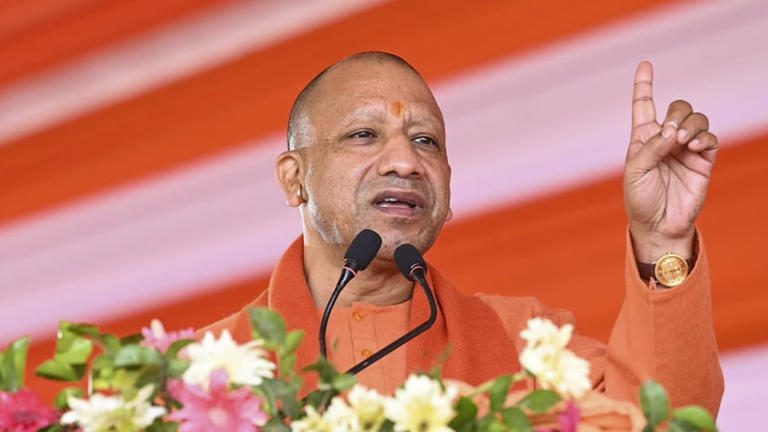
bjps cabinet expansion signals:
The Uttar Pradesh cabinet expansion is being viewed as a carefully calibrated political exercise aimed at strengthening the BJP’s caste arithmetic ahead of the 2027 Assembly elections. By balancing representation among OBCs, Dalits, upper castes, and regional communities, the party appears determined to preserve the social coalition that has powered its dominance in the state.
The BJP’s Uttar Pradesh strategy increasingly revolves around micro-social engineering rather than broad ideological messaging alone. The cabinet expansion suggests the party believes its electoral success depends on maintaining a highly fragmented but stable coalition of non-Yadav OBCs, non-Jatav Dalits, upper castes, and regional communities — a formula that has repeatedly weakened opposition caste consolidation.
The move also signals that the BJP sees governance and representation as inseparable from electoral mathematics in India’s largest state. Every ministerial appointment is effectively both an administrative decision and a political message aimed at specific communities before the high-stakes 2027 Assembly battle.
UP Cabinet Expansion Signals BJP’s 2027 Caste Strategy
The recent cabinet expansion in Uttar Pradesh is being widely interpreted as more than a routine administrative reshuffle. Political observers see it as a strategic move by the Bharatiya Janata Party (BJP) to fine-tune its caste and regional equations ahead of the crucial 2027 Uttar Pradesh Assembly elections.
By carefully distributing ministerial positions across caste groups and regions, the BJP appears to be reinforcing the social coalition that has helped it dominate Uttar Pradesh politics over the past decade. The expansion reflects the party’s long-standing approach of combining Hindutva politics with highly detailed caste management — a formula that has repeatedly delivered electoral success.
For the BJP, Uttar Pradesh is not just another state. It is India’s most politically important electoral battleground, sending 80 MPs to Parliament and heavily influencing national politics. Any political shift in UP can reshape the broader national landscape.
That is why even relatively small cabinet changes are viewed through a much larger electoral lens.
Why Caste Arithmetic Remains Central in UP Politics
Despite rapid urbanization and changing political narratives, caste remains one of the most decisive factors in Uttar Pradesh elections.
Political parties in the state continuously calculate:
- caste representation,
- regional balance,
- community outreach,
- and social perception.
Ministerial appointments often function as signals to specific communities that their interests remain politically recognized and protected.
For decades, UP politics revolved around major caste blocs:
- Yadavs aligned with the Samajwadi Party,
- Jatavs associated with the Bahujan Samaj Party,
- and upper castes traditionally linked to the BJP.
However, the BJP fundamentally altered this equation after 2014 by aggressively mobilizing:
- non-Yadav OBCs,
- non-Jatav Dalits,
- smaller backward caste communities,
- and beneficiaries of welfare programs.
That broader social alliance has become the backbone of the BJP’s dominance in Uttar Pradesh.
Cabinet Expansion as Political Messaging
Every cabinet expansion in Uttar Pradesh carries layered political meaning.
The BJP’s latest reshuffle appears designed to send several messages simultaneously:
Representation Matters
By including leaders from multiple caste groups, the BJP is reinforcing the perception that it remains inclusive within the broader Hindu social spectrum.
The party understands that symbolic political representation can significantly influence voter perception, particularly in rural and semi-urban regions.
Retaining Non-Yadav OBC Support
One of the BJP’s most successful political strategies has been consolidating non-Yadav OBC communities that historically felt overshadowed by dominant OBC groups in regional parties.
These communities include:
- Kurmis,
- Nishads,
- Mauryas,
- Lodhs,
- Rajbhars,
- and several smaller caste groups.
The cabinet expansion appears aimed at reassuring these communities that they remain central to BJP calculations.
Dalit Outreach
The BJP has also steadily expanded outreach among non-Jatav Dalit communities.
While the BSP traditionally dominated Dalit politics, the BJP has attempted to fragment that vote base by emphasizing welfare delivery, symbolic inclusion, and local leadership representation.
Cabinet appointments help reinforce that strategy.
Balancing Upper Castes
At the same time, the BJP cannot afford alienation among upper castes, who remain one of its most loyal support bases.
The party’s challenge is balancing expanded backward caste representation without creating dissatisfaction among Brahmins, Thakurs, Banias, and other upper-caste communities.
Why 2027 Is Already Shaping BJP Decisions
Although the next Assembly election is still some time away, the BJP’s electoral machinery typically operates years in advance.
The party appears focused on preventing complacency after consecutive electoral successes in Uttar Pradesh.
Several political realities explain why 2027 calculations have already begun.
Opposition Realignment Risks
The BJP remains aware that opposition unity could create challenges if caste blocs consolidate effectively.
The Samajwadi Party continues trying to expand beyond its traditional Yadav-Muslim base, while Congress hopes to regain relevance in parts of the state.
The BJP’s response is to deepen its own social coalition before opponents can rebuild theirs.
Anti-Incumbency Management
Long periods in power inevitably generate local dissatisfaction, factionalism, and governance complaints.
Cabinet reshuffles help:
- refresh political messaging,
- reward loyal leaders,
- manage internal rivalries,
- and reduce anti-incumbency pressure.
Welfare Politics Plus Social Engineering
The BJP increasingly combines welfare delivery with caste outreach.
Government schemes targeting:
- housing,
- food distribution,
- toilets,
- health insurance,
- and direct benefit transfers
have helped the party create a cross-caste beneficiary network.
Cabinet representation complements this strategy by ensuring communities also feel politically visible.
Yogi Adityanath’s Role in BJP’s Social Coalition
Chief Minister Yogi Adityanath remains one of the BJP’s most powerful regional leaders and central to its UP strategy.
His leadership blends:
- strong Hindutva positioning,
- centralized governance,
- welfare delivery,
- and organizational discipline.
However, the BJP’s success in Uttar Pradesh does not rely solely on ideological appeal. It also depends heavily on organizational caste management at the grassroots level.
The cabinet expansion suggests coordination between:
- Yogi Adityanath’s administration,
- the BJP’s state organization,
- and the national leadership.
This reflects the party’s broader model where governance and electoral planning operate simultaneously.
Regional Balancing Also Matters
Caste is not the only factor shaping cabinet decisions.
Uttar Pradesh’s vast size means regional representation is equally important.
The BJP must maintain influence across:
- Purvanchal,
- Awadh,
- Bundelkhand,
- Western UP,
- Rohilkhand,
- and central UP.
Each region has unique caste dynamics and political priorities.
Ministerial appointments are therefore often designed to:
- strengthen weak regions,
- reward influential local leaders,
- and prepare organizational structures for future elections.
Opposition’s Challenge
The BJP’s caste strategy creates major challenges for opposition parties.
Samajwadi Party
The SP continues trying to broaden its social appeal beyond Yadav voters.
However, the BJP’s success among smaller OBC groups has weakened the opposition’s traditional caste arithmetic.
Bahujan Samaj Party
The BSP faces continuing difficulties in retaining a unified Dalit vote base.
The BJP’s outreach toward non-Jatav Dalits has significantly altered UP’s political landscape.
Congress
Congress remains organizationally weak in much of Uttar Pradesh and struggles to compete with the BJP’s extensive booth-level network.
BJP’s “Winning Formula”
Political analysts often describe the BJP’s UP strategy as a “rainbow Hindu coalition.”
Instead of relying on one dominant caste bloc, the party seeks to:
- fragment opposition social bases,
- unite multiple smaller communities,
- and create a broader Hindu political identity layered over caste calculations.
This formula has allowed the BJP to:
- reduce dependence on any single caste,
- minimize localized setbacks,
- and sustain statewide dominance.
The cabinet expansion suggests the party believes this strategy remains effective for 2027.
Governance vs Electoral Strategy
Critics argue that excessive caste balancing can weaken governance by prioritizing electoral optics over administrative efficiency.
Supporters counter that democratic representation itself is essential for effective governance in a socially diverse state like Uttar Pradesh.
In reality, Indian politics often treats governance and social representation as interconnected rather than separate.
Cabinet expansions therefore serve dual purposes:
- administrative restructuring,
- and electoral signaling.
What the Expansion Reveals About BJP Thinking
The reshuffle suggests several broader conclusions about BJP strategy:
The Party Still Prioritizes Social Engineering
Despite ideological messaging, caste arithmetic remains deeply important.
BJP Is Preparing Early
The 2027 election cycle is already influencing organizational decisions.
Non-Yadav OBC Strategy Remains Central
The BJP continues viewing smaller OBC communities as essential to its dominance.
Welfare Alone Is Not Enough
Political representation remains crucial alongside welfare benefits.
Opposition Unity Still Concerns BJP
The party appears determined to prevent social consolidation against it.
What Happens Next?
Several developments will determine whether the BJP’s strategy succeeds heading toward 2027.
Electoral Performance
Upcoming local and national elections will test whether current caste alignments remain stable.
Opposition Alliances
Any stronger opposition coordination could complicate BJP calculations.
Economic Conditions
Inflation, jobs, and rural distress could reshape voter behavior beyond caste equations.
Internal BJP Dynamics
Managing competing ambitions inside such a large political coalition will remain important.
Welfare Delivery
Continued implementation of social schemes may strengthen beneficiary-based voting patterns.
The Uttar Pradesh cabinet expansion appears to be a carefully designed political exercise aimed at reinforcing the BJP’s long-term caste coalition ahead of the 2027 Assembly elections. By balancing representation across OBCs, Dalits, upper castes, and regional groups, the party is signaling that its successful social engineering formula remains central to its electoral strategy.
For the BJP, Uttar Pradesh remains the heart of national politics, and maintaining dominance in the state is critical for future parliamentary ambitions. The cabinet reshuffle therefore reflects not merely governance priorities, but a broader political calculation about how to preserve one of the most effective electoral coalitions in modern Indian politics.
AI Insight
The BJP’s UP strategy demonstrates how Indian electoral politics has evolved beyond simple caste blocs into highly granular coalition-building. Rather than depending on one dominant social group, the party has succeeded by assembling multiple smaller communities into a broader political framework tied together through representation, welfare delivery, and ideological messaging.
The cabinet expansion shows that the BJP believes this coalition still has electoral durability. But sustaining such a broad alliance over time requires continuous political balancing — and even small shifts in caste perception, regional dissatisfaction, or economic conditions could significantly influence the road to 2027.