Europe warns of Russia’s hybrid attacks but struggles to counter them
  Former chief election commissioner calls SIR scheme illegal.
  A Corruption Scandal Is Reshaping Brazil’s Presidential Election
  US citizen injured in Illinois after ICE agents mistook him for fugitive, tried to arrest him
  At 10 years old, Smithsonian’s Black museum is undaunted amid pressure from Trump administration
 BJP gained border seats in Bengal, widened margins: Does it point to traction for its infiltration narrative
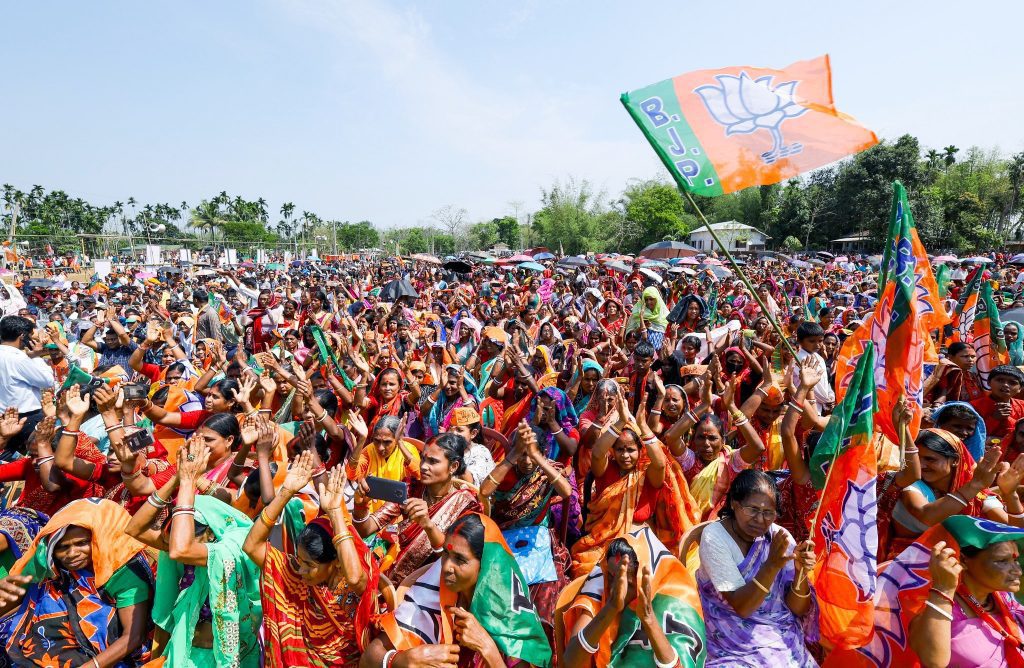
gained border seats bengal:
The BJP’s improved performance in several border-region seats in West Bengal has reignited debate over whether its long-running narrative around illegal infiltration and border security is gaining political traction among voters. The party’s stronger margins in sensitive districts suggest that identity, migration, and citizenship concerns continue shaping electoral behavior in parts of the state.
The BJP’s Bengal strategy increasingly relies on converting border insecurity and demographic anxieties into a durable political identity issue. Its gains in border constituencies suggest that narratives around illegal immigration, citizenship, and resource competition may be resonating beyond the party’s traditional urban and ideological support base.
At the same time, electoral shifts in border districts do not automatically validate the BJP’s broader claims in full. Voter behavior in these regions is influenced by multiple overlapping factors including welfare delivery, local leadership, Hindu-Muslim polarization, economic stress, and anti-incumbency sentiments against the ruling Trinamool Congress (TMC).
BJP Gains in Bengal Border Seats Spark Debate Over Infiltration Narrative
The Bharatiya Janata Party’s improved performance in several border-region constituencies in West Bengal has intensified political debate over whether its campaign centered around infiltration and border security is finding deeper resonance among voters.
The BJP not only retained influence in key border belts but also reportedly widened victory margins or improved vote shares in areas close to the Bangladesh border. These developments are politically significant because border districts have long been central to the BJP’s messaging around:
- illegal immigration,
- demographic change,
- citizenship,
- national security,
- and welfare distribution.
For years, the BJP has accused the ruling Trinamool Congress (TMC) of encouraging illegal infiltration from Bangladesh for electoral purposes — an allegation the TMC strongly rejects as politically motivated communal polarization.
Now, after the BJP’s stronger performance in several border constituencies, political analysts are examining whether this narrative is gaining broader acceptance among voters in sensitive frontier regions.
Why Bengal’s Border Politics Matter
West Bengal shares a long and highly porous international border with Bangladesh.
Districts such as:
- North 24 Parganas,
- Nadia,
- Murshidabad,
- Malda,
- Cooch Behar,
- Uttar Dinajpur,
- and South 24 Parganas
have historically experienced complex migration flows, cross-border cultural ties, smuggling networks, and demographic changes.
These districts are politically important because:
- they contain large rural populations,
- significant minority communities,
- economically vulnerable voters,
- and socially mixed caste-religious demographics.
The BJP has increasingly attempted to transform these local concerns into a broader statewide political narrative focused on:
- border control,
- citizenship verification,
- national identity,
- and alleged demographic imbalance.
BJP’s Infiltration Narrative
The BJP’s political messaging in Bengal has consistently emphasized the issue of “illegal infiltration” from Bangladesh.
The party argues that unchecked migration affects:
- employment opportunities,
- welfare distribution,
- land ownership,
- security,
- and demographic balance.
The issue became especially prominent during debates surrounding:
- the Citizenship Amendment Act (CAA),
- National Register of Citizens (NRC),
- and border security policies.
The BJP framed itself as the defender of:
- national security,
- refugee rights for persecuted Hindus,
- and stricter immigration enforcement.
In contrast, the TMC accused the BJP of:
- fear-mongering,
- communal polarization,
- and targeting minorities for electoral gain.
What the Election Results Suggest
The BJP’s stronger performance in border constituencies has strengthened arguments within the party that its messaging is resonating with sections of voters.
Several patterns appear politically important.
Wider Margins in Sensitive Areas
Improved margins in border districts suggest the BJP may be consolidating support among communities particularly sensitive to:
- migration pressures,
- identity politics,
- and citizenship concerns.
Consolidation of Hindu Votes
The BJP has long sought to consolidate Hindu voters across caste divisions in Bengal by emphasizing cultural and security issues.
Border regions with mixed religious populations often become focal points for such polarization dynamics.
Refugee Politics
Communities with roots in Partition-era displacement — especially Matua and refugee-origin populations — remain politically significant.
The BJP has repeatedly attempted to connect citizenship policies with refugee identity politics.
Local Security Perceptions
In some border belts, smuggling, cattle trafficking, and informal cross-border activity remain persistent concerns. The BJP has used these issues to strengthen its security-oriented narrative.
Does This Mean the Narrative Has Fully Succeeded?
Not necessarily.
Electoral outcomes are rarely shaped by a single issue alone.
Several additional factors may also explain BJP gains in border areas.
Anti-Incumbency Against TMC
Local dissatisfaction with TMC leaders, corruption allegations, or governance complaints may have contributed significantly.
Welfare Politics
Both the BJP and TMC heavily rely on welfare-based electoral mobilization.
Voter choices may reflect local perceptions about scheme delivery rather than ideological alignment alone.
Polarization Dynamics
Religious polarization often intensifies electoral consolidation in mixed-population regions.
Candidate Factors
Strong local candidates and organizational structures frequently influence constituency-level outcomes more than national narratives.
Regional Economic Stress
Border regions facing unemployment or economic hardship may become more receptive to identity-based political messaging.
Why Border Seats Carry Symbolic Importance
Border constituencies matter politically beyond their numerical value.
For the BJP, success in these regions strengthens its broader ideological argument that:
- border security is a major public concern,
- demographic anxieties are politically real,
- and nationalism-based messaging can reshape Bengal politics.
For the TMC, protecting these regions is equally important because:
- Bengal’s plural social identity forms a core part of Mamata Banerjee’s political positioning,
- and accusations related to infiltration directly challenge the party’s governance credibility.
As a result, border-seat performance often becomes symbolically larger than ordinary constituency outcomes.
TMC’s Counter-Narrative
The Trinamool Congress has consistently rejected BJP allegations regarding infiltration politics.
The party argues that:
- the BJP is deliberately polarizing communities,
- using fear-based politics,
- and attempting to divide Bengal along religious lines.
Mamata Banerjee has repeatedly positioned herself as:
- a defender of Bengal’s social harmony,
- constitutional protections,
- and minority rights.
The TMC also emphasizes:
- welfare delivery,
- Bengali regional identity,
- and opposition to what it portrays as “outsider politics” by the BJP.
Citizenship Politics and the CAA Factor
The BJP’s gains in border belts also revive attention on the Citizenship Amendment Act (CAA).
The CAA remains politically sensitive in Bengal because of its connection to refugee communities and citizenship documentation debates.
The BJP has sought to reassure Hindu refugee-origin communities that:
- citizenship protections will be implemented,
- and legal status concerns will be addressed.
Opponents argue that:
- the policy creates religious divisions,
- and generates fear among minority populations.
Border constituencies remain central battlegrounds for these competing narratives.
The Importance of Demographic Politics
Demographic change has become one of the BJP’s most frequently used political themes in Bengal.
The party often frames demographic concerns as:
- cultural protection,
- electoral fairness,
- and national security issues.
Critics, however, warn that such narratives risk:
- communal polarization,
- stigmatization,
- and social division.
The political effectiveness of demographic messaging depends heavily on local context, historical migration patterns, and voter perception.
BJP’s Larger Bengal Strategy
The BJP views Bengal as one of India’s most strategically important expansion states.
Although the party has not yet displaced the TMC from power, it has dramatically expanded its vote base over the past decade.
Its Bengal strategy relies on several interconnected themes:
- Hindutva mobilization,
- anti-corruption messaging,
- welfare politics,
- nationalism,
- and border-security narratives.
Border districts are particularly important because they combine:
- identity politics,
- refugee issues,
- religious polarization,
- and economic vulnerability.
Can Border Gains Translate Into Statewide Success?
That remains uncertain.
West Bengal’s political landscape is highly regionalized and emotionally shaped by:
- Bengali identity,
- welfare politics,
- local leadership networks,
- and community mobilization.
The BJP’s challenge is converting constituency-level traction into a durable statewide majority coalition.
Several barriers remain:
- Mamata Banerjee’s strong personal popularity,
- TMC’s grassroots organization,
- minority voter consolidation,
- and regional cultural resistance to aggressive central narratives.
Still, improved performance in border regions suggests the BJP continues expanding influence in strategically important zones.
What Political Analysts Are Watching
Observers are now closely monitoring several questions:
Is the BJP Building a Stable Border Belt Vote Base?
Repeated gains could indicate long-term consolidation.
Will TMC Adjust Its Strategy?
The ruling party may intensify welfare outreach and regional identity messaging.
How Important Will CAA/NRC Become Again?
Citizenship politics could re-emerge strongly before future elections.
Can BJP Expand Beyond Polarized Seats?
Winning Bengal ultimately requires broader cross-regional appeal.
Will Economic Issues Override Identity Politics?
Jobs, inflation, and rural distress may still dominate future voting behavior.
The BJP’s stronger performance and widened margins in several border constituencies in West Bengal have strengthened speculation that its infiltration and border-security narrative is finding greater traction among certain sections of voters. The results suggest that identity politics, citizenship concerns, and demographic anxieties continue playing an influential role in Bengal’s evolving political landscape.
However, electoral outcomes in border districts reflect a combination of factors including local dissatisfaction, welfare politics, regional identity, and polarization dynamics. While the BJP may see these gains as validation of its broader political strategy, translating border-region success into statewide dominance remains a far more complex challenge.
For now, one thing is clear: Bengal’s border politics will remain central to the state’s future electoral battles.
AI Insight
The BJP’s border-seat gains reveal how effectively localized anxieties can be transformed into broader political narratives when linked to identity and security themes. In Bengal, border politics is no longer only about migration management — it has become deeply connected to questions of citizenship, cultural identity, welfare competition, and political belonging.
Yet Bengal’s political culture also remains resistant to simple polarization formulas. The BJP’s future success will depend on whether it can move beyond issue-based consolidation in sensitive regions and build a wider emotional and organizational connection across the state.