Europe warns of Russia’s hybrid attacks but struggles to counter them
  Former chief election commissioner calls SIR scheme illegal.
  A Corruption Scandal Is Reshaping Brazil’s Presidential Election
  US citizen injured in Illinois after ICE agents mistook him for fugitive, tried to arrest him
  At 10 years old, Smithsonian’s Black museum is undaunted amid pressure from Trump administration
 Putin Calls New Delhi a ‘Reliable Strategic Partner’, Slams Western Interference in IndiaRussia Relations Amid Deepening Geopolitical Realignment
Russian President Vladimir Putin’s visit to India marks a significant shift in the country’s global alliances, as New Delhi solidifies its ties with Moscow despite growing pressure from the West, with Putin praising India as a reliable partner and emphasizing its commitment to national interests.
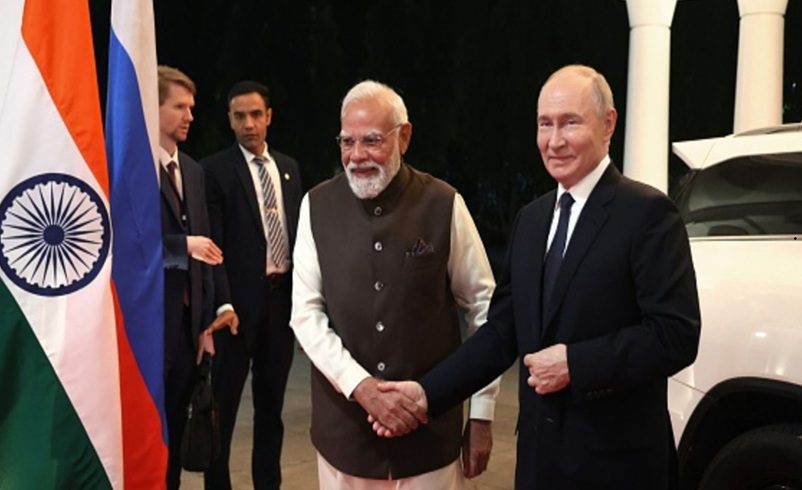
putin calls delhi reliable:
Russian President Vladimir Putin has described New Delhi as a “reliable partner,” reaffirming the strength of India–Russia ties despite growing global geopolitical tensions. He also criticized Western countries, accusing them of attempting “detrimental interference” in bilateral relations between Moscow and New Delhi. The remarks underscore a continued strategic alignment between India and Russia amid an increasingly polarized global order.
Putin Reaffirms India as a Core Strategic Partner in Multipolar World Order
Russian President Vladimir Putin has once again publicly reinforced the importance of India in Russia’s foreign policy framework, calling New Delhi a “reliable partner” in a rapidly shifting global geopolitical environment. His remarks come at a time when global alliances are being reshaped by ongoing conflicts, economic sanctions, energy security concerns, and intensifying rivalry between Western powers and emerging multipolar blocs.
The Russian leader’s statement underscores Moscow’s long-standing effort to deepen ties with India, a key player in Asia and one of the world’s fastest-growing major economies. Despite external pressures and geopolitical complexities, India and Russia have maintained a historically strong relationship spanning decades, rooted in defense cooperation, energy partnerships, and diplomatic trust.
Putin’s comments also carried a sharper tone directed at Western nations, which he accused of attempting to interfere in India–Russia relations. He characterized such actions as “detrimental,” suggesting that external actors are trying to weaken longstanding bilateral partnerships in pursuit of broader geopolitical objectives.
These remarks highlight not only the resilience of India–Russia ties but also the growing contest for influence in the Global South, where countries like India are increasingly asserting strategic autonomy.
A Legacy of India–Russia Strategic Cooperation
India and Russia share one of the most enduring strategic partnerships in modern international relations. Dating back to the Cold War era, the relationship between New Delhi and Moscow has evolved through multiple global transitions, including the collapse of the Soviet Union, the rise of globalization, and the current era of multipolar competition.
For decades, Russia has been one of India’s most important defense suppliers, providing advanced military platforms including fighter aircraft, submarines, missile systems, and nuclear technology cooperation. Even as India has diversified its defense imports in recent years, Russia remains a key contributor to India’s military modernization.
Beyond defense, the partnership extends to energy cooperation, with Russia playing a significant role in India’s crude oil imports in recent years, particularly after global sanctions altered traditional energy flows. The two countries also collaborate in nuclear energy, space research, and industrial technology.
Putin’s reaffirmation of India as a “reliable partner” reflects continuity in this strategic relationship, even as global alliances become more fragmented.
Western Concerns and Geopolitical Friction
The Russian President’s criticism of Western interference reflects a broader narrative frequently advanced by Moscow: that Western countries are attempting to isolate Russia diplomatically and economically while discouraging third countries from maintaining close ties with it.
In recent years, Western governments—particularly in Europe and North America—have imposed extensive sanctions on Russia, especially following geopolitical conflicts in Eastern Europe. These sanctions have targeted financial systems, energy exports, defense industries, and key individuals.
Within this context, Russia has increasingly sought to strengthen partnerships with non-Western powers, particularly in Asia, Africa, and Latin America. India, as a major global economy with an independent foreign policy approach, plays a crucial role in this strategy.
Putin’s remarks suggest that Moscow views attempts to influence India’s diplomatic choices as part of a broader Western effort to shape global alignments. However, India has consistently maintained that its foreign policy decisions are guided by national interests and strategic autonomy rather than external pressure.
India’s Strategic Autonomy in Foreign Policy
India’s response to global geopolitical tensions has been characterized by a policy often described as “strategic autonomy.” This approach allows New Delhi to engage with multiple global powers simultaneously without aligning exclusively with any single bloc.
India continues to maintain strong relationships with Western countries, including the United States, European Union members, and strategic partners in the Indo-Pacific region. At the same time, it sustains long-standing ties with Russia, particularly in defense and energy sectors.
This balancing act has become increasingly significant in the current global order, where geopolitical rivalries between major powers are intensifying. India’s position as a key voice in the Global South further amplifies its diplomatic influence.
Putin’s comments implicitly acknowledge India’s ability to resist external pressure and maintain independent decision-making in foreign policy. By labeling India a “reliable partner,” Moscow is signaling trust in New Delhi’s consistency and predictability in bilateral relations.
Defense Cooperation: A Pillar of India–Russia Relations
One of the most critical dimensions of India–Russia ties is defense cooperation. Russia has historically been India’s largest defense supplier, providing a wide range of military equipment and technology transfers.
Key areas of cooperation include:
- Fighter aircraft such as Sukhoi series jets
- Air defense systems
- Nuclear-powered submarines
- Missile systems and advanced radar technology
- Joint production and technology transfer initiatives
Although India has increasingly diversified its defense procurement to include the United States, France, Israel, and domestic manufacturing under initiatives like “Make in India,” Russian-origin systems continue to form a significant portion of India’s defense infrastructure.
The durability of this defense partnership reflects deep institutional trust and long-standing interoperability between the two militaries.
Putin’s reaffirmation of India as a reliable partner is therefore closely tied to this defense relationship, which remains a cornerstone of bilateral ties.
Energy Cooperation and Economic Realignment
Energy trade has emerged as another major pillar of India–Russia relations in recent years. Following global disruptions in energy markets, India has increased imports of discounted crude oil from Russia, helping stabilize domestic energy prices.
This shift has contributed to a broader reconfiguration of global energy flows, with India emerging as one of the largest buyers of Russian oil in certain periods. While this has drawn scrutiny from Western governments, India has consistently defended its energy imports as necessary for ensuring affordable energy security for its population.
Russia, in turn, views India as a stable and growing energy market, particularly as it seeks to diversify away from traditional European buyers due to sanctions and geopolitical restrictions.
The energy dimension adds another layer of strategic interdependence to the bilateral relationship.
Diplomatic Messaging and Global Power Dynamics
Putin’s remarks are also symbolic in nature, reflecting broader diplomatic messaging aimed at reinforcing Russia’s global partnerships. By publicly praising India, Moscow is signaling that it retains influential allies despite Western isolation efforts.
At the same time, criticism of Western interference serves to reinforce Russia’s narrative of resisting what it describes as an unfair global order dominated by Western powers.
This narrative aligns with Russia’s broader foreign policy strategy of promoting multipolarity—a global system where power is distributed across multiple centers rather than concentrated in a single bloc.
India’s rise as a major global economy and diplomatic actor makes it a central participant in this evolving order.
India–Russia Relations in a Changing World
Despite global tensions, India and Russia continue to engage across multiple levels:
- High-level diplomatic exchanges
- Defense procurement and joint development projects
- Energy trade agreements
- Multilateral cooperation in forums such as BRICS and SCO
Both countries have consistently emphasized the importance of maintaining stable and predictable relations.
However, the geopolitical environment surrounding this partnership has become increasingly complex. India’s growing ties with Western economies and participation in Indo-Pacific frameworks coexist with its long-standing relationship with Russia, creating a multi-aligned foreign policy structure.
Putin’s comments reflect an acknowledgment of this complexity while reaffirming Russia’s desire to maintain strong ties with New Delhi.
Western Strategy and Global Responses
From a Western perspective, efforts to limit Russia’s global influence have included diplomatic pressure, sanctions, and attempts to isolate Moscow in international forums. However, the effectiveness of these measures has been mixed, particularly in regions where countries prioritize economic development and strategic independence over alignment with geopolitical blocs.
India’s position has often been described as pragmatic, focusing on national interest rather than ideological alignment.
This divergence in approaches has created friction in global diplomacy, with competing narratives about sovereignty, influence, and global governance.
Putin’s remarks are therefore not isolated statements but part of an ongoing geopolitical discourse shaping the 21st-century international order.
Broader Implications for Global Geopolitics
The reaffirmation of India as a “reliable partner” carries implications beyond bilateral relations. It signals:
- Continued resilience of India–Russia ties despite global pressure
- Strengthening of multipolar global dynamics
- Increasing importance of Asia in global decision-making
- Limitations of unilateral diplomatic pressure in reshaping alliances
- Expansion of non-Western strategic cooperation frameworks
As global power structures evolve, relationships like India–Russia serve as key indicators of how nations navigate competing interests in a fragmented international system.
President Vladimir Putin’s remarks reaffirming India as a “reliable partner” and criticizing Western interference highlight the enduring strength and strategic depth of India–Russia relations. Despite shifting global alignments and external pressures, the partnership continues to evolve across defense, energy, and diplomatic domains.
The statements also reflect broader geopolitical realities, where emerging powers like India play a central role in shaping a multipolar world order. As global tensions persist, India’s balanced foreign policy approach ensures it remains an influential actor capable of engaging with multiple power centers simultaneously.
Insights
This development reflects a structural shift in global geopolitics rather than a bilateral diplomatic event alone. Russia’s framing of India as a “reliable partner” is a strategic signal aimed at consolidating non-Western alliances amid Western sanctions and isolation efforts. For India, the situation reinforces the value of strategic autonomy—maintaining diversified partnerships without formal alignment. Over time, such positioning increases India’s leverage in global negotiations but also requires continuous balancing to avoid overdependence on any single geopolitical bloc. The broader trend points toward a fragmented but interconnected multipolar order where middle powers like India become decisive arbiters of global stability.