Europe warns of Russia’s hybrid attacks but struggles to counter them
  Former chief election commissioner calls SIR scheme illegal.
  A Corruption Scandal Is Reshaping Brazil’s Presidential Election
  US citizen injured in Illinois after ICE agents mistook him for fugitive, tried to arrest him
  At 10 years old, Smithsonian’s Black museum is undaunted amid pressure from Trump administration
 Delhi Gymkhana Club Row: Elite Membership, Public Land Debate and Clash Over Private Privilege vs Public Rights Intensifies
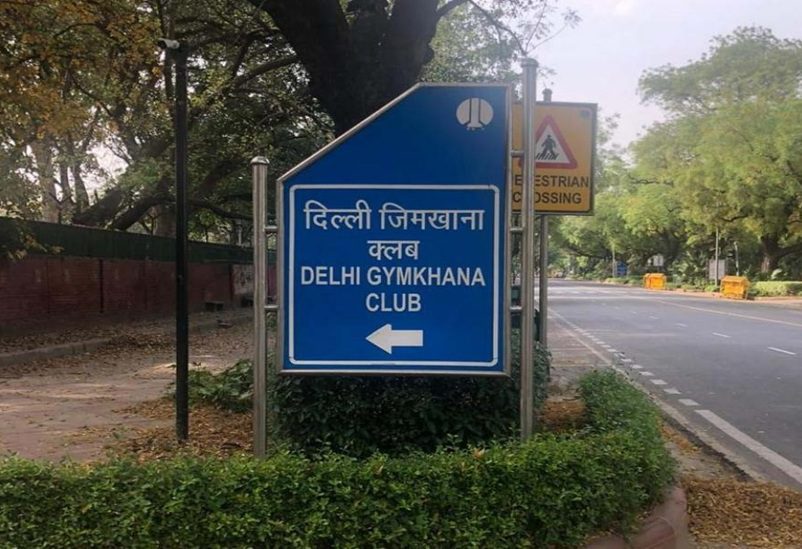
delhi gymkhana club elite:
The Delhi Gymkhana Club has once again come under spotlight amid a growing debate over whether elite institutions operating on prime public land should remain exclusive or be opened to broader public access. The club, known for its powerful membership base including politicians, business leaders, and celebrities, is now at the center of a wider discussion on privilege, governance, and public accountability.
The Delhi Gymkhana Club—one of India’s most prestigious and historically exclusive social institutions—has re-entered public discourse amid renewed scrutiny over its functioning, membership structure, and its use of prime urban land in the heart of the national capital.
At the center of the debate lies a fundamental question: should an elite private club, reportedly built and sustained on land with public origins or concessional allocation, continue to operate as an exclusive enclave for the country’s most powerful individuals, or should it be subjected to greater public access, transparency, and accountability?
The controversy has reignited long-standing tensions between two competing principles: private association rights versus public interest in scarce urban land resources.
A Symbol of Power and Prestige in Lutyens’ Delhi
The Delhi Gymkhana Club is widely regarded as one of the most exclusive social clubs in India. Located in Lutyens’ Delhi, the city’s most politically significant and architecturally elite zone, the club has historically served as a meeting ground for India’s political and economic establishment.
Its membership list is said to include a cross-section of the country’s influential elite:
- Senior politicians across party lines
- Leading industrialists and business tycoons
- Retired bureaucrats and diplomats
- Bollywood personalities and cultural figures
- Senior professionals from judiciary and corporate sectors
For decades, membership in the club has been considered not just a social privilege but also a marker of elite status within India’s power structure.
The club’s exclusivity, long waiting lists, and high entry barriers have only reinforced its reputation as a closed network of influence.
The Core of the Controversy: Public Land, Private Access
The renewed debate surrounding the Gymkhana Club is not merely about social exclusivity—it is fundamentally about land use and governance.
Critics argue that institutions like the Gymkhana Club occupy extremely valuable urban land that could otherwise serve broader public purposes such as parks, cultural spaces, or civic infrastructure. They question whether such exclusive usage aligns with principles of equitable urban development.
Supporters, however, maintain that the club is a private association operating within legal frameworks, and that membership-based institutions have the right to define their own access rules.
This tension reflects a broader national conversation about how cities like Delhi allocate and regulate premium land resources.
Historical Roots of Elite Clubs in India
To understand the current debate, it is important to examine the historical origins of clubs like the Gymkhana Club.
Many such institutions trace their origins to the colonial era, when exclusive clubs were established for British administrators and Indian elites who were aligned with the colonial administration. Over time, these institutions transitioned into post-independence India, retaining much of their structural exclusivity while adapting to new social realities.
Despite India’s democratic evolution, many of these clubs have continued to function as semi-closed social ecosystems.
The legacy of exclusivity has therefore persisted across generations, raising questions about whether such institutions align with contemporary democratic values.
Membership Dynamics: Power Networks in Urban India
The Gymkhana Club is often described not merely as a recreational space but as a networking hub for India’s influential class.
Membership is typically limited, selective, and governed by internal committees. Entry often requires sponsorship, long waiting periods, and adherence to strict eligibility criteria.
This exclusivity has led to perceptions that access is not merely about leisure but about proximity to power.
In urban sociology terms, such institutions function as “elite social reproduction spaces,” where business relationships, political alliances, and informal decision-making networks are often formed.
This is why the club frequently becomes part of larger discussions about inequality and privilege in Indian society.
Public vs Private Rights: The Legal and Ethical Debate
At the heart of the controversy is a complex legal and ethical question: when does a private club’s autonomy conflict with public interest?
Arguments Supporting Club Autonomy
Supporters of the Gymkhana Club emphasize:
- It is a membership-based private association
- Its governance is internal and legally recognized
- Members contribute financially to its maintenance
- Restricting access would violate association rights
From this perspective, the club is no different from any private organization that operates on membership terms.
Arguments for Greater Public Accountability
Critics argue:
- The land in question is extremely valuable and centrally located
- Historical allocation may have involved concessional terms
- Public interest should override exclusive usage of scarce urban land
- Elite institutions reinforce socio-economic inequality
- Transparency in governance and land use is necessary
From this standpoint, such clubs are seen as beneficiaries of historical privilege that may no longer be justified in a modern democratic framework.
Urban Space and Inequality in Delhi
Delhi’s urban landscape is marked by stark contrasts: sprawling informal settlements exist alongside highly exclusive enclaves such as Lutyens’ Delhi, where power, wealth, and influence are concentrated.
The Gymkhana Club sits within this geography of inequality, symbolizing the spatial manifestation of India’s socio-economic hierarchy.
Urban planners and sociologists often point out that premium land use in central Delhi reflects broader structural inequities in access to public resources.
The debate over the club is therefore not isolated—it is part of a larger conversation about urban justice.
Political Sensitivities Surrounding Elite Institutions
Given the presence of politicians among its members, discussions around institutions like the Gymkhana Club are often politically sensitive.
Any move to alter their structure, access, or governance tends to trigger debates about:
- Constitutional rights of association
- Property rights versus public interest
- Political neutrality of elite institutions
- Influence networks within governance structures
As a result, reforms in this area are often slow and contested.
Economic and Social Dimensions of Exclusivity
Beyond politics, elite clubs also have significant economic and social implications.
Economic Dimension
- High membership fees restrict access to wealthy individuals
- Networking opportunities can translate into business advantages
- Informal economic deals often originate in such spaces
Social Dimension
- Reinforces class-based social segregation
- Limits inter-class interaction
- Creates parallel social ecosystems within cities
These dynamics contribute to broader debates about inequality and social mobility in India.
Governance and Transparency Concerns
One of the recurring criticisms of elite clubs is the perceived lack of transparency in their operations.
Questions often raised include:
- How are membership decisions made?
- What criteria govern access and exclusion?
- Are land and financial arrangements fully transparent?
- What regulatory oversight exists over such institutions?
While clubs typically function as private associations, critics argue that when public assets or prime urban land are involved, a higher degree of accountability is warranted.
Cultural Significance of the Gymkhana Club
Despite controversies, the Delhi Gymkhana Club also holds cultural and historical significance.
It has long been associated with:
- Colonial-era architectural heritage
- Elite social traditions in post-independence India
- Diplomatic and cultural gatherings
- Sporting and recreational facilities for members
For many members, it represents continuity, tradition, and institutional legacy rather than exclusivity alone.
The Larger Question: Who Owns Urban Space?
The debate ultimately converges on a broader philosophical question: who owns and controls urban space in a rapidly growing democracy?
Is it:
- The state, acting as custodian of public resources?
- Private associations with historical claims?
- Or a hybrid system balancing both interests?
Cities like Delhi are increasingly forced to confront these questions as population density rises and land becomes more scarce and valuable.
Possible Future Scenarios
Several outcomes are possible as debates around elite institutions evolve:
1. Status Quo Continuation
The club continues operating as a private institution with minimal changes.
2. Increased Regulatory Oversight
Greater transparency requirements and audits of land use and governance.
3. Partial Public Access Reforms
Limited public access to certain facilities or events.
4. Legal and Policy Intervention
Government or judicial review of land allocation and usage terms.
Each scenario carries significant political and legal implications.
The Delhi Gymkhana Club controversy is not merely about a single institution—it reflects deeper tensions in Indian urban society between privilege and equity, tradition and reform, private rights and public interest.
As Delhi continues to evolve as a global capital city, such debates are likely to intensify, forcing policymakers to confront difficult questions about how premium urban spaces should be governed and who they ultimately serve.
Insights
This issue exemplifies a structural urban governance dilemma seen in many post-colonial megacities: the persistence of elite enclaves occupying high-value public-origin land without proportional public accountability. While legally framed as private associations, such institutions often function as hybrid public-private spaces with outsized influence on socio-economic networks. The policy challenge is not simply redistribution but regulatory clarity—defining when exclusivity becomes incompatible with equitable urban development. In the long term, cities facing land scarcity will likely move toward stricter transparency norms, usage audits, and partial democratization of historically exclusive urban assets.