Europe warns of Russia’s hybrid attacks but struggles to counter them
  Former chief election commissioner calls SIR scheme illegal.
  A Corruption Scandal Is Reshaping Brazil’s Presidential Election
  US citizen injured in Illinois after ICE agents mistook him for fugitive, tried to arrest him
  At 10 years old, Smithsonian’s Black museum is undaunted amid pressure from Trump administration
 China Seeks Reset with North Korea as Xi Jinping Heads to Pyongyang for High-Stakes Talks with Kim Jong-un
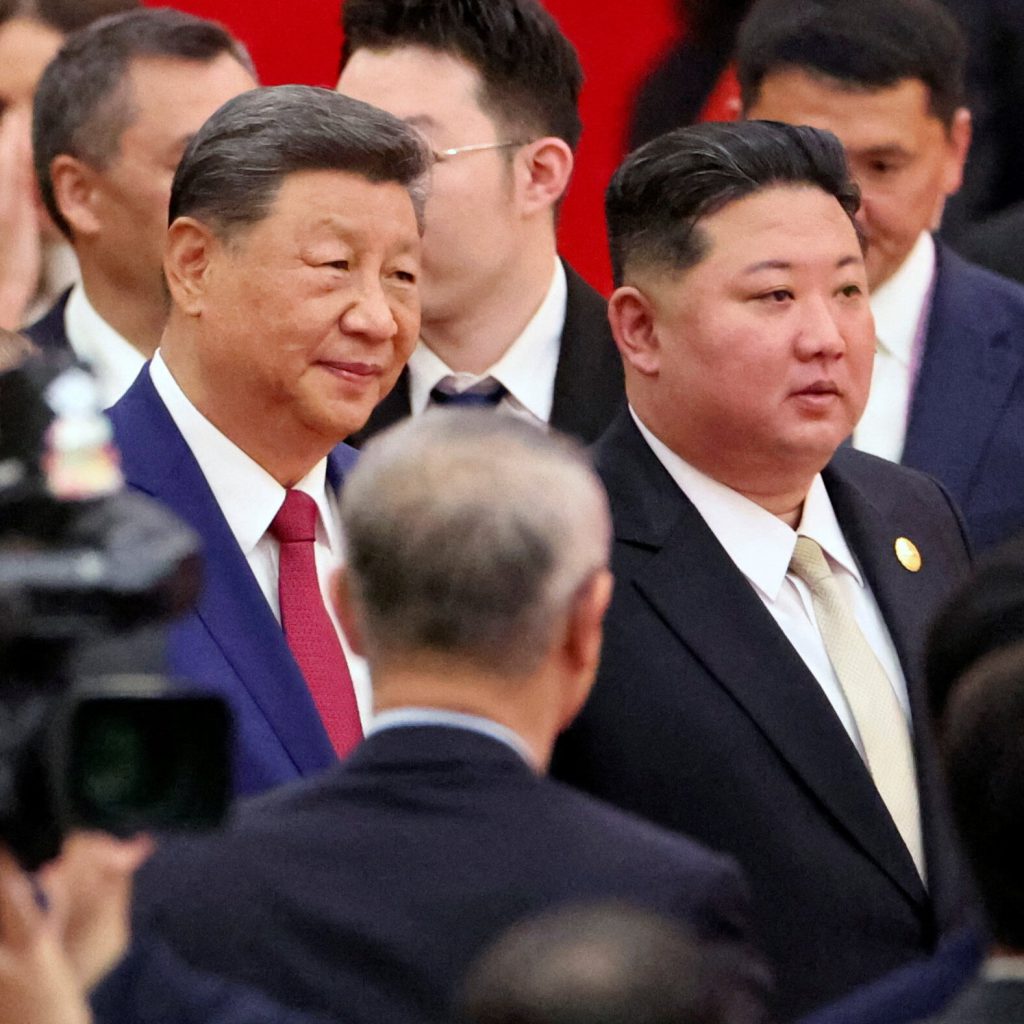
china seeks reset north:
Chinese President Xi Jinping is set to visit North Korea for a two-day trip, his first in nearly seven years, to meet leader Kim Jong-un. The visit comes as Beijing seeks to revive strained ties affected by pandemic-era trade disruptions and Pyongyang’s growing alignment with Russia. The meeting signals a potential recalibration of one of Asia’s most complex strategic relationships.
Chinese President Xi Jinping is expected to arrive in Pyongyang on Monday for a two-day visit, marking his first trip to North Korea in nearly seven years and signaling a potential recalibration of one of Asia’s most strategically sensitive alliances. The visit comes at a moment of shifting geopolitical alignments in Northeast Asia, where longstanding assumptions about regional partnerships are being reshaped by pandemic-era disruptions, sanctions regimes, and North Korea’s expanding ties with Russia.
Xi’s meeting with North Korean leader Kim Jong-un is being closely watched by regional powers and global analysts alike, not only for what it reveals about bilateral relations, but also for how it may influence the broader strategic balance involving the United States, South Korea, Japan, and Russia.
At its core, the visit reflects Beijing’s attempt to reassert influence over a junior ally whose foreign policy trajectory has grown more independent in recent years.
China and North Korea share one of the most historically entrenched alliances in modern geopolitics, formalized through a mutual defense treaty dating back decades. However, the relationship has experienced visible strain in recent years.
During the Covid-19 pandemic, North Korea sealed its borders almost completely, resulting in a sharp decline in trade with China—its primary economic lifeline. Cross-border commerce, informal supply routes, and humanitarian flows were all significantly reduced, contributing to economic stress inside North Korea and limiting Beijing’s day-to-day leverage.
Even as borders have gradually reopened, trade recovery has been uneven. Sanctions imposed by the United Nations in response to North Korea’s nuclear and missile programs continue to constrain formal economic engagement. As a result, much of the bilateral relationship has shifted into a narrower set of political and strategic communications rather than robust economic integration.
This backdrop forms the central challenge for Xi’s visit: rebuilding trust and functional engagement in a relationship that has become structurally constrained.
Xi Jinping’s Strategic Calculus: For China, North Korea remains a critical buffer state. Despite frustrations over Pyongyang’s nuclear weapons program and periodic provocations, Beijing continues to prioritize stability on the Korean Peninsula over punitive isolation.
Xi Jinping’s decision to travel to Pyongyang after nearly seven years suggests a renewed effort to stabilize the relationship through direct high-level engagement. Diplomatic observers interpret the visit as an attempt to reassert China’s central role in Korean Peninsula diplomacy at a time when regional dynamics are increasingly shaped by U.S.-South Korea-Japan security cooperation and North Korea-Russia alignment.
China’s strategic objectives in this visit are widely understood to include:
- Preventing instability along its northeastern border
- Ensuring North Korea does not escalate militarily in ways that provoke regional conflict
- Reaffirming Beijing’s role as the primary external stakeholder in Korean Peninsula affairs
- Rebalancing North Korea’s foreign relations away from excessive reliance on Russia
While China continues to support denuclearization in principle, its immediate priority remains preventing escalation that could lead to conflict or refugee flows across the border.
Regional Reactions and Strategic Anxiety: The prospect of renewed high-level engagement between China and North Korea is being closely monitored in Washington, Seoul, and Tokyo.
For the United States and its allies, closer coordination between Beijing and Pyongyang could complicate efforts to enforce sanctions and manage North Korea’s nuclear program. However, some analysts argue that China’s renewed engagement may also serve as a stabilizing force, reducing the likelihood of uncontrolled escalation.
South Korea, in particular, is likely to view the meeting through the lens of security dynamics on the peninsula, especially given ongoing tensions related to North Korea’s missile testing programs.
Japan, similarly, remains concerned about regional missile threats and the broader implications of shifting alliances.
A Shifting Geopolitical Triangle: The China–North Korea–Russia dynamic is increasingly being viewed as a triangular geopolitical configuration, albeit one that remains fluid and asymmetrical.
While Russia’s growing engagement with North Korea introduces new strategic variables, China remains the dominant economic actor. However, North Korea’s diversification strategy suggests a gradual recalibration of dependence patterns.
This evolving triangle will likely play a significant role in shaping regional security dynamics in the coming years, particularly as global geopolitical blocs become more defined.
This visit reflects a classic pattern in asymmetric alliances: when a smaller state (North Korea) gains alternative patrons (Russia), the dominant partner (China) is forced into active diplomatic renewal to prevent strategic drift. Xi’s trip is less about immediate agreements and more about reasserting hierarchical influence in a system where North Korea is gradually increasing its bargaining autonomy. The broader signal is fragmentation of previously stable alignment structures in Northeast Asia, where bilateral dependencies are being replaced by multi-vector balancing strategies.