Europe warns of Russia’s hybrid attacks but struggles to counter them
  Former chief election commissioner calls SIR scheme illegal.
  A Corruption Scandal Is Reshaping Brazil’s Presidential Election
  US citizen injured in Illinois after ICE agents mistook him for fugitive, tried to arrest him
  At 10 years old, Smithsonian’s Black museum is undaunted amid pressure from Trump administration
 Missiles Rain Over Israel as Iran Launches Major Attack, Air Raid Sirens Trigger Nationwide Panic
missiles rain israel iran:
Iran launched a fresh wave of missile attacks on Israel, triggering widespread air raid sirens and forcing millions into shelters overnight.
Israel claimed most projectiles were intercepted, though explosions were still reported in multiple areas. The escalation follows earlier strikes and rising regional tensions, with diplomatic pressure urging restraint.
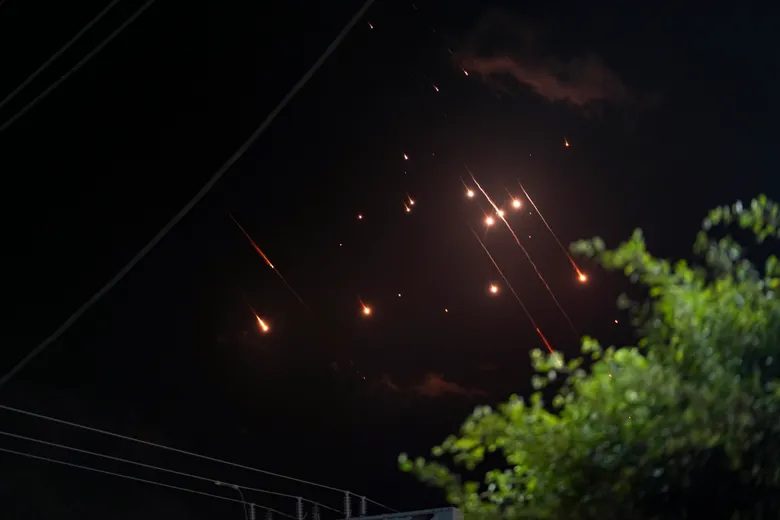
In the early hours of the night, Israel’s skies were illuminated by streaks of fire as Iran launched a coordinated missile assault, triggering nationwide air raid sirens and sending millions of civilians scrambling into shelters. The attack, described by Israeli defense officials as one of the more significant escalations in recent weeks, unfolded amid already heightened regional tensions following earlier strikes attributed to Israel against Iranian-linked targets.
Residents across multiple Israeli cities reported hearing explosions and seeing interception systems activate in rapid succession. While the Israeli military maintained that a substantial portion of the incoming missiles were successfully intercepted, the psychological impact of the barrage was unmistakable: a nation once again bracing under the threat of sustained regional warfare.
The Iranian government, meanwhile, issued warnings suggesting that the attack was not an isolated response but part of a broader retaliatory posture, signaling that further escalation could follow if what it described as “provocations” continued.
As missile trajectories were detected, Israel’s national alert systems activated sirens across central and southern regions, including densely populated urban zones. Civilians were instructed to enter fortified shelters immediately, a protocol deeply embedded in Israeli public life but rarely invoked at such scale in recent years.
Eyewitness accounts described a tense and chaotic night. Families rushed into underground shelters, highways briefly emptied, and emergency services shifted into high-alert mode. In several areas, the sound of interception systems—part of Israel’s multi-layered missile defense network—was followed by loud detonations in the sky, suggesting mid-air neutralization attempts.
Despite official claims of successful interception, fragments and shockwaves reportedly caused minor structural damage in isolated locations. Authorities have not yet released comprehensive casualty or damage assessments, indicating ongoing evaluation of impact zones.
Israel’s Missile Defense Systems Under Strain : Israel’s defense establishment has long relied on a sophisticated multi-tiered missile interception architecture designed to counter short-, medium-, and long-range threats. Systems such as Iron Dome, David’s Sling, and Arrow are integrated into a layered defense grid that tracks incoming projectiles and determines interception priorities in real time.
During the latest attack, military officials stated that the systems were “fully operational” and engaged multiple incoming threats simultaneously. However, defense analysts note that saturation attacks—where multiple missiles are launched simultaneously—can test even the most advanced interception networks.
Preliminary assessments suggest that while most missiles were intercepted, some penetrated defensive layers or were not fully neutralized before impact. The Israeli military has not disclosed the exact number of missiles fired or successfully intercepted, citing operational security.
The latest escalation does not occur in isolation. The Middle East has been experiencing a period of heightened volatility driven by overlapping conflicts, proxy engagements, and strategic rivalries.
Tensions between Israel and Iran have been escalating steadily, particularly through indirect confrontations in Syria, Lebanon, and other regional theaters. Cyber operations, targeted strikes, and proxy engagements have become routine elements of this shadow conflict.
The recent exchange of missile fire represents a shift toward more overt military signaling, raising concerns among regional and global observers that the conflict may be entering a more dangerous phase.
Israel’s Home Front Command activated emergency protocols immediately following the detection of incoming missiles. Citizens were instructed to remain in shelters until further notice, and public transportation services were temporarily disrupted in affected regions.
Emergency medical teams were deployed to potential impact zones, although initial reports suggest that casualties remain limited due to effective interception and shelter compliance.
The Israeli government has repeatedly emphasized civilian preparedness as a critical component of national resilience. Regular drills, public alert systems, and widespread shelter infrastructure have contributed to reducing casualties in past missile incidents.
However, the psychological toll of repeated alerts and sheltering cannot be understated. Experts note that prolonged exposure to such conditions can lead to increased anxiety, particularly among children and elderly populations.
Global Energy and Security Concerns: Any escalation in Israel-Iran tensions carries implications beyond the immediate region. Global energy markets are particularly sensitive to conflict in the Middle East, given the region’s role in oil and gas supply chains.
Shipping routes in nearby waters, particularly those connected to the Strait of Hormuz, are closely monitored during periods of heightened tension. Even the perception of instability can lead to fluctuations in energy prices and insurance premiums for maritime transport.
Security analysts warn that sustained missile exchanges could also increase risks for international personnel and infrastructure across the region.
This missile exchange reflects a shift from indirect proxy conflict toward more direct state-to-state military signaling between Israel and Iran. The pattern suggests a breakdown in previous escalation control mechanisms that relied on ambiguity and third-party proxies. When states begin launching visible, attributable strikes while still claiming deterrence rather than war, it usually indicates a transition phase in conflict dynamics—where both sides are testing thresholds without fully committing to sustained war. Historically, such phases are unstable and prone to miscalculation, especially when layered onto existing regional crises and fragmented diplomatic channels.