Europe warns of Russia’s hybrid attacks but struggles to counter them
  Former chief election commissioner calls SIR scheme illegal.
  A Corruption Scandal Is Reshaping Brazil’s Presidential Election
  US citizen injured in Illinois after ICE agents mistook him for fugitive, tried to arrest him
  At 10 years old, Smithsonian’s Black museum is undaunted amid pressure from Trump administration
 Trump Warns Iran Will ‘Pay the Price’ as Nuclear and Security Talks Stall Amid Rising Middle East Tensions
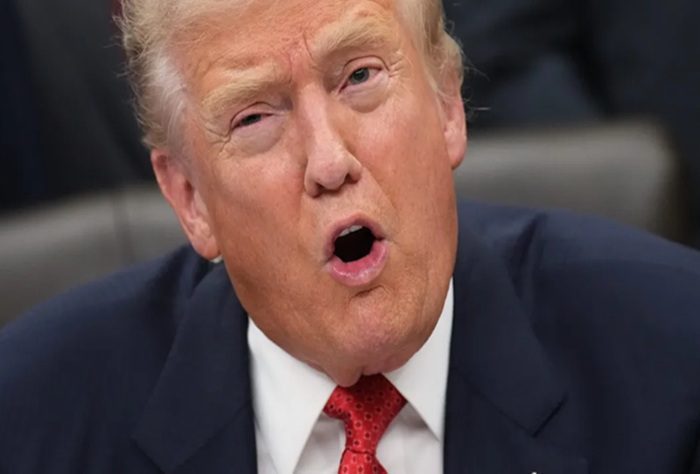
U.S. President Donald Trump has warned that Iran will “pay the price” for delays in reaching a negotiated agreement with Washington, signaling growing frustration amid stalled diplomatic efforts. The remarks come as tensions between the two countries rise following recent military exchanges and uncertainty over the future of negotiations.
U.S. President signals tougher stance as diplomatic efforts face growing uncertainty
WASHINGTON — President Donald Trump has sharply escalated pressure on Iran, warning that Tehran will “have to pay the price” for what he described as prolonged delays in negotiations with the United States.
The comments, made Wednesday, reflect increasing frustration within the Trump administration as efforts to secure an agreement with Iran remain deadlocked despite months of diplomatic engagement and intermittent back-channel talks.
Trump accused Iranian leaders of dragging out negotiations and failing to take meaningful action toward a deal.
“Iran has taken too long to negotiate,” Trump said, adding that the country would now “have to pay the price."
Trump’s remarks come against the backdrop of a sharp deterioration in U.S.-Iran relations.
Recent weeks have seen military confrontations between the two countries, including U.S. strikes against Iranian military assets and retaliatory Iranian attacks targeting American facilities in the region. These exchanges have raised fears that diplomatic efforts could collapse entirely, opening the door to a broader regional conflict.
According to reports, Iran launched missile and drone strikes against U.S. military positions in Jordan, Kuwait, and Bahrain after American forces carried out attacks on Iranian positions near the Strait of Hormuz.
The latest developments represent one of the most serious confrontations between Washington and Tehran since hostilities intensified earlier this year.
While Trump did not provide specific details regarding potential measures against Iran, reports indicate he suggested additional military action could remain an option if negotiations continue to stall.
The president has repeatedly argued that Tehran has failed to demonstrate urgency in reaching an agreement and accused Iranian officials of relying on rhetoric rather than substantive negotiations.
His latest warning marks a notable shift from earlier statements in which he expressed confidence that Iran would eventually return to the negotiating table. Earlier this month, Trump suggested Iran had “no choice” but to reach an agreement, while also indicating that Washington could consider sanctions relief if a deal were achieved.
Global markets react: The escalating rhetoric has also reverberated through global energy markets.
Oil prices rose significantly after Trump’s latest comments, with traders reacting to concerns that further instability in the Gulf region could disrupt energy supplies. Brent crude and West Texas Intermediate both posted gains as investors priced in additional geopolitical risk.
Particular attention remains focused on the Strait of Hormuz, one of the world’s most critical maritime chokepoints for oil and natural gas shipments. Any prolonged disruption in the area could have significant consequences for global energy markets and inflation.
What happens next?: For now, the future of the negotiations remains uncertain.
Trump’s warning suggests Washington is becoming increasingly impatient with the pace of talks, while Iran appears unwilling to make rapid concessions under pressure. Whether the latest rhetoric is intended to force progress at the negotiating table or signals preparation for stronger measures remains unclear.
As diplomatic efforts continue behind the scenes, international observers will be closely watching whether the two sides can return to meaningful negotiations—or whether tensions move toward a more dangerous phase.
Trump’s latest warning illustrates a familiar pattern in high-stakes international negotiations: the use of escalating public rhetoric to increase leverage before a potential breakthrough—or confrontation. The challenge for both Washington and Tehran is that repeated cycles of threats, military signaling, and stalled diplomacy can create a situation where political leaders become constrained by their own public positions. As a result, even if both sides prefer negotiation, the path back to compromise becomes increasingly narrow. The coming weeks may determine whether this pressure campaign produces renewed talks or pushes the region into another period of heightened instability.
This is a developing story. More updates will follow as new information becomes available.
This is a developing story. More updates will follow as new information becomes available.