Europe warns of Russia’s hybrid attacks but struggles to counter them
  Former chief election commissioner calls SIR scheme illegal.
  A Corruption Scandal Is Reshaping Brazil’s Presidential Election
  US citizen injured in Illinois after ICE agents mistook him for fugitive, tried to arrest him
  At 10 years old, Smithsonian’s Black museum is undaunted amid pressure from Trump administration
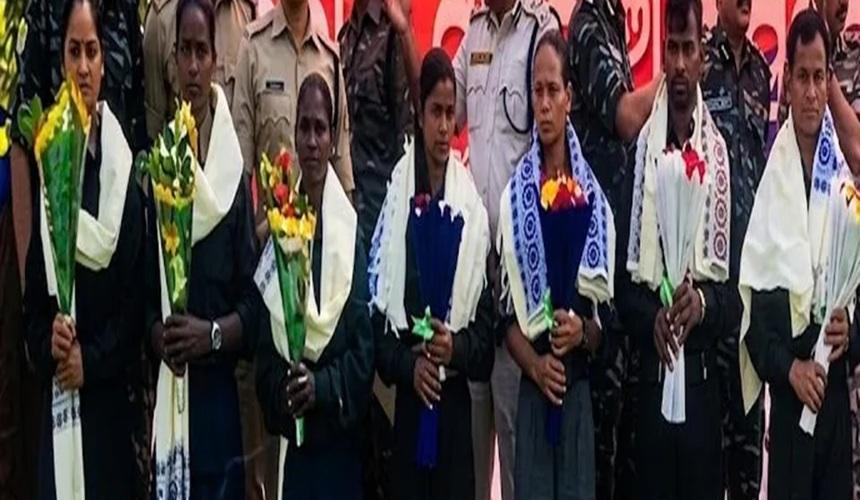
 Major Breakthrough in Anti-Maoist Operations: High-Value Rebel Leader, 9 Others Surrender in Odisha
major breakthrough antimaoist operations:
In a significant development that underscores the relentless efforts of law enforcement agencies to combat left-wing extremism, a total of 10 Maoist cadres, including a high-ranking leader with a substantial bounty on his head, have surrendered before the Kandhamal Police in the eastern Indian state of Odisha. The surrender, which includes the handing over of firearms and ammunition, marks a considerable breakthrough in the ongoing anti-Maoist operations in the region.
The leader, who hails from the neighboring state of Chhattisgarh, carried a bounty of ₹55 lakh, indicative of his significant role and influence within the Maoist ranks. His decision to surrender, along with nine other cadres, reflects the growing disillusionment among Maoist ranks with the ideology and the increasing pressure from security forces that have made it difficult for them to operate effectively.
The surrender of these cadres, including the high-value target, is the result of sustained efforts by the Odisha Police, in collaboration with central security agencies, to persuade Maoist operatives to lay down their arms and reintegrate into mainstream society. This approach, which combines enforcement with rehabilitation, aims to address the socio-economic grievances that often drive individuals to join extremist movements, by offering them a pathway back to normal life.
The operation is seen as a testament to the improving coordination and intelligence gathering between state and central agencies, which have been working tirelessly to dismantle the Maoist network in the region. Odisha, along with neighboring states like Chhattisgarh and Jharkhand, has been at the forefront of the battle against left-wing extremism, with security forces employing a mix of military tactics and developmental initiatives to counter the Maoist insurgency.
The surrender of these cadres also highlights the success of the government’s surrender and rehabilitation policies, designed to wean away Maoist sympathizers and operatives from the path of violence. These policies offer a comprehensive package of incentives and support, including financial assistance, education, and job training, to help former Maoists rebuild their lives and contribute positively to society.
As the security situation in the region continues to evolve, the surrender of the Maoist leader and his comrades is expected to dealt a significant blow to the morale of the extremist groups operating in the area. It also sends a strong message to other Maoist cadres who may be considering surrender, emphasizing the commitment of the government and security agencies to facilitate their reintegration into society.
The Kandhamal Police, in particular, have been praised for their proactive approach in engaging with local communities and building trust, which has been instrumental in encouraging Maoist cadres to surrender. This community-centric policing strategy, coupled with targeted operations against Maoist strongholds, has yielded positive results, contributing to a decline in Maoist-related violence in the state.
In conclusion, the surrender of the high-value Maoist leader and nine other cadres in Odisha is a major achievement for law enforcement agencies, underscoring their resolve to combat terrorism and extremism in all its forms. As the region moves forward, it is expected that this development will pave the way for further surrenders and a reduction in Maoist activities, ultimately contributing to a more peaceful and stable environment for the local populace.