Europe warns of Russia’s hybrid attacks but struggles to counter them
  Former chief election commissioner calls SIR scheme illegal.
  A Corruption Scandal Is Reshaping Brazil’s Presidential Election
  US citizen injured in Illinois after ICE agents mistook him for fugitive, tried to arrest him
  At 10 years old, Smithsonian’s Black museum is undaunted amid pressure from Trump administration
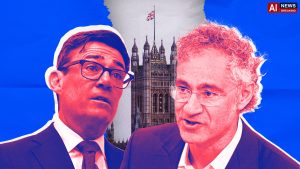
 Andy Burnham Becomes UK Prime Minister, Britain’s Seventh Leader in 10 Years, Promises ‘A New Path for Britain’
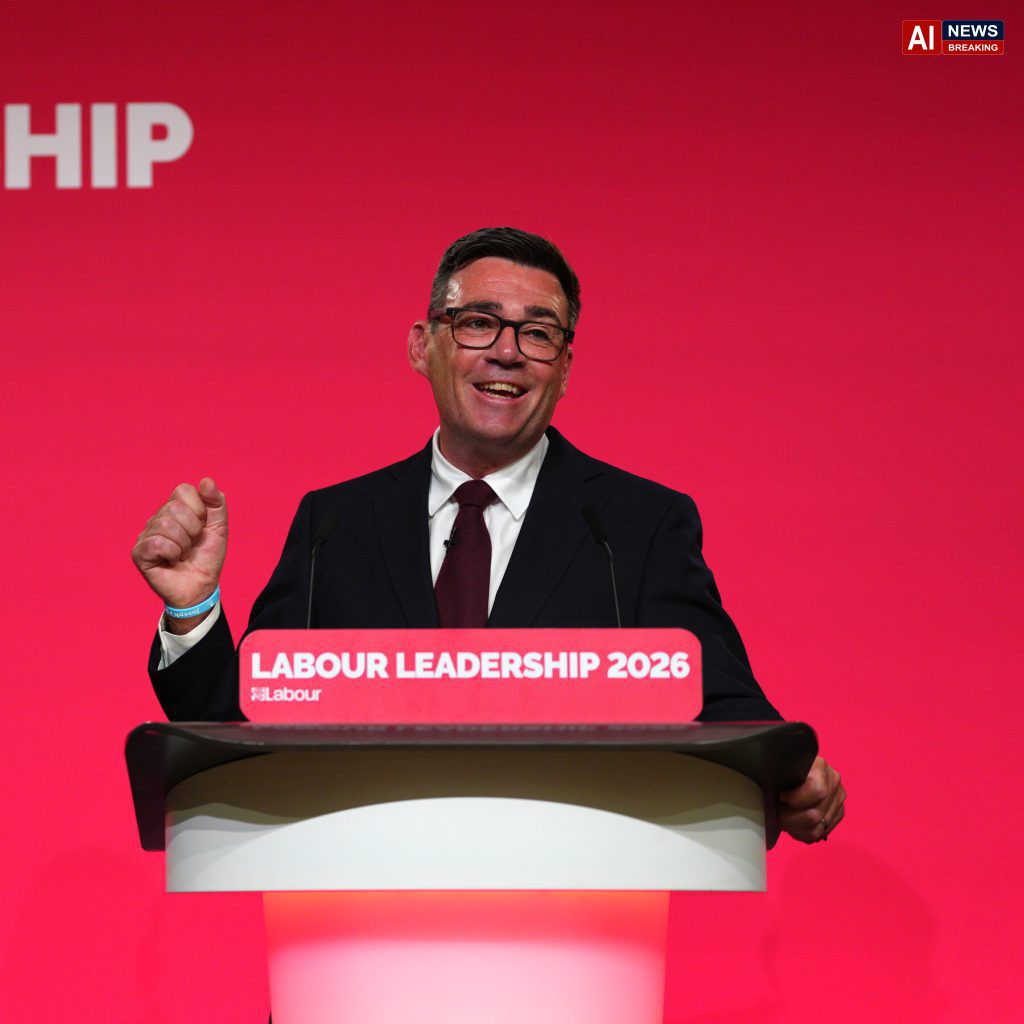
Andy Burnham Becomes UK Prime Minister, Britain's Seventh Leader in 10 Years, Promises 'A New Path for Britain' - AI News Breaking
andy burnham becomes prime:
Andy Burnham has officially become the United Kingdom’s 59th Prime Minister after succeeding Keir Starmer as Labour Party leader. Promising “a new path for Britain,” Burnham has pledged economic renewal, political stability and a new model of governance as the UK welcomes its seventh prime minister in just ten years.
Key Highlights
- Andy Burnham has become the United Kingdom’s 59th Prime Minister.
- He is Britain’s seventh prime minister in just ten years.
- Burnham succeeded Keir Starmer following his resignation.
- He has promised “a new path for Britain” focused on stability and economic renewal.
- A nationwide listening tour is planned during Parliament’s summer recess.
- His government will prioritize cost-of-living measures, housing and regional empowerment.
Andy Burnham Takes Charge of Britain Amid Political Turbulence
The United Kingdom has ushered in another political transition with Andy Burnham formally becoming Prime Minister on July 20, 2026. His appointment marks a remarkable milestone in British politics—not only because he is Britain’s 59th Prime Minister, but because he is the country’s seventh leader in just a decade, highlighting an extraordinary period of political instability.
Burnham officially assumed office after meeting King Charles III at Buckingham Palace, following the resignation of Keir Starmer. Under the UK’s constitutional system, the monarch formally invites the individual capable of commanding a parliamentary majority to form a government. Burnham accepted the King’s invitation and immediately became Prime Minister.
The leadership transition comes at a critical moment for Britain as the country grapples with economic pressures, cost-of-living challenges, public sector concerns and growing political fragmentation. Burnham has pledged to restore public trust in politics and deliver what he calls “a new path for Britain.”
Who Is Andy Burnham?
Andy Burnham, 56, is one of Labour’s most recognizable political figures. Before becoming Prime Minister, he served as Mayor of Greater Manchester for nearly a decade and earned the nickname “King of the North” for his outspoken advocacy on behalf of northern England.
His political career spans more than two decades and includes serving in several Cabinet positions under former Prime Minister Gordon Brown, including Health Secretary and Culture Secretary. He has also been a prominent campaigner for the Hillsborough disaster victims and has long advocated for greater regional empowerment across the UK.
After leaving Parliament in 2017 to focus on local governance in Greater Manchester, Burnham returned to Westminster politics earlier this year by winning the Makerfield parliamentary by-election, paving the way for his rise to the country’s highest political office.
Keir Starmer’s Exit and Labour’s Leadership Change
Burnham’s appointment follows the resignation of Keir Starmer after just two years as Prime Minister. Starmer’s leadership came under increasing pressure following disappointing political performances, internal party dissatisfaction and concerns over Labour’s declining popularity in opinion polls.
Remarkably, Burnham secured overwhelming support from Labour MPs and became party leader unopposed, allowing for one of the swiftest leadership transitions in recent British political history.
Political analysts believe Labour viewed Burnham as the strongest candidate capable of reconnecting the party with traditional working-class voters while appealing to younger and moderate constituencies.
‘A New Path for Britain’
In his first speech as Prime Minister, Burnham outlined an ambitious vision for the country, promising a new political and economic model aimed at restoring stability and public confidence in government.
His agenda reportedly includes:
- Tackling the cost-of-living crisis.
- Strengthening public services.
- Reforming social care.
- Building more council housing.
- Expanding mental health services.
- Increasing regional devolution and local decision-making.
- Delivering long-term economic stability.
- Reducing political divisions across the country.
Burnham has repeatedly emphasized that economic growth must benefit all parts of the United Kingdom rather than remain concentrated in London and the South East. His philosophy of regional empowerment has become one of the defining themes of his political career.
Summer Listening Tour Planned
One of Burnham’s first initiatives as Prime Minister will be a nationwide “listening tour” during Parliament’s summer recess.
The tour is expected to take him to communities across England, Scotland, Wales and Northern Ireland to engage directly with citizens and gather feedback on the priorities of his government. Areas affected by industrial decline, economic restructuring and regional inequalities are expected to feature prominently on the itinerary.
Political observers view the initiative as an effort to distinguish Burnham’s leadership style from previous administrations by emphasizing grassroots engagement and local perspectives.
Economic Challenges Await the New Prime Minister
Despite the optimism surrounding his appointment, Burnham inherits significant economic challenges.
Among the key issues facing his government are:
- High public debt levels.
- Cost-of-living pressures.
- Slow economic growth.
- Public sector funding demands.
- Housing shortages.
- Fiscal constraints.
- Regional economic disparities.
Financial markets are closely monitoring Burnham’s early cabinet appointments and economic policy announcements. Investors have expressed particular interest in the selection of his Chancellor and the government’s approach to fiscal discipline.
Burnham has indicated that his government will remain committed to fiscal responsibility while pursuing social and economic reforms.
Political Stability in Question
Burnham’s appointment also underscores Britain’s extraordinary political volatility over the past decade.
The United Kingdom has witnessed seven prime ministers in just ten years:
- David Cameron
- Theresa May
- Boris Johnson
- Liz Truss
- Rishi Sunak
- Keir Starmer
- Andy Burnham
Frequent leadership changes have contributed to public concerns regarding political stability and long-term policy planning. Burnham has acknowledged these concerns and pledged to provide stable leadership during a challenging period for the country.
His government now faces the difficult task of rebuilding public confidence in Westminster institutions and demonstrating policy continuity.
Foreign Policy and Global Expectations
While Burnham enjoys considerable domestic political experience, some analysts have questioned his relatively limited exposure to international affairs compared with previous prime ministers.
Global leaders are expected to closely observe:
- Britain’s relationship with the European Union.
- Its role within NATO.
- Trade negotiations.
- Defence spending commitments.
- Climate and energy policies.
- Relations with the United States and Commonwealth nations.
Burnham has already indicated that his government will honour existing defence commitments while developing a comprehensive ten-year national strategy later this year.
What Happens Next?
Andy Burnham is expected to announce key cabinet appointments in the coming days and begin implementing early cost-of-living measures before Parliament reconvenes.
Political analysts believe the first 100 days of his premiership will prove crucial in determining whether he can deliver the political renewal he has promised.
With Britain facing economic uncertainty and growing demands for governmental reform, Burnham’s leadership will be closely scrutinized both domestically and internationally.
AI Insight: Andy Burnham’s rise to the premiership represents more than another leadership change—it reflects Britain’s search for political stability after a decade of unprecedented turnover at the top. His emphasis on regional empowerment, economic fairness and long-term planning suggests an attempt to redefine Labour’s governing philosophy. Whether Burnham can deliver meaningful reforms while maintaining fiscal discipline may ultimately determine whether his promise of “a new path for Britain” becomes a lasting political legacy or another chapter in the UK’s recent cycle of rapid leadership transitions.