 Australia probes AI‑driven breach of My Health Record portal
  Engineering student’s ‘suicide’ turns out to be murder; two arrested
  Canada’s Capital Bids Good Riddance to Trump Avenue as Tensions With U.S. Rise
  Pentagon investigates after China obtains parts from F-35 stealth fighter jet
 Sikkim Tunnel Disaster: Seven Dead, Several Workers Feared Trapped as Massive Rescue Operation Continues
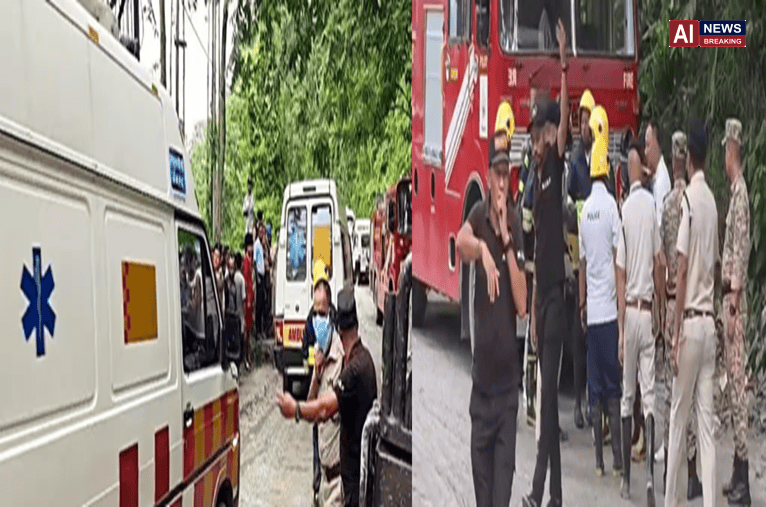
Sikkim Tunnel Disaster: Seven Dead, Several Workers Feared Trapped as Massive Rescue Operation Continues - AI News Breaking
sikkim tunnel disaster seven:
At least seven workers have died and several others remain trapped after a landslide blocked the entrance of an under-construction tunnel at the NHPC Teesta Stage VI Hydroelectric Project in Sikkim’s Namchi district. Rescue teams from multiple agencies are racing against time amid fears of a gas leak inside the tunnel, making the operation extremely challenging.
A major industrial disaster has unfolded in Sikkim’s Namchi district after a landslide blocked the entrance of an under-construction tunnel at the National Hydroelectric Power Corporation’s (NHPC) Teesta Stage VI Hydroelectric Project. The tragedy has claimed at least seven lives, while several workers remain trapped inside the tunnel as rescue teams battle hazardous conditions to reach them.
The incident, which occurred at Samardung in Namchi district on Monday afternoon, has triggered one of the largest rescue operations in the northeastern state this year. Authorities fear that methane or other toxic gases may have accumulated inside the tunnel, significantly complicating efforts to locate and evacuate trapped workers.
What Happened? : According to officials, the landslide struck near the entrance of the under-construction tunnel at approximately 3:40 PM on July 20, blocking the access point and trapping workers inside.
Initial reports indicate that 43 workers were present inside the tunnel when the landslide occurred. While 16 workers managed to escape safely, authorities believe that around 27 workers may still be trapped inside, although the exact number is being verified.
The collapse also triggered fears of a possible gas leak within the tunnel, further increasing the risk for both trapped workers and rescue personnel.
Seven Workers Confirmed Dead
Officials have confirmed that seven workers lost their lives in the incident. The bodies of the deceased have been shifted to various hospitals, including:
- Singtam District Hospital.
- STNM Hospital, Gangtok.
- Namchi District Hospital.
The identities of all victims have not yet been officially released pending notification of their families.
The death toll could rise as rescue teams continue their search operations.
Rescue Operation Underway
Multiple government agencies have been deployed at the disaster site, including:
- National Disaster Response Force (NDRF).
- State Disaster Response Force (SDRF).
- Sikkim Police.
- Fire and Emergency Services.
- Health Department officials.
- NHPC emergency response teams.
- Namchi District Administration.
- Sikkim State Disaster Management Authority (SSDMA).
Heavy rescue equipment has been mobilized to clear debris and restore access to the tunnel entrance. However, operations have been slowed considerably due to the possibility of toxic gases accumulating inside the underground structure.
Authorities are continuously monitoring air quality levels before allowing rescue teams to proceed deeper into the tunnel.
Gas Leak Concerns Add to Rescue Challenges
One of the biggest challenges facing rescue workers is the suspected gas leak reported inside the tunnel.
Officials have indicated that methane gas or other hazardous gases may be present due to underground excavation activities. Exposure to such gases can lead to:
- Suffocation.
- Loss of consciousness.
- Respiratory complications.
- Reduced visibility.
- Increased risks for rescue personnel.
Several rescue workers reportedly experienced health complications while attempting initial rescue efforts, forcing authorities to adopt a more cautious approach.
Specialized safety protocols are now being followed to prevent additional casualties during the rescue mission.
Part of Strategic Hydropower Project
The tunnel forms part of the NHPC’s Teesta Stage VI Hydroelectric Project, one of the major infrastructure projects aimed at enhancing power generation capacity in the region.
Hydroelectric projects in mountainous states like Sikkim often involve extensive underground tunneling operations that are vulnerable to:
- Landslides.
- Water seepage.
- Gas accumulation.
- Geological instability.
- Heavy rainfall-induced disasters.
The northeastern Himalayan region is considered geologically sensitive and frequently experiences landslides during periods of heavy rainfall.
Experts have repeatedly warned that underground construction projects in such terrain require rigorous safety assessments and continuous geological monitoring.
Sikkim’s Growing Infrastructure Challenges
Sikkim has witnessed multiple natural disasters over the past few years, including:
- Flash floods.
- Landslides.
- Road collapses.
- Infrastructure damage caused by extreme weather events.
The state’s mountainous geography makes infrastructure development particularly challenging.
Climate variability and increasingly unpredictable weather patterns have further complicated large-scale construction activities across the Himalayan belt.
The latest tunnel tragedy has once again highlighted the need for:
- Improved geological risk assessments.
- Enhanced worker safety mechanisms.
- Advanced tunnel monitoring technologies.
- Comprehensive disaster preparedness plans.
Families Await News of Trapped Workers
The rescue operation has left families of workers anxiously waiting for updates from authorities.
Emergency response teams are working around the clock to determine:
- The exact number of workers trapped.
- Their possible locations inside the tunnel.
- Whether communication can be established.
- The safest evacuation routes.
Medical teams remain on standby to provide immediate treatment to survivors once they are rescued.
The coming hours are expected to be critical in determining the final casualty figures and the success of the rescue mission.
Government Monitoring Situation Closely
Senior officials from the Namchi district administration and the Sikkim government are closely monitoring developments at the site.
The Sikkim State Disaster Management Authority has activated emergency response protocols and is coordinating with multiple agencies involved in rescue efforts.
Authorities have assured that all available resources are being deployed to save the trapped workers and support affected families.
What Next?: Rescue operations are expected to continue until every trapped worker has been accounted for.
Investigations are likely to focus on:
- The cause of the landslide.
- Safety protocols followed at the construction site.
- Geological conditions preceding the incident.
- Possible gas leak mechanisms.
- Emergency preparedness measures implemented by contractors and project authorities.
The findings could influence future tunnel construction and worker safety regulations for infrastructure projects in geologically sensitive regions across India.
The Sikkim tunnel disaster has turned into a heartbreaking tragedy for dozens of families as rescue teams continue their race against time. With seven workers confirmed dead and several others feared trapped, the incident underscores the immense risks associated with large-scale infrastructure development in mountainous terrain. As authorities battle hazardous underground conditions to save lives, the nation watches closely, hoping for successful rescues and answers regarding how such a devastating accident occurred.
AI Insight: The Sikkim tunnel tragedy highlights the growing challenge of balancing rapid infrastructure development with worker safety in environmentally fragile regions. Large-scale hydropower and tunnel projects are essential for India’s energy and connectivity ambitions, but they also demand world-class geological monitoring and emergency preparedness systems. This incident serves as a stark reminder that infrastructure progress must always be accompanied by uncompromising safety standards, particularly in disaster-prone Himalayan states where natural and human-made risks frequently intersect.