Spotify Tightens Family Plan Controls with QR Code Verification
 Use of Chief Minister C. Joseph Vijay’s deep fake videos to collect money: Rajasthan youth moves Madras High Court seeking bail
 Florida officer took possession of man’s home after finding him dead 4 years ago, police say
 Jury weighs fate of US woman who says father forced her into Syria’s war zone when she was a teen
Strait of Hormuz Attack: 11 Indian Seafarers Injured as India Condemns Strike on Commercial Vessel
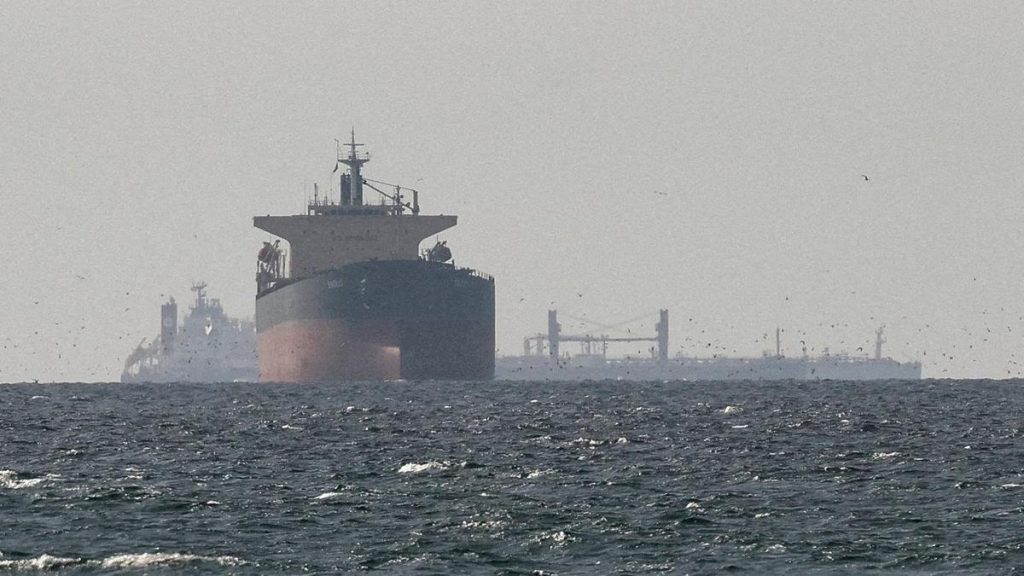
strait hormuz attack indian:
India has strongly condemned an attack on a commercial vessel transiting the strategically important Strait of Hormuz, after a projectile struck the Panama-flagged MT On Peace, injuring 12 members of its crew, including 11 Indian nationals.
The incident, reported on October 6, 2026, has renewed concerns over the safety of civilian shipping through one of the world’s most important maritime chokepoints. According to information released by India’s Ministry of External Affairs, the vessel was struck while sailing off the coast of Oman. Of the vessel’s 19 crew members, 17 were Indian nationals, and 11 of those Indian crew members were among the injured.
India has called for an immediate cessation of attacks against civilian infrastructure and seafarers, while expressing concern over the continuing risks facing commercial shipping in the region.
The incident is particularly significant for India because thousands of Indian seafarers work aboard commercial vessels operating across the Gulf, Arabian Sea and wider Middle Eastern shipping network. Any sustained disruption to maritime traffic in the Strait of Hormuz therefore carries consequences not only for international energy markets but also for Indian workers, shipping companies, exporters, importers and consumers.
What Happened to the Commercial Vessel MT On Peace?
The vessel involved in the latest incident is MT On Peace, a commercial ship flying the flag of Panama. It was transiting the Strait of Hormuz when it was hit by a projectile off the coast of Oman.
India’s Ministry of External Affairs said it condemned the attack and highlighted the danger posed to civilian vessels and seafarers navigating the region.
The vessel had 19 crew members on board, of whom 17 were Indian nationals. Twelve crew members were injured in the incident, including 11 Indians.
The injured crew members were subsequently evacuated with assistance from Omani authorities. They were taken to Khasab, Oman, where they were receiving medical treatment.
The immediate priority for Indian authorities is the safety and medical care of the affected seafarers. The incident also places renewed attention on the security arrangements for commercial vessels using the Strait of Hormuz during an increasingly dangerous period for maritime traffic.
India Condemns the Attack
The Indian government has taken a firm position against attacks on commercial vessels and civilian seafarers.
The Ministry of External Affairs said India condemned the attack on MT On Peace and called for an immediate end to attacks against civilian infrastructure and seafarers.
New Delhi’s response reflects a broader Indian concern: maritime security cannot be separated from the safety of Indian citizens working aboard international commercial vessels.
For India, the issue has both a humanitarian and strategic dimension. Indian seafarers constitute a significant part of the global maritime workforce, and incidents involving Indian crew members can quickly become matters of national concern.
The government’s emphasis on the protection of civilian shipping also fits India’s broader diplomatic position that commercial maritime routes should remain open and secure, particularly during periods of armed conflict or regional confrontation.
Why the Strait of Hormuz Matters
The Strait of Hormuz is one of the world’s most strategically important maritime chokepoints.
Located between Iran and Oman, the narrow waterway connects the Persian Gulf with the Gulf of Oman and the Arabian Sea. A substantial portion of the world’s oil and LNG trade passes through the waterway.
That makes any attack on commercial shipping in the area potentially significant for global energy markets.
Recent shipping data indicate that Middle Eastern crude and condensate exports through the Strait of Hormuz remained substantial in September, even as security risks increased. Reuters reported that Middle Eastern exports through the strait averaged about 18.3 million barrels per day during September, while LNG shipments also remained elevated.
This combination creates a difficult strategic situation.
On one side, energy producers and consumers depend on the continued movement of tankers through the waterway. On the other, repeated attacks can force ship operators to reassess routes, increase insurance costs and delay voyages.
Even when a shipping lane is technically open, rising security risks can make it considerably more expensive and complicated to use.
The Human Cost Behind the Maritime Crisis
The latest incident illustrates an important point that is sometimes lost in discussions about oil prices, naval deployments and geopolitics: commercial vessels carry people.
The crew of MT On Peace was made up predominantly of Indian nationals. Eleven Indian seafarers were injured when the projectile struck the vessel.
For their families, the incident is not an abstract geopolitical development. It is a direct threat to the lives and livelihoods of people working at sea.
Indian seafarers routinely operate in some of the world’s busiest maritime corridors. Their work supports international trade but can expose them to risks when commercial shipping routes become entangled in military conflict.
The evacuation of the injured crew members with assistance from Omani authorities is therefore an important humanitarian aspect of the incident.
It also demonstrates why coordination among governments, maritime authorities, shipping companies and international organizations becomes increasingly important during regional crises.
A Growing Pattern of Attacks on Commercial Shipping
The attack on MT On Peace comes amid growing concern over attacks on commercial vessels in and around the Middle East.
Reuters reported that at least seven tanker attacks had been reported during the first week of October, although not all incidents resulted in crew casualties.
The increasing frequency of incidents raises questions about whether commercial shipping can continue operating normally through the region.
Shipping companies must consider multiple factors before sending vessels through a high-risk maritime corridor. These include:
- The probability of further attacks
- The availability of alternative routes
- Insurance premiums
- Crew safety
- Fuel costs
- Delays caused by security restrictions
- Naval escort arrangements
- The potential impact on cargo delivery schedules
For energy tankers, the stakes are even higher because a decision to avoid Hormuz can add substantial time and cost to a voyage.
Why Indian Seafarers Are Particularly Exposed
India has a large maritime workforce, with Indian nationals serving aboard merchant ships operating around the world.
The Gulf region is particularly important because of the enormous volume of energy and commercial trade passing through the area.
Consequently, an escalation affecting commercial shipping in the Strait of Hormuz can directly affect Indian citizens even when India itself is not a party to the conflict.
The MT On Peace incident demonstrates this vulnerability.
The vessel was Panama-flagged, but the majority of its crew were Indian. This means that the nationality of a ship and the nationality of its crew can be very different.
For governments, this complicates diplomatic responses to maritime incidents.
A ship may be registered in one country, owned or operated by companies based in another, carry cargo belonging to multiple countries and employ crew members from several nationalities.
A single attack can therefore create diplomatic and humanitarian consequences across several countries simultaneously.
Oman’s Role in the Emergency Response
Omani authorities played an important role in the evacuation of the injured crew.
According to reports, the injured seafarers were evacuated and taken to Khasab for medical treatment.
Oman’s geographical position makes it particularly important to maritime security around the Strait of Hormuz.
The country’s coastline extends along the Gulf of Oman and includes the Musandam Governorate, which sits close to the strategic waterway.
Its authorities can therefore become directly involved in search-and-rescue operations, emergency medical assistance and maritime security incidents involving vessels passing through the region.
The assistance provided to the MT On Peace crew highlights the importance of regional coordination when civilian vessels come under attack.
The Larger Security Challenge
The Strait of Hormuz has always been strategically sensitive.
But when commercial vessels begin to face repeated attacks, the consequences extend beyond individual ships.
The first concern is crew safety.
The second is freedom of navigation.
The third is energy security.
The fourth is global trade.
And the fifth is market stability.
These issues are interconnected.
If shipping companies determine that a route has become too dangerous, they may reduce traffic or seek alternative routes. This can increase voyage times and transportation costs.
Higher shipping costs can eventually affect commodity prices.
For oil and gas markets, the consequences can be particularly immediate because expectations about potential supply disruptions can influence prices even before physical shortages occur.
Potential Impact on Oil Markets
The Strait of Hormuz is particularly important to global energy markets because large quantities of crude oil, petroleum products and LNG pass through it.
A serious disruption could therefore place upward pressure on global energy prices.
The October attacks come at a time when energy markets are already closely watching geopolitical developments in the Middle East.
Reuters reported that Middle Eastern oil exports had remained strong in September despite growing maritime risks.
That suggests that shipping has not yet stopped at scale.
However, markets often react not only to actual supply losses but also to the possibility of future disruption.
If attacks become more frequent, traders may begin pricing in a higher geopolitical risk premium.
That could affect crude oil prices, freight rates, insurance costs and eventually transportation and consumer prices.
For countries such as India, which depend heavily on imported crude oil, prolonged disruption around Hormuz could become a major economic concern.
India Faces a Difficult Diplomatic Balance
India’s response to the attack also highlights the delicate diplomatic balancing act facing New Delhi.
India maintains important relationships with countries across the Gulf and the wider Middle East. At the same time, it has significant energy, trade and diaspora interests in the region.
India therefore has strong reasons to support freedom of navigation and the safety of civilian shipping without unnecessarily becoming directly involved in regional military confrontation.
The MEA’s call for attacks on civilian infrastructure and seafarers to stop represents a diplomatic approach focused on protecting human life and commercial navigation.
The objective is clear: shipping lanes that support global trade must remain safe for civilian vessels.
What the Incident Means for Indian Shipping
For Indian shipping companies, the incident could encourage greater scrutiny of routes through high-risk areas.
Operators may have to consider additional precautions, including:
- More detailed voyage-risk assessments
- Coordination with maritime security authorities
- Enhanced communication with crew
- Changes in sailing schedules
- Additional insurance coverage
- Possible rerouting
- Greater reliance on maritime security advisories
The economic consequences can be significant.
A vessel taking a longer route may consume more fuel and require more time. A high-risk route may require higher insurance premiums. Delays can affect cargo contracts and delivery schedules.
These additional costs can ultimately be reflected throughout global supply chains.
The Safety of Civilian Shipping Must Remain Central
One of the most important messages emerging from the incident is that civilian commercial vessels should not become collateral targets in regional conflicts.
Merchant ships are fundamentally different from military vessels.
Their crews include sailors whose primary responsibility is to transport cargo safely between ports. They are not combatants.
When commercial shipping comes under attack, the consequences can include deaths, injuries, environmental damage, cargo losses and major disruptions to global trade.
The injury of 11 Indian seafarers aboard MT On Peace provides a human face to that broader problem.
What Happens Next?
The immediate focus will be on the condition of the injured crew members and ensuring that they receive appropriate medical treatment.
Indian diplomatic officials are expected to continue coordinating with Omani authorities and relevant maritime agencies regarding the affected seafarers.
The broader questions, however, will take longer to answer.
Authorities will need to assess the circumstances surrounding the projectile strike, the security environment around the vessel and the wider pattern of attacks affecting commercial shipping.
For shipping operators, the key question will be whether the latest incident represents an isolated event or part of a continuing escalation.
If attacks continue, more vessels could face increased security restrictions, higher insurance premiums and potential route changes.
Strait of Hormuz Becomes a Global Security Test
The latest attack is another reminder that the security of the Strait of Hormuz is not merely a regional issue.
The waterway links Middle Eastern energy producers with global consumers.
India, China, Japan, South Korea, European economies and many other countries depend directly or indirectly on energy and goods moving through maritime routes connected to the Gulf.
A prolonged crisis could therefore have consequences far beyond the shores of Oman and Iran.
It could affect global inflation, energy prices, freight markets, manufacturing costs and economic growth.
For India, the stakes are particularly high because the country combines significant energy-import requirements with a large community of seafarers working aboard international merchant vessels.
AI News Breaking Insights
The attack on MT On Peace should be viewed as more than another isolated maritime security incident. The injury of 11 Indian seafarers demonstrates how quickly geopolitical conflicts can move from military and diplomatic arenas into the lives of ordinary workers. The Strait of Hormuz remains indispensable to global energy trade, and repeated attacks on commercial vessels could eventually produce consequences far beyond the immediate danger faced by individual crews. India’s strongest interest is therefore not simply protecting its citizens but preserving the principle of safe civilian navigation. New Delhi’s call for an immediate cessation of attacks is significant because the continued targeting or endangerment of merchant shipping could create a dangerous feedback loop: higher security risks could lead to fewer ships using the route, higher insurance and freight costs, energy-price volatility and further pressure on already fragile global supply chains. The MT On Peace incident should consequently be treated as both a humanitarian emergency and a warning about the growing strategic vulnerability of one of the world’s most important trade corridors.