Trump administration offers mixed messages on limits to Ukraine’s Starshield access
 US Treasury proposes a rule to crack down on high-tech investments in China, other adversaries
 Calley Means, a key MAHA advocate, resigns as a top RFK Jr. adviser
 Spotify Tightens Family Plan Controls with QR Code Verification
 Use of Chief Minister C. Joseph Vijay’s deep fake videos to collect money: Rajasthan youth moves Madras High Court seeking bail
The Hidden Policies That Power China’s Export Boom
**
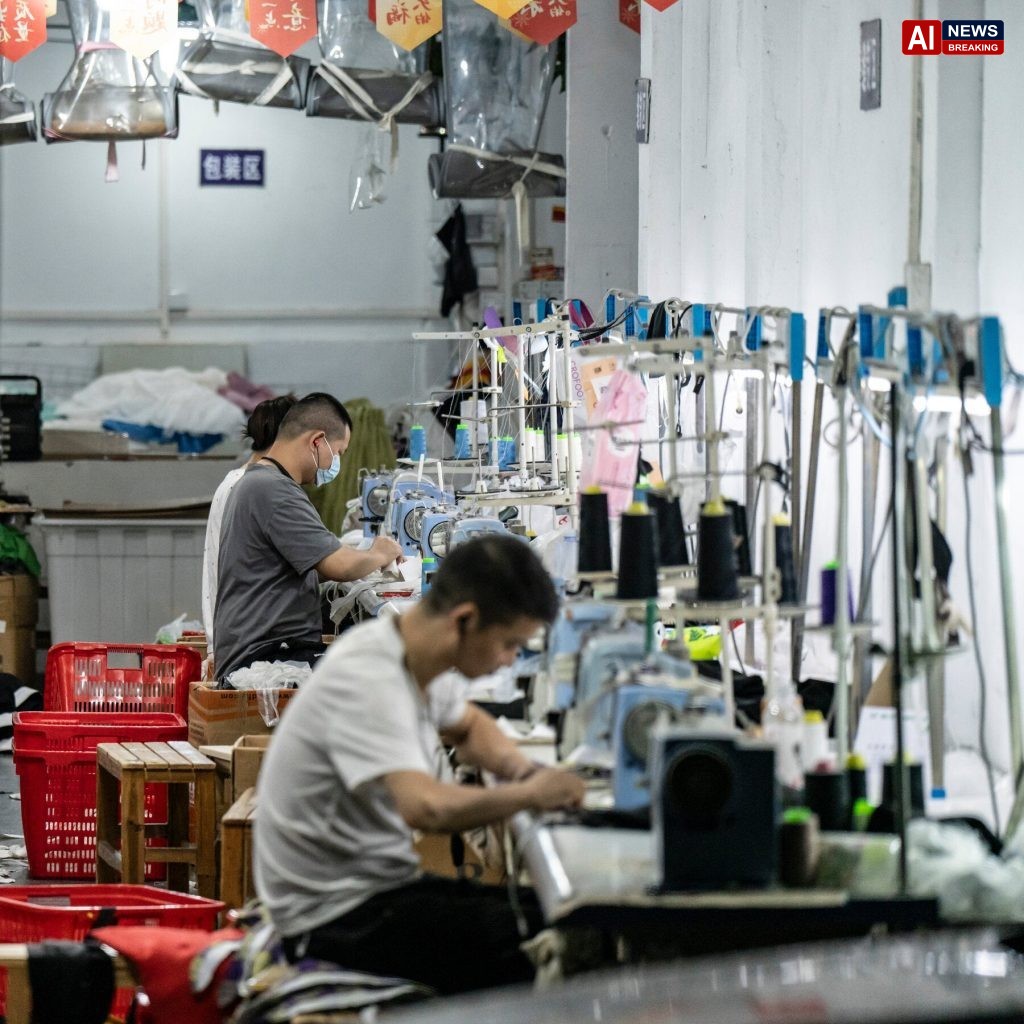
The Hidden Policies That Power China’s Export Boom - AI News Breaking
The Hidden Policies That Power China’s Export Boom China’s export sector has surged to record levels over the past decade, a phenomenon that many observers attribute to market forces and global supply chain dynamics. However, a closer examination reveals that state‑driven policies play an outsized role in sustaining this growth. By providing targeted tax incentives and maintaining a deliberately undervalued currency, the government has effectively lowered the cost of Chinese goods abroad, giving domestic manufacturers a competitive edge in international markets..
These measures, while boosting short‑term trade figures, have far‑reaching implications for the country’s fiscal health and long‑term economic strategy. One of the most significant levers in China’s export machinery is the tax framework. The government offers a range of preferential treatments for export‑oriented firms, including reduced value‑added tax rates, duty‑free access to foreign markets, and accelerated depreciation schedules for capital investments..
These incentives reduce operating costs, allowing companies to price their products more aggressively. The cumulative effect is an export price advantage that is difficult for competitors in other countries to match without similar fiscal support. In addition to tax breaks, China’s monetary policy deliberately keeps the renminbi (RMB) at a level below its perceived intrinsic value..
The People’s Bank of China intervenes in foreign exchange markets, purchasing foreign currency reserves and selling RMB to dampen appreciation. A weaker currency lowers the price of Chinese goods in foreign markets, enhancing their attractiveness to buyers worldwide. While the policy is framed as a stabilising tool, its impact on export competitiveness is undeniable, as it effectively subsidises foreign buyers through lower costs..
These policy choices have helped China achieve a trade surplus that eclipses the combined exports of the United States and the European Union. The surplus has grown from a modest 60 billion yuan in 2010 to over 1.2 trillion yuan in recent years. Such a massive inflow of foreign currency has supported domestic investment and consumption but has also created a fiscal imbalance..
The government’s budget deficit widened, rising from 3.4% of GDP in 2010 to nearly 5.5% in 2022, partly because the state has had to subsidise industry and maintain the currency peg. The fiscal strain is compounded by the need to finance large public infrastructure projects, including high‑speed rail, coastal ports, and new urban development zones. These projects, while stimulating growth, require significant public spending that is not fully offset by tax revenue, especially when export‑based companies receive preferential treatment..
The resulting deficit poses a risk to China’s debt sustainability, as the central government must balance the need to support growth with the imperative to keep borrowing costs manageable. Moreover, the export‑led growth model has led to a concentration of economic activity in a handful of regions. Coastal provinces such as Guangdong, Jiangsu, and Zhejiang have become hubs for manufacturing and logistics, attracting both domestic and foreign investment..
While this concentration has spurred regional development, it has also widened the disparity between coastal and inland areas. The central government faces a dilemma: how to redistribute economic opportunities without undermining the export engine that underpins national revenue. Critics argue that China’s export policies distort global trade flows..
By offering fiscal subsidies and currency manipulation, the country creates an uneven playing field for firms in other nations that must absorb higher production costs. This dynamic has led to tensions with major trading partners, resulting in tariffs and trade disputes. The most recent trade talks with the United States highlighted concerns over “unfair subsidies” that give Chinese exporters an artificial advantage, a claim that the Chinese government continues to contest..
In response, China has begun to signal a shift toward a more balanced economy, with initiatives aimed at boosting domestic consumption and upgrading the manufacturing sector. The “Made in China 2025” plan, for example, encourages investment in high‑technology industries such as robotics, semiconductors, and artificial intelligence. Yet the plan still relies on export growth as a catalyst for technological advancement, creating a paradox where the country seeks to reduce reliance on foreign markets while simultaneously preserving the export advantage..
The tension between export reliance and fiscal prudence is reflected in recent policy adjustments. In 2023, the Chinese government announced a phased reduction of preferential tax rates for export firms, aiming to temper the trade surplus and reduce the fiscal deficit. At the same time, it introduced a new currency policy that allowed for a modest appreciation of the renminbi, signalling a willingness to recalibrate the exchange rate..
These moves were intended to demonstrate a commitment to a sustainable growth model while maintaining the competitive edge of domestic industry. However, implementing such reforms has proven challenging. Export‑oriented businesses have lobbied against tax cuts, arguing that they would erode price competitiveness and lead to job losses..
The government has had to negotiate a delicate balance, offering alternative incentives such as subsidies for research and development or tax credits for green technologies. These compromises illustrate the complexity of reforming an economy where state support and market mechanisms are deeply intertwined. Looking ahead, the sustainability of China’s export boom will depend on its ability to reconcile fiscal responsibility with industrial policy..
If the country can successfully transition from tax‑based subsidies to innovation‑driven growth, it may reduce its trade surplus without compromising the health of its manufacturing base. This shift would also help mitigate the risk of a currency crisis, as a more robust domestic market would lessen dependence on foreign exchange reserves. In the broader context of global trade, China’s approach underscores the challenges that arise when a state plays an active role in shaping market outcomes..
While the policies have delivered tangible benefits for the country’s economy, they also raise questions about fairness, sustainability, and the long‑term viability of a model that relies.
Updated: October 6, 2026
China’s export surge is underpinned by state‑backed tax breaks and a deliberately weak yuan, boosting competitiveness while widening fiscal gaps and regional disparities. Recent policy tweaks aim to trim subsidies and appreciate the renminbi, but balancing growth, debt, and global trade fairness remains a tightrope walk for Beijing.
This development highlights evolving dynamics and may have broader implications in the near term.