Europe warns of Russia’s hybrid attacks but struggles to counter them
  Former chief election commissioner calls SIR scheme illegal.
  A Corruption Scandal Is Reshaping Brazil’s Presidential Election
  US citizen injured in Illinois after ICE agents mistook him for fugitive, tried to arrest him
  At 10 years old, Smithsonian’s Black museum is undaunted amid pressure from Trump administration
 Congress Alleges Jagdeep Dhankhar Was Forced to Resign, Questions Government’s Handling of Constitutional Institutions
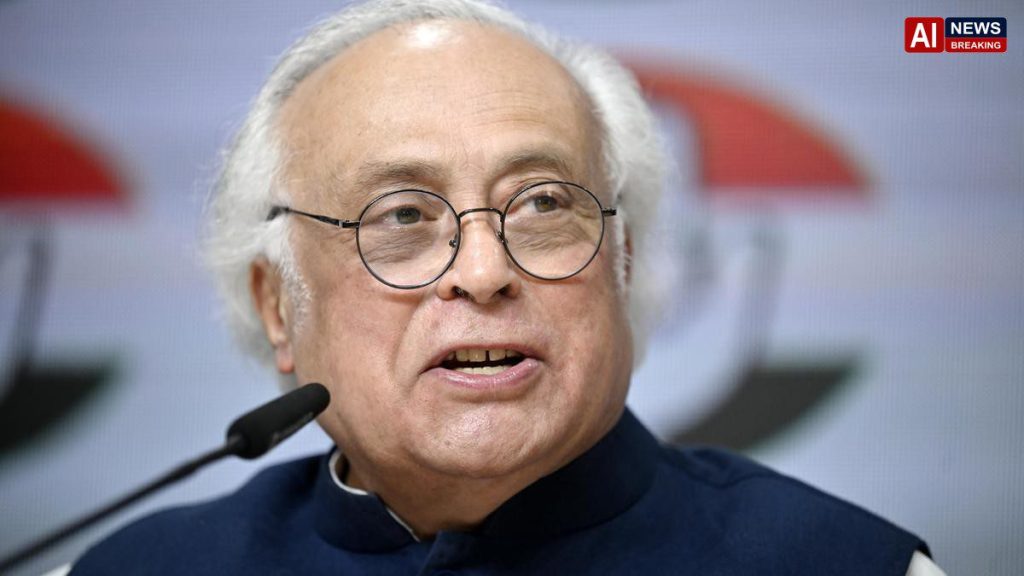
Congress Alleges Jagdeep Dhankhar Was Forced to Resign, Questions Government's Handling of Constitutional Institutions - AI News Breaking
The Congress has renewed its criticism of the Centre over former Vice President Jagdeep Dhankhar’s resignation, alleging that he was forced to step down and denied the dignity traditionally accorded to constitutional office holders. Senior Congress leader Jairam Ramesh has drawn parallels between Dhankhar’s exit and the government’s handling of recent youth protests, accusing the ruling dispensation of displaying institutional insensitivity and undermining democratic norms.
A fresh political controversy has erupted over the resignation of former Vice President Jagdeep Dhankhar after the Congress party accused the Centre of treating one of the country’s highest constitutional offices with “insensitivity and disrespect.” Senior Congress leader Jairam Ramesh has alleged that Dhankhar was compelled to resign and was not even accorded a formal farewell, raising questions about institutional dignity and political accountability.
The remarks have once again brought Dhankhar’s departure from office into the national spotlight, with the opposition drawing broader parallels between the government’s treatment of constitutional functionaries and its handling of public protests and dissent.
Congress Revives Questions Over Dhankhar’s Exit
Speaking on the issue, Congress General Secretary Jairam Ramesh claimed that Jagdeep Dhankhar’s resignation was not voluntary and that circumstances surrounding his departure remain unexplained.
According to the Congress leader, the former Vice President was “forcibly made to resign,” a claim that has further intensified political debate over the events leading to his exit.
Ramesh alleged that the government failed to uphold the dignity traditionally associated with India’s constitutional institutions by not organising an appropriate farewell ceremony for the country’s second-highest constitutional office holder.
The Congress has argued that such treatment reflects a larger pattern of institutional disregard that warrants public scrutiny.
Why Jagdeep Dhankhar’s Resignation Remains Politically Significant
The office of the Vice President occupies a critical position within India’s constitutional framework. Besides serving as the country’s second-highest constitutional authority, the Vice President also functions as the Chairman of the Rajya Sabha.
Historically, transitions involving constitutional office bearers have been marked by:
- Formal farewell ceremonies.
- Parliamentary tributes.
- Official acknowledgements of public service.
- Institutional continuity and respect.
The Congress maintains that the circumstances surrounding Dhankhar’s resignation deviated from established democratic traditions.
Political observers note that questions surrounding constitutional conventions often become significant because they shape public perceptions of institutional independence and democratic accountability.
Jairam Ramesh Draws Parallel With Youth Protests
Jairam Ramesh further linked Dhankhar’s resignation to the government’s alleged handling of recent youth protests over examination-related issues.
The Congress leader argued that the same “insensitivity” displayed in the treatment of protesting students and young aspirants was also evident in the handling of Dhankhar’s departure.
According to the opposition party, both incidents reflect a broader pattern of governance that is increasingly intolerant of criticism and dismissive of institutional norms.
The Congress has sought to frame the controversy as part of a larger debate concerning:
- Democratic accountability.
- Institutional autonomy.
- Constitutional propriety.
- Respect for dissent.
- Political transparency.
Questions Raised by the Opposition
The Congress has publicly questioned several aspects of the resignation process, including:
- The circumstances under which Dhankhar resigned.
- Whether political pressure influenced the decision.
- Why a formal farewell was allegedly not organised.
- Whether constitutional conventions were adequately followed.
Opposition leaders argue that greater transparency would help address speculation and preserve public confidence in democratic institutions.
At present, no official statement has substantiated allegations that Dhankhar was compelled to resign.
Constitutional Offices and Democratic Norms
India’s constitutional framework places significant emphasis on the dignity and independence of constitutional offices.
Constitutional experts often highlight that public confidence in democratic institutions depends upon:
- Transparency in institutional transitions.
- Respect for constitutional conventions.
- Political neutrality in constitutional functioning.
- Maintenance of institutional dignity.
The controversy surrounding Dhankhar’s resignation has therefore acquired importance beyond partisan politics, as it touches upon questions relating to institutional norms and democratic practices.
Political Implications Ahead of Parliamentary Debates
The renewed criticism by the Congress is expected to generate political discussion during upcoming parliamentary sessions.
Opposition parties are likely to raise issues relating to:
- Constitutional accountability.
- Institutional independence.
- Government transparency.
- Democratic conventions.
The matter could potentially become part of broader debates regarding the functioning of constitutional institutions under the current political leadership.
Political analysts believe that such controversies often resonate because they involve questions of constitutional morality rather than merely electoral politics.
Government Yet to Respond to Fresh Allegations
The Centre has not publicly responded to the latest allegations made by Congress regarding Dhankhar’s resignation or claims that he was denied a formal farewell.
Without an official explanation addressing the opposition’s concerns, political speculation surrounding the issue is expected to continue.
Government representatives have previously maintained that constitutional processes are followed in accordance with established legal provisions whenever transitions in public office occur.
Why Institutional Dignity Matters
Democratic institutions derive their legitimacy not only from constitutional provisions but also from longstanding traditions and conventions that reinforce public trust.
Respecting institutional dignity serves several important purposes:
- Strengthening democratic norms.
- Promoting political stability.
- Preserving constitutional values.
- Reinforcing public confidence in governance.
Regardless of political affiliations, constitutional offices are generally expected to be treated with impartiality and dignity as symbols of democratic continuity.
The current controversy has therefore sparked discussions that extend beyond partisan political considerations.
What Happens Next?
The Congress is expected to continue pressing for greater clarity regarding the circumstances of Jagdeep Dhankhar’s resignation.
Political observers will be closely watching:
- Parliamentary discussions on the matter.
- Any official response from the government.
- Statements from former constitutional office holders.
- Potential demands for institutional reforms.
Whether the issue evolves into a major political flashpoint may depend largely on future disclosures and the government’s willingness to address the opposition’s concerns.
The Congress party’s allegations that former Vice President Jagdeep Dhankhar was forced to resign have reopened debates surrounding constitutional propriety and institutional dignity in India. By linking his departure to broader concerns over democratic accountability and governmental sensitivity, the opposition has sought to elevate the discussion beyond routine political criticism. As questions persist regarding the circumstances of Dhankhar’s resignation, the controversy underscores the importance of transparency and respect for constitutional conventions in maintaining public trust in democratic institutions.
AI Insight: Constitutional offices occupy a unique space in democratic governance because they transcend electoral politics and symbolize institutional continuity. Controversies surrounding the treatment of constitutional office bearers often generate wider debates about democratic norms, transparency, and political culture. Regardless of competing political narratives, maintaining institutional dignity and adhering to constitutional conventions remain essential for strengthening public confidence in democratic institutions. The Jagdeep Dhankhar episode illustrates how perceptions of institutional respect can become as politically significant as formal constitutional procedures themselves.