Europe warns of Russia’s hybrid attacks but struggles to counter them
  Former chief election commissioner calls SIR scheme illegal.
  A Corruption Scandal Is Reshaping Brazil’s Presidential Election
  US citizen injured in Illinois after ICE agents mistook him for fugitive, tried to arrest him
  At 10 years old, Smithsonian’s Black museum is undaunted amid pressure from Trump administration
 Dunedin Prepares for Historic Total Solar Eclipse as Hotels Sell Out Years in Advance
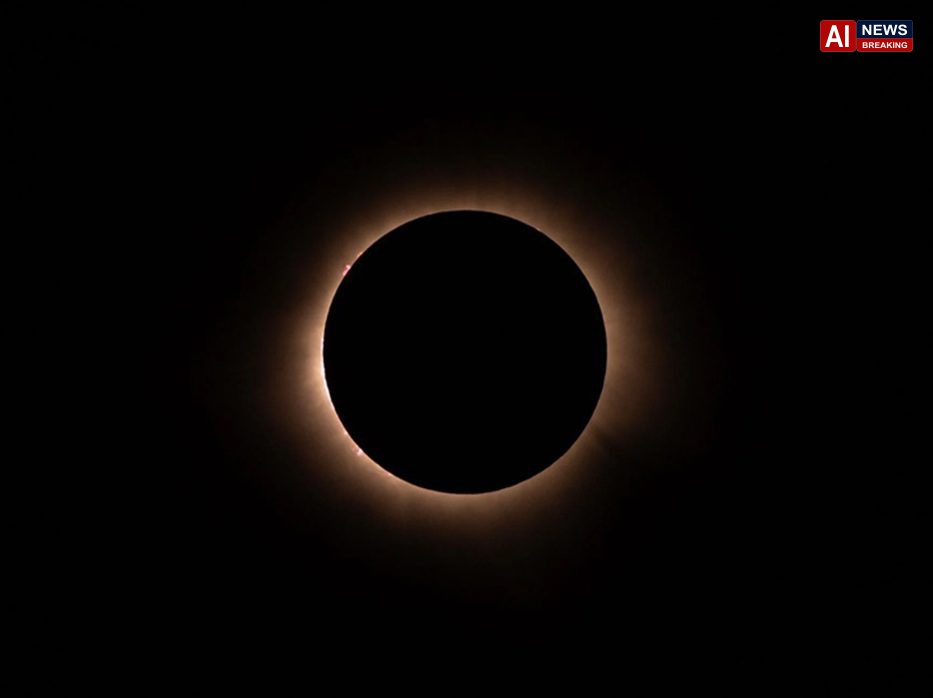
Dunedin Prepares for Historic Total Solar Eclipse as Hotels Sell Out Years in Advance - AI News Breaking
dunedin prepares historic total:
Hotels in Dunedin, New Zealand, are already filling up nearly two years in advance as travelers prepare for the rare total solar eclipse set to occur on July 22, 2028. The city, which last witnessed a total eclipse in 1163—centuries before human settlement in New Zealand—is expected to become a global destination for astronomy enthusiasts.
A rare astronomical event is turning New Zealand’s southern city of Dunedin into one of the world’s hottest travel destinations for 2028.
Hotels across Dunedin are reporting strong demand and, in some cases, complete bookings nearly two years ahead of a total solar eclipse that will darken parts of southern New Zealand on July 22, 2028.
The eclipse is expected to be the first total solar eclipse visible from the region in more than 850 years, making it a once-in-a-lifetime experience for residents, tourists and astronomy enthusiasts alike.
Key Highlights
- Dunedin is preparing for its first total solar eclipse since 1163.
- The eclipse will occur on July 22, 2028, at approximately 4:17 p.m.
- Totality will last for 2 minutes and 51 seconds.
- Hotels in Dunedin are already booking out nearly two years in advance.
- The path of totality will pass across southern New Zealand, including Queenstown and Dunedin.
- Scientists and tourists from around the world are expected to attend.
- The event could provide a major boost to New Zealand’s tourism industry.
A Historic Celestial Event: According to astronomers, the eclipse will begin at approximately 4:17 p.m. local time on July 22, 2028.
During the event:
- The Moon will move directly between the Earth and the Sun.
- A shadow approximately 100 kilometers wide will cross southern New Zealand.
- Areas within the path of totality will experience complete daytime darkness.
- Totality is expected to last for approximately 2 minutes and 51 seconds.
The path of totality will stretch across parts of the South Island, including:
- Dunedin.
- Queenstown.
- Invercargill.
- Nearby coastal and inland communities.
For nearly three minutes, observers will witness one of nature’s most spectacular phenomena as the Sun’s corona becomes visible against a darkened sky.
Dunedin’s Extraordinary Eclipse History: What makes the upcoming eclipse particularly remarkable is Dunedin’s historical connection to the event.
Astronomical records indicate that the city last experienced a total solar eclipse in the year 1163—more than eight centuries ago.
At the time:
- New Zealand had not yet been settled by humans.
- The Māori migration to New Zealand had not begun.
- Medieval Europe was in the High Middle Ages.
- The world looked dramatically different from today.
The 2028 eclipse will therefore mark the first total solar eclipse ever witnessed by humans from the Dunedin region.
Experts say this historical significance is a major factor behind the surge in tourism interest.
Hotels Already Feeling the Impact
Tourism operators report an unprecedented level of demand despite the event being nearly two years away.
Several accommodation providers in Dunedin have already:
- Sold out premium rooms.
- Opened waiting lists for reservations.
- Introduced eclipse-specific travel packages.
- Expanded capacity planning.
Industry representatives expect visitor numbers to increase substantially as the date approaches.
Local businesses are preparing for an influx of:
- International tourists.
- Amateur astronomers.
- Professional researchers.
- Photographers.
- Science enthusiasts.
The eclipse is anticipated to provide a significant economic boost to the region.
Why Total Solar Eclipses Attract Global Audiences
Total solar eclipses are among the rarest and most dramatic astronomical events visible from Earth.
Unlike partial eclipses, total eclipses offer observers the opportunity to witness:
- Complete daytime darkness.
- The Sun’s outer corona.
- Rapid temperature changes.
- Unusual animal behavior.
- A 360-degree twilight effect on the horizon.
Because the path of totality is typically narrow, eclipse chasers often travel thousands of kilometers to experience the event.
Recent eclipses in North America, South America and Europe have generated billions of dollars in tourism revenue and attracted millions of visitors.
New Zealand’s Opportunity
Tourism officials believe the eclipse presents a unique opportunity to showcase New Zealand’s natural beauty to a global audience.
Southern New Zealand is already known for:
- Dark sky reserves.
- Scenic landscapes.
- Wildlife tourism.
- Adventure activities.
- Indigenous Māori culture.
Cities such as Dunedin and Queenstown are expected to leverage the event to promote long-term tourism growth.
Local authorities are also expected to begin planning for:
- Transportation management.
- Public safety measures.
- Visitor information services.
- Eclipse viewing events.
- Infrastructure upgrades.
Scientists Prepare for Observations
Beyond tourism, the eclipse is expected to attract scientists and researchers from around the world.
Total solar eclipses provide valuable opportunities to study:
- The Sun’s corona.
- Solar activity.
- Atmospheric conditions.
- Light and temperature variations.
- Public engagement in science.
Universities and observatories are expected to organize special observation programs and educational initiatives ahead of the event.
Looking Ahead to July 2028
With exactly two years remaining until the eclipse, anticipation continues to build.
Experts recommend that travelers planning to visit southern New Zealand during the event:
- Book accommodations early.
- Monitor official tourism updates.
- Prepare for large crowds.
- Purchase certified eclipse viewing glasses.
- Consider multiple viewing locations.
For Dunedin, July 22, 2028, promises to be more than just an astronomical event—it will be a moment that connects the modern world with a phenomenon last seen in the region centuries before humans ever arrived on New Zealand’s shores.
Rare celestial events increasingly demonstrate the intersection of science, tourism and economic opportunity. The 2028 total solar eclipse is a reminder that astronomy remains one of the few fields capable of inspiring global travel on a massive scale. For Dunedin, the event represents not only a scientific milestone but also a chance to position itself as a premier destination for astro-tourism in the decades ahead.