 Tech leaders to UN: For the sake of humanity, please control the AI technology we created
  Gulf nations have found ways to keep oil flowing
  France deploys patrol fleet to curb Channel migrant crossings
  From a Nepal in Pain, a Young Leader Makes a Case for Climate Reparations
  Ukraine transfers two North Korean POWs to South Korea.
 Trump Escalates EU Dispute, Promises Probe Into Fines Levied on US Tech Giants
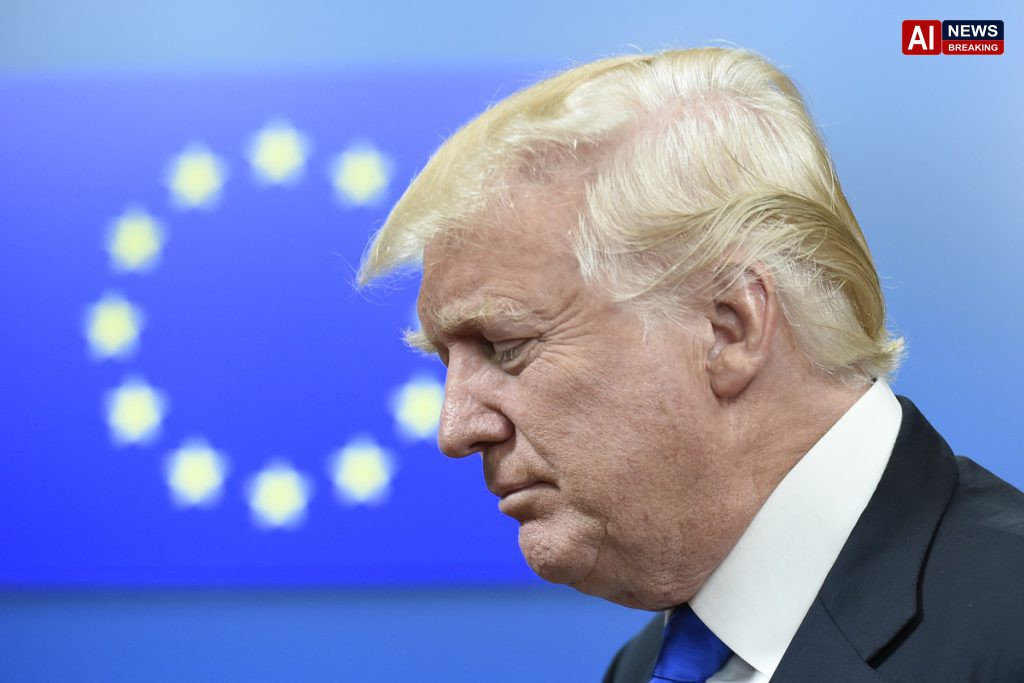
Trump Escalates EU Dispute, Promises Probe Into Fines Levied on US Tech Giants - AI News Breaking
trump escalates dispute promises:
US President Donald Trump has announced a formal investigation into the European Union’s treatment of American technology companies, accusing the bloc of unfairly targeting firms such as Google, Apple, Meta and Amazon. Trump said the EU’s multibillion-dollar fines should be “entirely reversed” and warned that Europe could face significant economic consequences.
News Highlights
- Donald Trump has announced a Section 301 investigation into EU trade practices.
- He accused the EU of unfairly targeting Google, Apple, Meta and Amazon.
- Trump said European fines against US tech firms should be “entirely reversed.”
- The move follows the EU’s €890 million fine against Google under the Digital Markets Act.
- The dispute could lead to new tariffs and heightened US-EU trade tensions.
President Donald Trump has opened a new front in the ongoing transatlantic trade dispute, pledging to investigate the European Union over what he described as unfair and discriminatory fines imposed on major American technology companies.
In a strongly worded statement on Truth Social, Trump accused the EU of “robbing” American businesses and taxpayers through billions of dollars in penalties levied against companies including Google, Apple, Meta and Amazon. He vowed to launch an immediate Section 301 investigation under the Trade Act of 1974 and suggested that the European Union would “pay a very big price” for its actions.
The latest confrontation follows the European Commission’s decision to fine Google’s parent company, Alphabet, €890 million (approximately $1 billion) for violating provisions of the EU’s Digital Markets Act (DMA).
Google Fine Triggers Fresh Tensions
The European Commission announced on July 23 that Google had breached the Digital Markets Act by favoring its own services in search results and restricting app developers from directing consumers to alternative purchasing channels outside Google Play. The penalties consisted of two separate fines totaling €890 million.
EU regulators stated that Google’s practices harmed competition by giving preferential treatment to its own products in areas such as:
- Shopping services
- Hotel listings
- Transportation results
- Sports information
- Mobile app distribution channels
The Commission has ordered Google to bring its practices into compliance with EU regulations.
Trump, however, rejected the EU’s rationale, claiming the fines were politically motivated and constituted an indirect tax on successful American companies.
Trump Demands Fines Be Reversed
In his public remarks, Trump argued that the EU has repeatedly targeted American firms while benefiting financially from enforcement actions.
He cited previous European penalties against:
- Apple
- Meta
- Amazon
- Other US-based technology companies
Trump stated that all such fines should be “entirely reversed” and insisted that American companies were being unfairly singled out under European digital regulations.
The president’s comments mark one of his strongest criticisms of the European Union since returning to office and could significantly increase tensions between Washington and Brussels.
What Is a Section 301 Investigation?
Trump said the United States would immediately initiate a Section 301 investigation into EU trade practices.
Section 301 of the Trade Act of 1974 allows the US government to investigate foreign policies deemed unfair or discriminatory toward American businesses. Following such investigations, the United States can impose retaliatory measures, including tariffs or trade restrictions.
Historically, Section 301 investigations have been used in major trade disputes involving countries such as China.
Potential outcomes include:
- Additional tariffs on European goods.
- Trade restrictions.
- Negotiated settlements.
- Diplomatic consultations.
- New bilateral agreements.
Analysts note that the investigation could further strain economic relations between two of the world’s largest trading partners.
EU Defends Digital Regulations
European officials have defended their actions, arguing that the Digital Markets Act is designed to ensure fair competition and protect consumers.
Under the DMA, designated “gatekeeper” companies are prohibited from:
- Self-preferencing their services.
- Restricting competition.
- Limiting alternative payment systems.
- Abusing dominant market positions.
EU regulators maintain that the rules apply equally to all companies operating within the bloc, regardless of their country of origin.
The European Commission has yet to formally respond to Trump’s latest threat of retaliatory action.
Tech Industry Watching Closely
The dispute has significant implications for the global technology sector.
Companies affected by EU regulations collectively represent trillions of dollars in market value and play a critical role in:
- Digital advertising.
- E-commerce.
- Mobile ecosystems.
- Cloud computing.
- Artificial intelligence.
- Social media.
Google has welcomed support from the Trump administration, while industry groups continue to argue that certain European regulations disproportionately affect US technology firms.
Growing Trade Tensions
Trump’s latest announcement comes amid broader disagreements between the United States and European Union over trade, technology regulation and industrial policy.
Recent areas of contention include:
- Tariffs on imports.
- Digital services taxes.
- Competition regulations.
- Artificial intelligence oversight.
- Data privacy standards.
Experts warn that escalating trade disputes could affect businesses and consumers on both sides of the Atlantic if retaliatory measures are implemented.
The latest clash between Washington and Brussels highlights a growing global divide over how technology giants should be regulated. While the European Union views aggressive antitrust enforcement as essential to maintaining competition, the United States increasingly sees such actions as disproportionately targeting its most successful companies. As digital markets become more central to economic power, disputes over regulation may become as consequential as traditional trade conflicts.