Europe warns of Russia’s hybrid attacks but struggles to counter them
  Former chief election commissioner calls SIR scheme illegal.
  A Corruption Scandal Is Reshaping Brazil’s Presidential Election
  US citizen injured in Illinois after ICE agents mistook him for fugitive, tried to arrest him
  At 10 years old, Smithsonian’s Black museum is undaunted amid pressure from Trump administration
 US Appeals Court Deals Blow to Trump’s $100,000 H-1B Visa Fee Policy
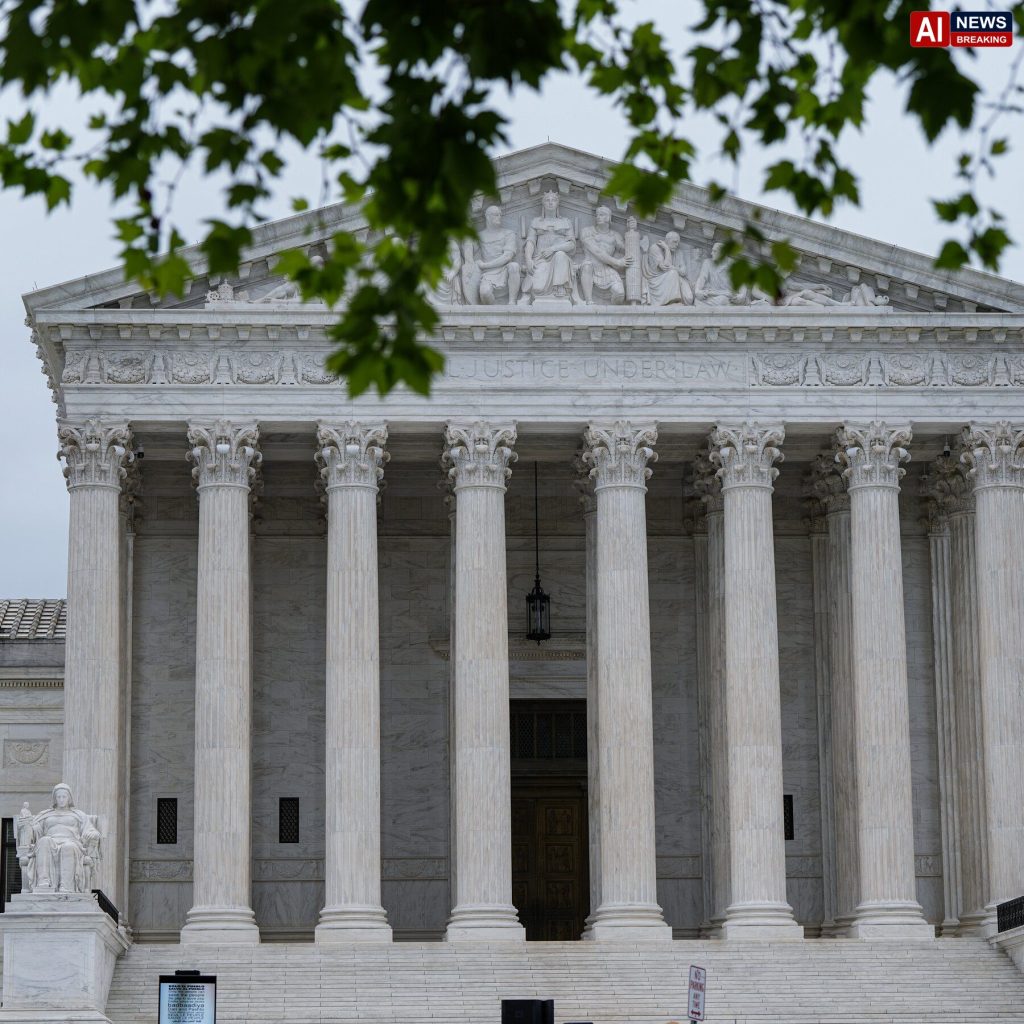
US Appeals Court Deals Blow to Trump's $100,000 H-1B Visa Fee Policy - AI News Breaking
A significant setback has been dealt to the US administration, as a federal appeals court has refused to overturn a lower court’s ruling blocking the controversial $100,000 H-1B visa fee. The three-judge panel of the US Court of Appeals for the Ninth Circuit issued a unanimous decision on Tuesday, leaving in place a district court’s finding that the fee was unlawful. The Trump administration had sought to reinstate the fee, which was imposed on employers seeking to hire foreign tech workers under the H-1B visa program.
Key Highlights
- A US appeals court refused to revive Trump’s $100,000 H-1B visa fee.
- The ruling leaves a lower court order striking down the fee in place.
- The fee had been challenged as an unauthorized tax imposed without congressional approval.
- Indian professionals and US employers are among those most affected by the decision.
- The Trump administration may continue its legal challenge in higher courts.
The H-1B visa program is a key tool for US businesses to attract top talent from around the world, particularly in the tech sector. However, the $100,000 fee imposed by the administration in 2020 sparked a fierce backlash from tech industry leaders and Democratic lawmakers, who argued that the fee was a thinly disguised tax hike that required congressional approval. In June, a district judge in San Francisco ruled that the administration had exceeded its executive branch authority by imposing the fee without legislative backing.
What Was the $100,000 H-1B Fee?
The Trump administration introduced the one-time $100,000 fee as part of a broader effort to reform legal immigration and discourage companies from hiring foreign workers over Americans.
The H-1B visa program allows US employers to hire highly skilled foreign workers in specialized fields, including:
- Information technology
- Engineering
- Healthcare
- Research
- Higher education
- Finance
- Artificial intelligence
Indian professionals account for a substantial majority of H-1B visa recipients, making any changes to the program particularly important for India’s technology sector and its workforce.
The Trump administration had appealed that ruling, arguing that the district court had overstepped its bounds and that the fee was a reasonable measure to ensure that employers using the H-1B program pay a fair share of the costs associated with immigration enforcement. However, the appeals court panel rejected that argument, concluding that the administration had failed to convince them that it was likely to prevail on the merits of the case. In a statement, a spokesperson for the Department of Justice, which represented the administration in the appeal, said that the decision was a disappointing setback for the administration’s efforts to reform the H-1B program.
The spokesperson emphasized that the administration remains committed to reforming the H-1B program and will continue to explore ways to do so. However, the ruling is widely seen as a significant blow to the administration’s efforts to impose a hefty fee on employers using the H-1B program. The $100,000 fee had been a key plank of the Trump administration’s efforts to reform the H-1B program, which is widely used by tech giants such as Google, Microsoft, and Facebook to hire foreign workers.
However, the fee sparked intense opposition from tech industry leaders, who argued that it would make it significantly more expensive for them to hire the best talent from around the world. The ruling will likely be welcomed by tech industry leaders, who are eager to attract top talent to the US. The decision also reflects a broader clash between the executive branch and the courts over the limits of executive authority.
Relief for Employers and Foreign Workers
The appeals court’s decision has been welcomed by employers across multiple industries.
Business groups had warned that the fee would:
- Make hiring highly skilled workers prohibitively expensive.
- Disproportionately affect small and medium-sized businesses.
- Exacerbate labor shortages.
- Reduce America’s competitiveness in attracting global talent.
- Increase operational costs for hospitals and universities.
For many employers, the additional $100,000 expense represented a dramatic increase over existing visa-related costs.
Immigration attorneys have noted that the ruling could encourage companies to proceed with H-1B sponsorship plans that had been delayed due to uncertainty surrounding the fee.
President Trump has repeatedly taken to Twitter to express his frustration with the courts, which he has accused of being incompetent and obstructionist. However, the H-1B ruling suggests that at least some of the courts are willing to push back against the administration’s efforts to exert its authority in sensitive areas such as immigration policy. In a statement, a spokesperson for the tech industry lobby group, the National Venture Capital Association, welcomed the ruling as a victory for the tech industry..
The spokesperson emphasized that the H-1B program is a critical tool for US businesses to attract top talent from around the world, and that the fee would have had a devastating impact on the industry. We are pleased that the courts have recognized the arbitrary nature of the administration’s decision to impose this massive fee, the spokesperson said. Meanwhile, the ruling has also been welcomed by Democratic attorneys general, who had challenged the fee on behalf of several tech industry groups..
Today’s ruling is a major victory for the tech industry and for the rule of law, said California Attorney General Xavier Becerra, who led the lawsuit against the administration. The courts have made it clear that the administration cannot unilaterally impose a massive tax hike on employers without congressional approval. The ruling will likely have far-reaching implications for the tech industry, which has been a key driver of economic growth in the US in recent years.
Why Was the Fee Struck Down?
The controversy began in June when US District Judge Leo Sorokin ruled that the Trump administration had exceeded its authority by implementing the fee without approval from Congress.
The judge concluded that:
- The fee effectively functioned as a tax.
- Congress had not authorized the executive branch to impose it.
- The policy violated the Administrative Procedure Act.
- The government failed to adequately consider its economic impact.
In his ruling, Sorokin stated that the administration’s action amounted to creating a new tax on employers seeking to hire foreign talent.
The Trump administration appealed the decision, arguing that immigration law grants the president broad authority to impose restrictions deemed necessary in the national interest.
By blocking the $100,000 fee, the courts have effectively preserved the H-1B program’s status quo, which allows tech giants to hire top talent from around the world at a relatively low cost. However, the ruling also highlights the ongoing tensions between the executive branch and the courts over the limits of executive authority. The H-1B program has been a lightning rod for controversy in recent years, with some critics arguing that it is a key driver of wage stagnation and displacement of US workers..
However, defenders of the program argue that it is a critical tool for US businesses to attract top talent from around the world, and that it has helped to drive economic growth and innovation in the US. In the wake of the ruling, the administration is likely to explore alternative methods of reforming the H-1B program. However, the outcome of any such efforts will depend on a range of factors, including the willingness of tech industry groups to engage with the administration and the limits of executive authority..
For now, the ruling is a significant setback for the administration’s efforts to impose a hefty fee on employers using the H-1B program. The decision is also the latest in a long and contentious debate over the H-1B program, which has been a key aspect of US immigration policy for decades. The program has been criticized by some for prioritizing the interests of tech giants over those of US workers, while defenders argue that it is a critical tool for driving economic growth and innovation in the US..
In the end, the outcome of the H-1B case highlights the ongoing tensions between the executive branch and the courts over the limits of executive authority in sensitive areas such as immigration policy. The ruling is a significant setback for the administration’s efforts to impose a hefty fee on employers using the H-1B program, but it is unlikely to be the final word on the matter..
Updated: July 25, 2026
A federal appeals court has sided with tech industry leaders, ruling that the Trump administration exceeded its authority by imposing a $100,000 fee on H-1B visa holders. The decision is a significant setback for the administration’s efforts to reform the high-skilled visa program, which is widely used by tech giants to hire foreign workers.
Insight: The rejection of the $100,000 H-1B visa fee by the US appeals court sets a precedent for future executive branch attempts to exert unchecked authority in sensitive policy areas, reinforcing the rule of law and reasserting the importance of congressional oversight in shaping national immigration policy. This development underscores a broader shift in the balance of power between the executive branch and the judiciary, with the courts now playing a crucial role in checking the administration’s ability to unilaterally impose costly and contentious policy measures.