Europe warns of Russia’s hybrid attacks but struggles to counter them
  Former chief election commissioner calls SIR scheme illegal.
  A Corruption Scandal Is Reshaping Brazil’s Presidential Election
  US citizen injured in Illinois after ICE agents mistook him for fugitive, tried to arrest him
  At 10 years old, Smithsonian’s Black museum is undaunted amid pressure from Trump administration
 Trump Warns of ‘Strong Military Action’ Against Iran if Diplomacy Fails, Raising Stakes in Middle East Crisis
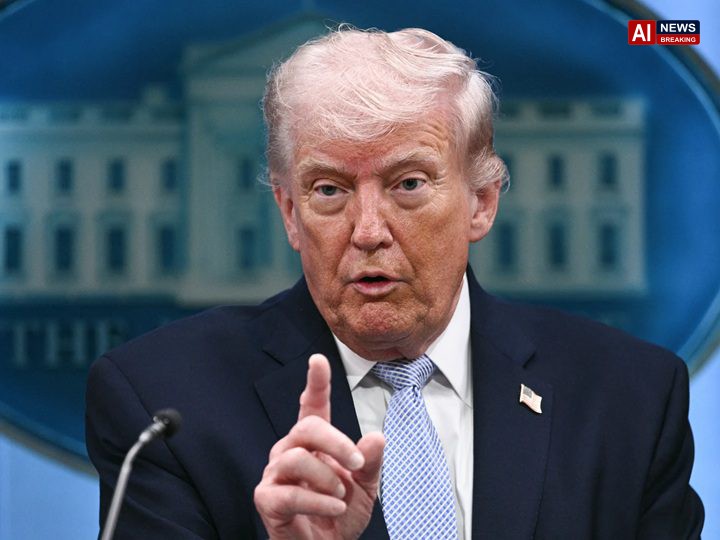
Trump Warns of 'Strong Military Action' Against Iran if Diplomacy Fails, Raising Stakes in Middle East Crisis - AI News Breaking
trump warns strong military:
Donald Trump has once again warned that the US will return to “strong military action” against Iran if diplomatic efforts do not bring a rapid resolution to the crisis in the Middle East. The US president expressed this sentiment in an interview with news organisation Axios on Monday. This statement has been met with conflicting reactions from officials in Washington and Tehran.
Key Highlights
- President Donald Trump warned of a return to “strong military action” if diplomacy with Iran fails.
- Negotiations between Washington and Tehran continue amid significant disagreements.
- Iran continues to seek assurances regarding sanctions and future U.S. commitments.
- The United States maintains that non-proliferation and verification remain central priorities.
- International observers are closely monitoring developments due to potential regional and global implications.
The status of talks between the US and Iran to end the ongoing crisis remains unclear. On one hand, the US has expressed optimism over the possibility of a breakthrough in negotiations. However, the Iranian side has shown signs of resistance in their willingness to compromise.
Trump Signals Potential Military Response if Talks Collapse
President Donald Trump has issued a fresh warning to Iran, stating that the United States is prepared to resume “strong military action” should diplomatic efforts fail to resolve the ongoing standoff between Washington and Tehran.
Speaking in an interview with Axios, Trump emphasized that while his administration remains committed to pursuing diplomacy, military options remain firmly on the table if negotiations do not yield rapid progress.
“If diplomacy doesn’t work, we’ll go back to strong military action,” Trump reportedly said, underscoring the administration’s determination to prevent Iran from advancing its nuclear capabilities.
The comments have renewed concerns about the possibility of another escalation in the Middle East, a region already grappling with multiple geopolitical flashpoints.
The conflicting messages have created a sense of uncertainty over the prospects for a successful agreement. This uncertainty reflects the deep-seated differences between the two nations regarding their stance on the crisis. Experts suggest that the lack of tangible progress in the diplomatic efforts may be due to Iran’s reluctance to make concessions.
Iran Continues to Raise JCPOA Concerns
One of the central sticking points in the negotiations remains the future of the Joint Comprehensive Plan of Action (JCPOA), commonly known as the Iran nuclear deal.
Tehran has repeatedly argued that trust between the two countries was severely damaged following the United States’ withdrawal from the agreement during Trump’s first term and the subsequent reimposition of sanctions.
Iran has consistently sought:
- Assurances against future U.S. withdrawal.
- Relief from economic sanctions.
- Recognition of its right to peaceful nuclear development.
- Greater economic access to international markets.
Iranian officials have maintained that any lasting agreement must provide concrete guarantees rather than relying solely on political commitments.
The Trump administration has maintained a tough stance towards Iran throughout the crisis. The president’s warning of a return to military action is seen by many as a reflection of this approach. In contrast, some officials in the US, including ary of State Mike Pompeo, have expressed a more cautious tone, indicating a desire to explore diplomatic avenues further.
Washington’s Position
The Trump administration has continued to emphasize that preventing nuclear proliferation remains a top national security priority.
U.S. officials have stated that any agreement with Iran must include:
- Verifiable limitations on nuclear activities.
- Compliance with international inspection regimes.
- Commitments to regional stability.
- Transparency regarding enrichment activities.
Washington has argued that a robust verification framework is essential to ensuring long-term compliance and maintaining international confidence.
The administration’s latest comments suggest that while diplomacy remains the preferred path, patience may be limited if negotiations continue to stall.
The varying views within the administration create a sense of confusion about the US’s actual intentions. The diplomatic efforts have been ongoing since early 2023, following several rounds of heightened tensions between the two nations. The crisis escalated after the US launched airstrikes against Iranian military targets following an alleged drone attack on a US base..
Iran denied responsibility for the attacks, which some observers described as a potential provocation. Despite the diplomatic efforts, some observers have raised concerns about the prospects for success. Analysts point to the deep-seated mistrust between the two nations, which has been exacerbated by the US withdrawal from the JCPOA nuclear deal..
The Iranian side has accused the US of breaking the deal unilaterally and has called for a new agreement that addresses its concerns. The US has rejected this demand, citing concerns about Iranian behaviour. Despite the challenges, diplomats from both sides have expressed a desire to find a peaceful resolution to the crisis..
However, the conflicting messages emanating from the US and Iran suggest a difficult road ahead. The international community has been watching the developments closely, with various countries taking positions on the crisis. Some have supported the US, while others have condemned the administration’s actions as a provocation..
As the diplomatic efforts continue, the Trump administration remains committed to exploring military options. However, the US military intervention in the region has also sparked fears of a wider conflict. In addition, concerns have been expressed about the humanitarian impact of any military action..
The fragile balance between the different factions in the region has created a potential powder keg, with many observers fearful of the consequences of a military escalation. The international community is watching the developments with great interest, with various countries maintaining their stance on the crisis. This has created a sense of international responsibility among nations, with some urging caution over the use of military force..
Analysts have raised concerns about the potential consequences of US military action, citing the experience of past interventions in the region. This debate is set to continue as the diplomatic efforts continue. In response to the US president’s statement, the White House has reiterated its commitment to diplomacy..
However, the message has been met with scepticism by many observers. The diplomatic efforts are set to continue, with both sides engaging in further talks. Despite the optimism expressed by some, the prospects for a successful agreement remain unclear..
The crisis has dominated international headlines for months, with the world watching the developments anxiously. As the diplomatic efforts continue, the international community is poised to respond swiftly to any developments. Analysts have suggested that the outcome will depend on the willingness of both nations to engage in constructive dialogue..
However, this remains to be seen, given the deep-seated mistrust between the two sides. The diplomatic dance between the US and Iran has raised concerns about the prospects for peace in the region. Some experts believe that a more pragmatic approach is required to resolve the crisis..
However, the conflicting messages emanating from the two sides suggest a difficult road ahead. The crisis has shown the fragility of the regional balance and the need for caution over any military intervention. As the diplomatic efforts continue, both sides will have to make concessions..
However, the question remains as to how much Iran is willing to compromise and whether the US is prepared to make corresponding concessions. The international community is holding its breath, waiting for a breakthrough. The stakes are high, and both nations are determined to secure a resolution that serves their interests..
Updated: July 28, 2026
Donald Trump has threatened a return to strong military action against Iran if diplomatic efforts fail to resolve the crisis. The statement has sparked conflicting reactions from officials in Washington and Tehran, amid concerns about the humanitarian impact and potential consequences of US military action.
The real challenge in US-Iran relations lies not in the willingness to negotiate, but in the fundamental trust deficit between the two nations, making it difficult to find a mutually acceptable compromise. Ultimately, a peaceful resolution will require a delicate balance of concessions and a willingness to set aside historical grievances, a tall order given the current geopolitical landscape.