 Australia probes AI‑driven breach of My Health Record portal
  Engineering student’s ‘suicide’ turns out to be murder; two arrested
  Canada’s Capital Bids Good Riddance to Trump Avenue as Tensions With U.S. Rise
  Pentagon investigates after China obtains parts from F-35 stealth fighter jet
 CAG Flags Irregularities in West Bengal Health Insurance Scheme, Questions Payments to Empanelled Hospitals
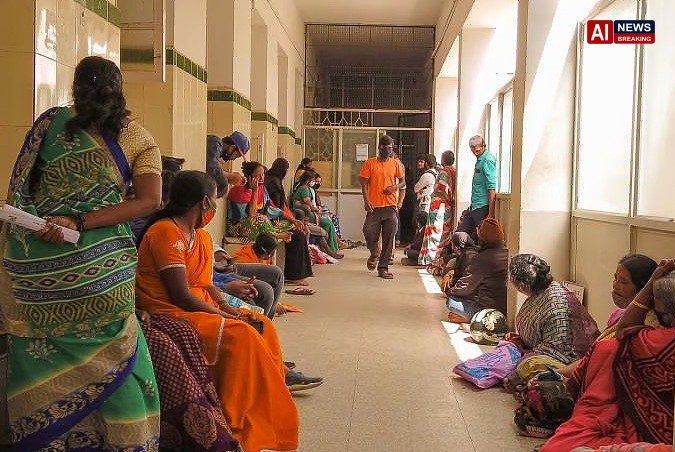
CAG Flags Irregularities in West Bengal Health Insurance Scheme, Questions Payments to Empanelled Hospitals - AI News Breaking
flags irregularities west bengal:
The Comptroller and Auditor General (CAG) has reportedly identified irregularities in the West Bengal government’s health insurance scheme, raising concerns over payments made to empanelled hospitals. The findings are expected to intensify political scrutiny over the implementation and oversight of one of the state’s flagship healthcare initiatives.
Key Points
- CAG has flagged alleged breaches involving hospitals empanelled under the West Bengal government’s insurance scheme.
- Questions have been raised regarding the number of beneficiaries and payments made to participating hospitals.
- The audit observations could lead to increased scrutiny of monitoring and accountability mechanisms within the scheme.
- The issue is likely to become a major political flashpoint between the ruling Trinamool Congress (TMC) and opposition parties.
- Authorities are expected to review the findings and determine whether corrective measures are required.
CAG Report Puts West Bengal’s Health Insurance Scheme Under Fresh Scrutiny
West Bengal’s flagship health insurance initiative has come under renewed scrutiny after the Comptroller and Auditor General (CAG) reportedly identified multiple breaches and procedural irregularities involving hospitals empanelled under the scheme.
The audit observations have raised questions about beneficiary records, payment mechanisms and oversight practices, potentially opening a new front in the ongoing political contest between the ruling Trinamool Congress (TMC) government and opposition parties.
The health insurance program, launched to provide cashless treatment to millions of residents, has long been promoted as a cornerstone of the state’s public welfare strategy. However, the latest findings suggest that weaknesses in implementation and monitoring may have affected the scheme’s overall efficiency and accountability.
What the CAG Found
According to the audit findings, the CAG has pointed to discrepancies relating to empanelled hospitals participating in the insurance scheme.
Among the issues reportedly highlighted are:
- Irregularities in payments made to empanelled healthcare institutions.
- Questions regarding beneficiary identification and verification processes.
- Potential lapses in monitoring and compliance mechanisms.
- Concerns over adherence to established operational guidelines.
- Weaknesses in maintaining records and documentation.
While the full extent of the irregularities remains subject to further examination, the report has prompted calls for greater transparency in the administration of public healthcare programs.
Importance of the Scheme
The state government’s health insurance initiative was introduced with the objective of providing financial protection to economically vulnerable families by offering cashless medical treatment across a network of public and private hospitals.
Over the years, the scheme has:
- Expanded healthcare access for millions of residents.
- Reduced out-of-pocket medical expenses.
- Increased participation from private healthcare providers.
- Strengthened the state’s healthcare infrastructure.
- Become a key component of West Bengal’s welfare agenda.
Given its scale and significance, any concerns regarding its implementation are likely to attract considerable public and political attention.
Political Reactions Expected
The CAG’s observations are expected to become a major political issue in the coming weeks.
Opposition parties are likely to use the findings to question the effectiveness of the government’s oversight mechanisms and demand accountability from officials responsible for implementing the scheme.
Critics argue that public welfare programs involving significant financial allocations must be subject to robust auditing and regular reviews to ensure that benefits reach intended recipients.
Meanwhile, supporters of the state government are expected to emphasize that audit reports often identify procedural shortcomings that can be addressed through administrative reforms rather than indicating systemic failures.
The Trinamool Congress has consistently defended its welfare initiatives, highlighting their role in improving access to healthcare and social services across the state.
Need for Greater Transparency
Public policy experts note that large-scale health insurance schemes are inherently complex and require continuous monitoring to prevent misuse and administrative inefficiencies.
Key areas frequently identified for improvement in such programs include:
- Digital verification systems.
- Real-time auditing mechanisms.
- Enhanced data management practices.
- Independent compliance reviews.
- Greater transparency in payments and claims processing.
Experts emphasize that strengthening these mechanisms can help improve public confidence while ensuring that healthcare resources are utilized effectively.
Public Healthcare and Accountability
The latest developments have once again underscored the importance of accountability in public healthcare administration.
Health insurance schemes involving millions of beneficiaries and extensive hospital networks require a delicate balance between accessibility, efficiency and financial oversight.
Audits conducted by institutions such as the CAG play an important role in identifying gaps in implementation and recommending corrective measures.
Analysts point out that audit observations should be viewed as opportunities to improve governance rather than solely through a political lens.
What Happens Next?
The state government is expected to examine the CAG’s findings and may initiate internal reviews or corrective measures where necessary.
Possible next steps include:
- Verification of audit observations.
- Strengthening compliance procedures.
- Reviewing payment systems.
- Enhancing monitoring mechanisms.
- Implementing administrative reforms.
The issue is also likely to feature prominently in legislative discussions, with opposition leaders expected to seek detailed explanations regarding the findings.
As the debate unfolds, the focus will remain on ensuring that public healthcare programs continue to serve beneficiaries effectively while maintaining the highest standards of transparency and accountability.
Insight: The CAG’s observations highlight a broader challenge facing public welfare programs across India: scale often brings complexity. As healthcare schemes expand to serve millions of beneficiaries, governments must invest equally in oversight, transparency and digital accountability. Effective public healthcare is not only about expanding access—it is also about ensuring that every rupee spent delivers measurable benefits to citizens. Strong audit mechanisms remain essential to maintaining public trust in welfare initiatives.