Europe warns of Russia’s hybrid attacks but struggles to counter them
  Former chief election commissioner calls SIR scheme illegal.
  A Corruption Scandal Is Reshaping Brazil’s Presidential Election
  US citizen injured in Illinois after ICE agents mistook him for fugitive, tried to arrest him
  At 10 years old, Smithsonian’s Black museum is undaunted amid pressure from Trump administration
 US H-1B, L-1 Visa Rule Change: Employers Face Up to 4.14 Lakh Cost for Indian Workers
** The US government has introduced new visa rules that will require large employers to pay a significant fee for visa extensions, affecting thousands of Indian workers in the US tech industry. The move is expected to impact not only the workers themselves, but also the competitiveness of the US companies that employ them, potentially accelerating the outsourcing of jobs to other countries.
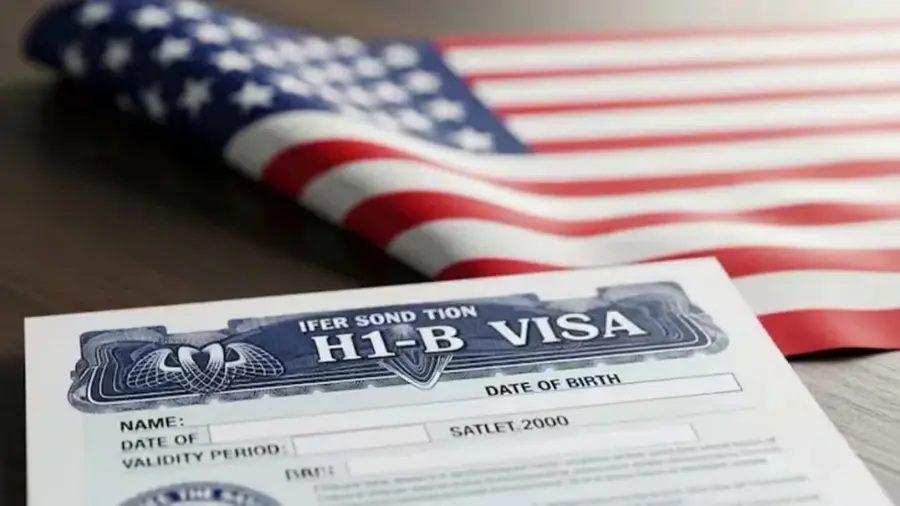
US H-1B, L-1 Visa Rule Change: Employers Face Up to 4.14 Lakh Cost for Indian Workers - AI News Breaking
visa rule change employers:
The US government has introduced a significant change to its visa rules, affecting employers who hire workers under the H-1B and L-1 nonimmigrant status. As of now, employers with 50 or more employees in the US will have to bear the cost of visa extension, which can range from ₹3.68 lakh to ₹4.14 lakh. This move is expected to have a major impact on Indian workers who are currently employed in the US under these visa categories.
The new rule applies to companies where more than 50% of the workforce is comprised of H-1B or L-1 visa holders. This means that a significant number of Indian workers will be affected, as many of them are employed in the US tech industry under these visa categories. The increased cost of visa extension is likely to be a major concern for employers, who may have to rethink their hiring strategies.
The H-1B visa is a nonimmigrant visa that allows US employers to temporarily employ foreign workers in specialty occupations. The L-1 visa, on the other hand, is used for intracompany transfers, where employees are transferred from a foreign office to a US office within the same company. Both visa categories are popular among Indian workers, who make up a significant proportion of the H-1B and L-1 visa holders in the US.
What Are H-1B and L-1 Visas?
The H-1B programme allows US employers to employ foreign workers in specialty occupations requiring specialised knowledge and typically a relevant bachelor’s degree or equivalent qualification.
Technology, engineering, finance, healthcare and other professional industries have historically relied heavily on H-1B workers.
The L-1 category serves a different purpose.
It allows multinational companies to transfer certain employees from an overseas office to a related US entity. L-1A visas generally cover managers and executives, while L-1B visas are used for employees with specialised knowledge.
Both categories are important for global companies operating across multiple countries.
For Indian professionals, the two visa categories are particularly relevant because India has a large technology and professional-services workforce employed by US-based companies and multinational corporations.
The new rule is expected to affect not just Indian workers, but also the US companies that employ them. Many US companies rely heavily on H-1B and L-1 visa holders to fill critical skill gaps in their workforce. With the increased cost of visa extension, these companies may have to consider alternative hiring strategies, such as hiring more US-based workers or outsourcing work to other countries.
The increased cost of visa extension is also likely to affect the overall competitiveness of US companies in the global market. Many US companies rely on the expertise and skills of foreign workers to stay ahead of the competition. With the increased cost of hiring and retaining these workers, US companies may find it harder to compete with companies based in other countries.
The US government has introduced this rule change as part of its efforts to encourage US companies to hire more US-based workers. The government believes that the increased cost of visa extension will discourage US companies from relying too heavily on foreign workers and encourage them to hire more US-based workers instead. However, many critics argue that this rule change will have the opposite effect.
They argue that US companies will simply find ways to circumvent the new rule, such as by hiring more workers through contractors or outsourcing work to other countries. This could lead to a loss of jobs for US-based workers, rather than an increase. The rule change is also likely to affect the US tech industry, which relies heavily on H-1B and L-1 visa holders.
The 50-Employee Threshold
One of the most important aspects of the new policy is the employer-size threshold.
The rule described in the policy applies to employers with at least 50 employees in the United States when more than 50% of their US workforce falls into the H-1B or L-1 categories.
That distinction is critical.
A company having 50 or more employees does not automatically become subject to the additional requirement.
The composition of its workforce also matters.
For example, a large American company employing thousands of US citizens and permanent residents alongside a relatively small number of H-1B workers may not meet the 50% threshold.
By contrast, a company whose workforce consists predominantly of H-1B and L-1 employees could face a substantially different financial obligation.
This means employers will need to examine their workforce composition carefully before determining whether the requirement applies.
Many tech companies have already expressed concerns about the new rule, arguing that it will make it harder for them to hire the skilled workers they need to stay competitive. The Indian government has also expressed concerns about the new rule, arguing that it will affect the livelihoods of many Indian workers who are currently employed in the US. The government has urged the US to reconsider the rule change, citing the important contributions that Indian workers make to the US economy.
Despite these concerns, the US government has shown no signs of backing down on the new rule. The government believes that the rule change is necessary to protect the interests of US workers and to encourage US companies to hire more US-based workers. The rule change is expected to come into effect soon, and it remains to be seen how it will affect US companies and Indian workers..
The new rule is part of a broader effort by the US government to reform its immigration system. The government has introduced a number of changes in recent months, aimed at reducing the number of foreign workers in the US and encouraging US companies to hire more US-based workers. While these changes have been controversial, the government believes they are necessary to protect the interests of US workers and to ensure that the US economy remains competitive..
The impact of the new rule will be closely watched in the coming months, as US companies and Indian workers navigate the changed landscape. While the rule change is expected to have a significant impact on the US tech industry and on Indian workers, it remains to be seen how it will affect the overall competitiveness of US companies and the US economy as a whole..
Updated: August 10, 2026
The US government has introduced new rules that will see large employers pay a significant fee for visa extensions, affecting thousands of Indian workers in the US tech industry. The move is expected to impact not only the workers themselves, but also the competitiveness of the US companies that employ them.
The shifted financial burden on employers may inadvertently accelerate the outsourcing of jobs to other countries, ultimately undermining the US government’s goal of promoting domestic employment. This policy change could also have far-reaching consequences for the global economy, as the reduced competitiveness of US companies may create new opportunities for other nations to attract top talent and foreign investment.