Europe warns of Russia’s hybrid attacks but struggles to counter them
  Former chief election commissioner calls SIR scheme illegal.
  A Corruption Scandal Is Reshaping Brazil’s Presidential Election
  US citizen injured in Illinois after ICE agents mistook him for fugitive, tried to arrest him
  At 10 years old, Smithsonian’s Black museum is undaunted amid pressure from Trump administration
 Trump Says US Is “Semi-Negotiating” With Iran as Tehran Sets Tough Conditions to Reopen Strait of Hormuz
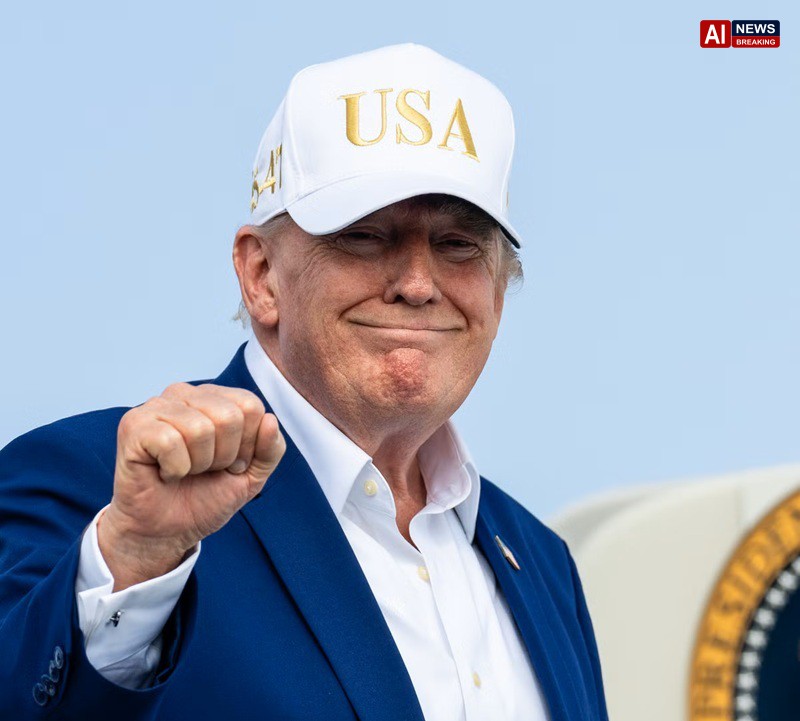
Trump Says US Is "Semi-Negotiating" With Iran as Tehran Sets Tough Conditions to Reopen Strait of Hormuz - AI News Breaking
trump says seminegotiating iran:
US President Donald Trump has acknowledged that Washington is “semi-negotiating” with Iran as the two countries remain locked in a tense standoff over the future of the Strait of Hormuz.
Trump’s comments came after Tehran outlined sweeping conditions for reopening the strategic waterway, making clear that an agreement on shipping routes alone would not necessarily result in the full restoration of normal commercial traffic.
Iran has said the Strait of Hormuz will remain closed or restricted unless the United States makes significant concessions. Tehran’s demands include compensation for damage caused during the conflict, the lifting of US sanctions, an end to the American naval blockade and military pressure, the release of frozen Iranian assets and guarantees against renewed US action.
The developments underline the growing gap between the two sides.
While Trump is signalling that some form of communication remains active, Iranian officials have denied that formal direct negotiations are taking place. Instead, Washington and Tehran are communicating indirectly through intermediaries, while Iran separately negotiates with Oman over arrangements for shipping through the strait.
The result is an unusual diplomatic situation in which both sides appear to be testing the possibility of an agreement while publicly maintaining hardline positions.
Trump Describes US-Iran Engagement as “Semi-Negotiating”
Trump’s latest remarks suggest that the United States is not pursuing conventional, fully structured peace negotiations with Tehran at this stage.
Instead, Washington appears to be maintaining indirect diplomatic contacts while simultaneously applying economic pressure.
Trump has signalled that he is prepared to allow economic pressure on Iran to increase rather than immediately launch another major military operation. His comments indicate a shift toward using economic leverage while keeping diplomatic channels open.
The wording is important.
Calling the process “semi-negotiating” suggests that Washington does not regard the current contacts as a comprehensive peace process.
It also gives the Trump administration room to increase pressure if Iran refuses to compromise.
For Tehran, however, the situation is equally complicated.
Iran has publicly insisted that it is not engaged in direct negotiations with Washington.
Instead, messages are being transmitted through intermediaries.
That allows Iran to maintain its political position while still exploring whether an arrangement can be reached.
Iran Sets Conditions for Reopening Hormuz
The central issue is the Strait of Hormuz.
Iran has made clear that an agreement with Oman over how ships should transit the waterway would not automatically mean that the strait is fully reopened.
Iranian Foreign Minister Abbas Araghchi said negotiations with Oman were nearing completion over the management of shipping routes, but indicated that reopening the waterway depended on additional conditions involving the United States.
That distinction is critical.
There are effectively two separate negotiations taking place.
The first concerns how commercial shipping can move through the Strait of Hormuz.
The second concerns the wider political and military relationship between Iran and the United States.
Tehran is attempting to connect the two.
Washington, meanwhile, wants the waterway reopened while pursuing its broader strategic objectives.
Iran’s Major Demands
Iran’s security leadership has outlined a broad list of demands.
They include:
- Compensation for damage caused by US and Israeli attacks.
- Lifting US sanctions against Iran.
- Ending the US naval blockade.
- Ending American military pressure and threats.
- Halting what Tehran describes as aggression against Iran and its allies.
- Releasing Iranian assets frozen overseas.
- Guarantees against renewed US military action.
Iran’s position effectively makes the reopening of Hormuz part of a much larger political settlement.
This creates a significant obstacle.
The United States is unlikely to accept every Iranian demand simply to restore shipping.
At the same time, Washington has strong incentives to prevent the waterway from remaining disrupted indefinitely because of the economic consequences for global energy markets.
Why Hormuz Is So Important
The Strait of Hormuz is one of the world’s most important energy chokepoints.
Before the current crisis, approximately one-fifth of global oil and liquefied natural gas shipments passed through the waterway.
That makes the strait critical not only for Iran and Gulf countries but for the entire global economy.
Any prolonged disruption can affect:
- Crude oil prices
- LNG prices
- Tanker insurance
- Freight costs
- Inflation
- Airline fuel costs
- Manufacturing expenses
- Global trade
The impact is particularly significant for Asian economies because much of the energy transported through the Persian Gulf ultimately reaches markets in Asia.
India, China, Japan and South Korea all have major interests in maintaining stable Gulf energy supplies.
Oil Markets Remain on Edge
The uncertainty surrounding Hormuz has already created pressure in energy markets.
The longer traders believe the disruption could continue, the greater the geopolitical premium that can be built into oil prices.
The market does not necessarily need to experience an immediate physical shortage.
The expectation of future shortages can itself raise prices.
That is why every diplomatic statement from Washington and Tehran is being closely monitored by energy traders.
If the United States and Iran move closer to an agreement, oil prices could receive relief.
If negotiations collapse and shipping remains restricted, markets could price in a longer disruption.
Iran’s Leverage Is Significant — But Risky
For Tehran, the Strait of Hormuz provides one of its strongest sources of geopolitical leverage.
Iran can demonstrate that military and economic pressure against it carries consequences for global energy security.
That gives Tehran bargaining power far beyond the country’s immediate economic size.
But the strategy also carries significant risks.
A prolonged closure can hurt Iran as well.
Iran depends on regional trade and energy exports.
International shipping companies may avoid the region if they believe their vessels are at risk.
Insurance costs can rise.
Foreign investment can decline.
And the United States and its regional partners could increase military pressure.
Iran therefore faces a delicate calculation.
It wants to use Hormuz as leverage without triggering consequences that outweigh the benefits.
The US Faces Its Own Dilemma
Washington’s position is equally complicated.
Trump wants to demonstrate that the United States can force Iran to make concessions.
But the administration also wants to avoid an extended economic shock caused by disruption of one of the world’s most important energy corridors.
That creates pressure for diplomacy.
The problem is that accepting major Iranian concessions could be portrayed as allowing Tehran to use control over a strategic waterway as a bargaining instrument.
The Trump administration therefore needs an agreement that restores shipping without appearing to surrender US strategic objectives.
Oman Emerges as a Critical Mediator
Oman has become one of the most important diplomatic channels in the crisis.
Muscat has historically maintained working relationships with both Washington and Tehran.
That makes it uniquely positioned to transmit messages between the two sides.
The latest discussions appear focused on establishing a workable route for commercial vessels through the Strait of Hormuz.
Iran and Oman are reportedly close to agreement on the route itself, although technical issues remain.
But the bigger political problem remains unresolved.
Iran insists that full reopening depends on US concessions.
This means Oman can potentially help solve the shipping problem, but it cannot by itself resolve the broader US-Iran confrontation.
Direct Talks Remain Elusive
One of the most striking aspects of the current crisis is the absence of formal direct negotiations.
Iran has denied holding direct talks with the United States.
Washington, however, says communication is continuing.
The two positions are not necessarily contradictory.
Diplomatic messages can be exchanged through intermediaries without the two governments formally sitting together.
Oman can act as the channel through which proposals, responses and possible compromises move between the parties.
This type of indirect diplomacy has been used previously in US-Iran relations.
It can be useful because it allows both governments to explore compromises without publicly committing to negotiations.
Trump’s Shift Toward Economic Pressure
Trump’s latest comments also indicate a possible shift in US strategy.
Instead of immediately escalating military operations, Washington appears increasingly willing to rely on economic pressure.
Trump has signalled that he can allow pressure on Iran’s economy to build rather than ordering another major military campaign immediately.
This approach could give diplomacy more time.
However, economic pressure is also a double-edged weapon.
Sanctions can weaken Iran’s economy, but they can also make Tehran less willing to compromise.
If Iranian leaders believe they are being pressured into surrendering, they may respond by increasing their demands.
That is exactly the dynamic now emerging around Hormuz.
Iran Wants More Than a Shipping Deal
Tehran’s latest demands show that Iran does not view Hormuz as an isolated maritime issue.
For Iranian leaders, the waterway is connected to the broader conflict.
The message is essentially that normal shipping cannot return while the wider confrontation continues under conditions that Iran considers unacceptable.
This is why sanctions relief, military withdrawal and compensation have become part of the discussion.
From Tehran’s perspective, reopening Hormuz without receiving wider concessions would mean surrendering one of its most valuable bargaining tools.
Washington Wants the Strait Fully Open
The United States has a fundamentally different objective.
Washington wants the Strait of Hormuz fully open to international commercial traffic.
The Trump administration has repeatedly stressed the importance of freedom of navigation.
A limited arrangement that allows selected ships to pass under Iranian supervision may therefore not be sufficient.
The difference between managed transit and full reopening could become one of the most important technical disputes in the negotiations.
Iran may accept controlled shipping while maintaining strategic authority over the waterway.
The United States and Gulf states are likely to demand broader guarantees.
Gulf Countries Are Watching Closely
The Gulf states have enormous economic interests in the outcome.
Saudi Arabia, the United Arab Emirates, Qatar, Kuwait and other regional exporters depend on secure maritime access.
Any arrangement that gives Iran long-term leverage over the strait is likely to concern Gulf governments.
The UAE has already reported incidents involving commercial vessels in the region.
The security of shipping is therefore not merely an American or Iranian issue.
It directly affects the economic security of Gulf countries.
A lasting agreement would need to reassure those states that commercial shipping will not become subject to unpredictable political decisions.
The Threat to Commercial Shipping
Even if diplomats reach an agreement, restoring normal shipping could take time.
Shipowners, insurers and crews need confidence that vessels will not be attacked.
A political announcement alone may not immediately change risk calculations.
Insurance companies could continue charging high premiums.
Shipping companies could continue using alternative routes.
Some operators may wait for several days or weeks of stable conditions before returning to normal schedules.
That means the economic benefits of a diplomatic breakthrough might not appear immediately.
India Faces Major Energy Risks
India has a particularly strong interest in the outcome.
The country is heavily dependent on imported crude oil and has deep energy-trade links with Gulf producers.
A prolonged disruption around Hormuz could increase India’s crude procurement costs.
Higher freight and insurance costs could add to the pressure.
The impact could eventually be felt through fuel prices, transportation costs and inflation.
Indian refiners have diversified their crude sources over the years, but the scale of Gulf energy flows means that a prolonged Hormuz disruption would remain a serious concern.
For New Delhi, therefore, the crisis is both a foreign-policy and economic-security issue.
Asia Is Especially Vulnerable
The wider Asian economy could also face significant consequences.
China is a major importer of Gulf energy.
India imports large quantities of crude.
Japan and South Korea depend heavily on energy imports.
A sustained disruption could therefore increase production costs across some of the world’s largest industrial economies.
Higher energy prices can feed into everything from transportation to manufacturing.
The longer the disruption lasts, the greater the risk that energy-market pressure becomes a broader inflation problem.
The Bigger US-Iran Negotiating Game
The current situation resembles a high-stakes bargaining contest.
Iran has Hormuz.
The United States has sanctions, military power and economic leverage.
Both sides are attempting to convince the other that they can withstand pressure longer.
Trump’s “semi-negotiating” description is revealing because it suggests Washington wants to maintain flexibility.
The US can negotiate while continuing pressure.
Iran can communicate through intermediaries while publicly denying direct talks.
Both sides therefore preserve room to escalate or compromise.
Could a Temporary Deal Be Possible?
A temporary arrangement may be easier to achieve than a comprehensive peace agreement.
The parties could potentially agree to:
- Establish safe commercial shipping corridors.
- Create communication channels between military authorities.
- Establish procedures for identifying commercial vessels.
- Reduce military activity around shipping lanes.
- Gradually restore tanker traffic.
- Continue broader negotiations on sanctions and security issues separately.
Such an arrangement could provide immediate economic relief without requiring Washington or Tehran to resolve every political disagreement.
This may ultimately be the most realistic diplomatic pathway.
The Main Obstacle Is Trust
The biggest problem is not simply the list of demands.
It is the lack of trust.
Iran wants guarantees that the United States will not launch another attack after sanctions are eased.
The United States wants guarantees that Iran will not use the Strait of Hormuz as a permanent instrument of political pressure.
Neither side is likely to accept verbal promises alone.
Any agreement will therefore require verification mechanisms.
That could include international observers, maritime monitoring and clearly defined procedures for resolving incidents.
The Nuclear Issue Remains in the Background
Although the immediate dispute concerns Hormuz, Iran’s nuclear programme remains a major part of the broader US-Iran confrontation.
The United States wants restrictions on Iran’s nuclear capabilities.
Iran has historically resisted demands that it surrender its right to peaceful nuclear activity.
Any comprehensive agreement would therefore need to address the nuclear question as well.
This makes the current diplomatic challenge considerably more complicated than a simple maritime agreement.
The Risk of Another Escalation
The biggest danger is that negotiations fail while military activity continues.
An attack on a commercial vessel could trigger retaliation.
A naval confrontation could escalate rapidly.
A miscalculated strike could destroy the fragile diplomatic channel.
This is why the current indirect communication is important.
Even when formal negotiations are absent, the ability to transmit warnings and proposals can reduce the risk of accidental escalation.
What to Watch Next
The coming days could provide several important indicators.
Iran’s response to Trump’s position
If Tehran softens its demands, negotiations could accelerate.
US sanctions policy
Any new sanctions relief or additional economic restrictions would reveal Washington’s negotiating strategy.
Oman’s mediation
A successful shipping agreement could become the foundation for wider negotiations.
Tanker movements
Actual commercial traffic through Hormuz will be a more reliable indicator than political statements.
Oil prices
Energy markets will respond rapidly to signs that the waterway is becoming safer or more dangerous.
Military activity
A reduction in US, Iranian or allied military operations would improve the chances of diplomacy.
A Narrow Window for Diplomacy
The current situation creates both an opportunity and a danger.
The opportunity is that neither side appears eager to immediately abandon all diplomatic channels.
Trump is describing the relationship as “semi-negotiating,” while Iran continues discussions with Oman.
The danger is that both governments remain publicly committed to conditions the other side may find unacceptable.
That leaves a narrow window in which intermediaries can build a compromise.
If that window closes, military and economic pressure could intensify again.
Conclusion
Trump’s statement that the United States is “semi-negotiating” with Iran reveals the unusual diplomatic state of the current crisis.
Washington and Tehran are communicating, but neither side appears ready to describe the process as formal negotiations.
Iran is simultaneously demanding major US concessions before agreeing to fully reopen the Strait of Hormuz, including sanctions relief, compensation, an end to military pressure and the release of frozen assets.
The United States, meanwhile, appears to be balancing economic pressure with indirect diplomacy.
The situation has created a complicated three-way process.
Iran and Oman are negotiating the practical management of shipping.
Iran and the United States are exchanging messages through intermediaries.
And Washington is attempting to use economic pressure to improve its negotiating position.
The central question is whether these separate tracks can eventually be combined into one broader agreement.
For global markets, the answer matters enormously.
The Strait of Hormuz previously carried around 20% of global oil and LNG shipments, meaning prolonged disruption could keep energy prices and inflation under pressure.
For Iran, the waterway is a source of strategic leverage.
For the United States, keeping it open is a matter of economic and security importance.
For Gulf exporters, it is a lifeline to international markets.
And for countries such as India, China, Japan and South Korea, it is an essential energy route.
The coming diplomatic phase will therefore be about much more than whether ships can pass through a narrow waterway.
It will determine whether Washington and Tehran can transform a military confrontation into a negotiated settlement.
For now, however, the two sides remain far apart.
Trump’s “semi-negotiating” language suggests the door to diplomacy remains open.
Iran’s demands show that Tehran intends to make Washington pay a substantial political and economic price for reopening it.
Insight: The current US-Iran standoff is increasingly becoming a battle over leverage rather than simply a battle over territory or military power. Iran’s control over access to the Strait of Hormuz gives it an extraordinary economic bargaining tool, while the United States retains powerful sanctions and military leverage. The most realistic near-term outcome may therefore be a limited, phased maritime agreement rather than a comprehensive peace deal. Oman could provide the mechanism for restoring commercial shipping while Washington and Tehran continue negotiating the much harder issues of sanctions, military presence, frozen assets and Iran’s security guarantees. The critical signal will be whether actual tanker traffic begins increasing. If ships return in significant numbers, it would indicate that the diplomatic track is producing practical confidence. If shipping remains restricted despite an Oman agreement, it would show that the underlying US-Iran confrontation remains unresolved and that Hormuz is still being used as a strategic bargaining weapon.