Europe warns of Russia’s hybrid attacks but struggles to counter them
  Former chief election commissioner calls SIR scheme illegal.
  A Corruption Scandal Is Reshaping Brazil’s Presidential Election
  US citizen injured in Illinois after ICE agents mistook him for fugitive, tried to arrest him
  At 10 years old, Smithsonian’s Black museum is undaunted amid pressure from Trump administration
 Sensex Crashes Over 1,200 Points, Nifty Slips Below 23,250 as Oil Surge and Global Tensions Rattle Dalal Street
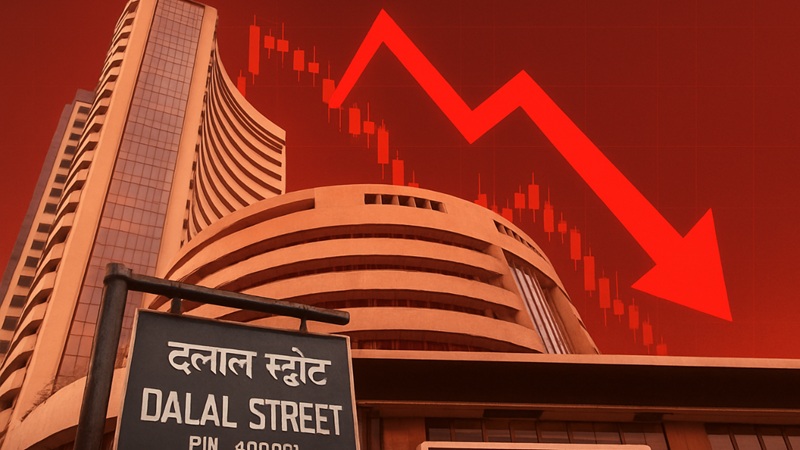
sensex crashes 1200 points:
The Indian stock market ended Friday’s session with sharp losses as heavy selling across banking, IT, and auto stocks dragged the benchmark indices lower. Rising crude oil prices, escalating geopolitical tensions in the Middle East, and a weakening rupee triggered risk aversion among investors, leading to one of the most volatile trading sessions of the week.
At market close, the BSE Sensex plunged more than 1,200 points while the Nifty 50 slipped below the crucial 23,250 mark, wiping out massive investor wealth on Dalal Street.
Market Closing Snapshot
- Sensex: around 74,700 (down over 1,200 points)
- Nifty 50: around 23,220 (down nearly 420 points)
- Nifty Bank: sharp decline amid banking sector selling
- India VIX: surged as volatility increased
The market decline was broad-based, with most sectoral indices finishing in the red.
Top Reasons Behind Today’s Market Fall
1. Crude Oil Prices Surge Amid Middle East Conflict
One of the biggest triggers behind the market sell-off was the sharp jump in global crude oil prices due to escalating tensions involving the US, Israel, and Iran.
Concerns that the conflict could disrupt oil shipments through the Strait of Hormuz — a key global oil transit route — pushed crude prices sharply higher. For India, which imports a large portion of its crude oil needs, higher energy prices could lead to rising inflation and fiscal pressure.
2. Rupee Weakens to Record Low
The Indian rupee weakened significantly during the session, hitting fresh record lows against the US dollar.
Currency depreciation increases import costs and can negatively impact corporate profitability, particularly for companies dependent on imported raw materials.
3. Heavy FII Selling
Foreign Institutional Investors (FIIs) continued to offload Indian equities amid global uncertainty and rising geopolitical risks.
Whenever global tensions rise, FIIs typically move funds toward safer assets such as US treasury bonds and gold, causing capital outflows from emerging markets like India.
4. Global Market Weakness
Asian and European markets also traded lower, reflecting global investor concerns about the ongoing geopolitical crisis and its impact on global growth.
Weak global cues further added to the negative sentiment on Dalal Street.
Sector Performance
Banking Sector
Banking stocks witnessed heavy selling pressure as investors reduced exposure to financial stocks amid market uncertainty.
Major private banks and PSU lenders ended the day sharply lower.
IT Sector
IT stocks remained under pressure due to concerns about global economic slowdown and weaker demand from overseas markets.
Export-oriented technology companies are particularly sensitive to global macroeconomic conditions.
Auto and Consumer Stocks
Auto companies saw declines as higher fuel prices could dampen consumer demand and increase operational costs.
Oil & Gas Stocks Buck the Trend
Interestingly, some energy companies showed resilience due to the spike in crude oil prices.
Stocks like Oil and Natural Gas Corporation and Oil India Limited attracted investor interest as higher oil prices can boost their revenue outlook.
Market Breadth Remains Weak
The overall market breadth remained negative throughout the session:
- Declining stocks significantly outnumbered advancing stocks.
- Mid-cap and small-cap stocks also witnessed strong selling pressure.
- Several stocks hit their intraday lows during the final trading hour.
Investor Wealth Erodes Sharply
Today’s sharp market decline wiped out over ₹6 lakh crore in investor wealth as market capitalization across listed companies on the Bombay Stock Exchange dropped significantly.
The sudden sell-off highlights how sensitive markets currently are to geopolitical developments and energy price shocks.
Key Levels for Traders
Technical analysts suggest that markets may remain volatile in the coming sessions.
Key levels to watch:
Nifty 50
- Immediate support: 23,000
- Next support: 22,800
Sensex
- Immediate support: 74,500
- Next support: 73,800
If these levels break, markets could witness further downside.
What Investors Should Do Now
Market experts advise investors to remain cautious in the short term as volatility is likely to remain high.
Key strategies include:
- Avoid panic selling
- Focus on fundamentally strong companies
- Watch global developments closely
- Keep an eye on crude oil prices and currency movement
Long-term investors may find buying opportunities if quality stocks correct further.
Outlook for Next Week
Going forward, market direction will depend on several factors:
- Developments in the Middle East conflict
- Movement in global crude oil prices
- Foreign investor flows
- Rupee stability against the US dollar
If geopolitical tensions ease, markets could see a relief rally. However, persistent global uncertainty may continue to keep investors cautious.