Europe warns of Russia’s hybrid attacks but struggles to counter them
  Former chief election commissioner calls SIR scheme illegal.
  A Corruption Scandal Is Reshaping Brazil’s Presidential Election
  US citizen injured in Illinois after ICE agents mistook him for fugitive, tried to arrest him
  At 10 years old, Smithsonian’s Black museum is undaunted amid pressure from Trump administration
 Iran War Nears Two Weeks: 4 More U.S. Troops Dead as Trump Issues Vague Threat — Middle East Conflict Intensifies
iran nears weeks more:
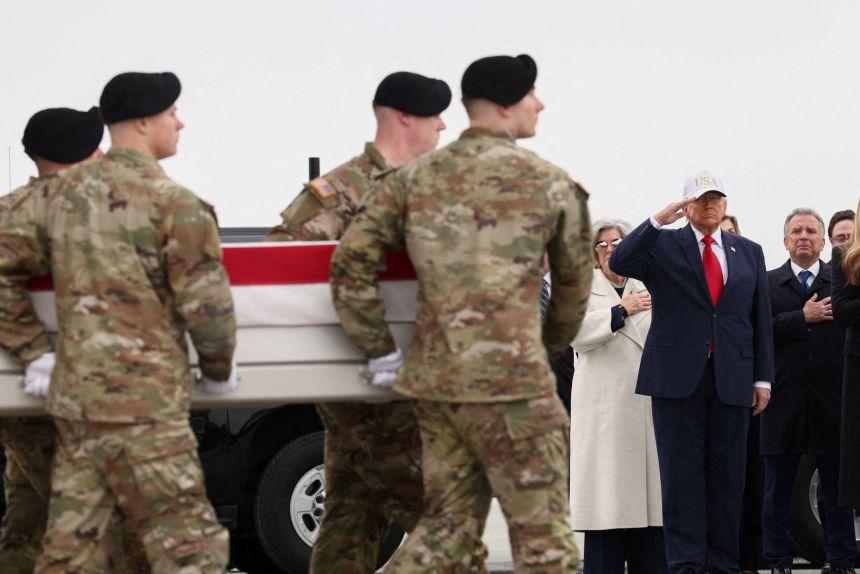
As the war between the United States, Israel, and Iran approaches the two-week mark, the conflict is entering a more dangerous phase. Fresh developments—including the death of four U.S. service members in a military aircraft crash, escalating attacks across the region, and a new warning from President Donald Trump—have raised fears that the conflict could widen further across the Middle East.
The deaths, which occurred when a U.S. Air Force refueling aircraft crashed during a mission linked to operations against Iran, pushed the American military death toll higher and underscored the mounting costs of the war. At the same time, Trump issued a cryptic warning to Iran’s leadership, telling reporters to “watch what happens”, fueling speculation about possible new military actions.
With airstrikes intensifying, oil markets in turmoil, and multiple regional powers drawn into the confrontation, the war—now entering its second week—shows no clear signs of ending soon.
Four U.S. Military Personnel Killed in Aircraft Crash
The latest fatalities came after a U.S. Air Force KC-135 aerial refueling aircraft crashed in western Iraq during a mission supporting operations connected to the Iran war.
According to U.S. military officials, four of the six crew members aboard the aircraft were confirmed dead, while search and rescue efforts continued for the remaining two. The aircraft was involved in an aerial incident with another tanker before crashing.
The second aircraft managed to land safely despite sustaining damage. Early reports indicate the crash was not caused by enemy fire, but the exact cause remains under investigation.
Aerial refueling missions are considered among the most dangerous operations in military aviation because they require precise maneuvering between aircraft flying close together at high speed.
This tragedy marks one of the most significant single incidents involving U.S. forces since the conflict began.
U.S. Death Toll Continues to Rise
The crash added four more casualties to the growing list of American military deaths linked to the conflict. Earlier in the war, U.S. troops were killed in Iranian drone strikes, missile attacks, and operational incidents across the region.
Reports suggest the overall number of American service members killed during the war has now climbed significantly since hostilities began.
The United States has deployed more than 50,000 troops to support operations connected to the war effort across the Middle East, including bases in Iraq, the Gulf states, and naval forces in nearby waters.
The rising death toll has become a politically sensitive issue in Washington, where lawmakers from both parties are increasingly questioning the long-term strategy of the conflict.
Trump Issues Vague Warning to Iran
Amid the escalating situation, President Donald Trump delivered a new warning to Iran’s leadership.
Speaking publicly, Trump said people should “watch what happens” to Iranian leaders soon, a statement widely interpreted as a hint that new U.S. military actions could be imminent.
The president did not elaborate on what actions he was referring to, but analysts say the remark may signal:
-
Additional airstrikes targeting Iranian military infrastructure
-
Possible operations against senior Iranian leadership
-
Expanded cyber or economic warfare
-
A new phase of joint U.S.–Israeli operations
Trump has repeatedly insisted that Iran’s military capabilities are “being decimated” and that the war is progressing faster than expected.
However, Iranian missile and drone attacks have continued, demonstrating that Tehran still retains significant military capability.
How the War Began
The current conflict erupted on February 28, 2026, when the United States and Israel launched a coordinated military campaign against Iranian targets.
The operation targeted Iranian missile bases, naval facilities, and nuclear infrastructure, with Washington arguing that the strikes were necessary to eliminate an imminent threat.
Iran responded quickly with a wave of missile and drone attacks across the region, targeting Israel and U.S.-aligned countries in the Persian Gulf.
The escalation rapidly transformed into one of the largest military confrontations in the Middle East in decades.
Iran’s Retaliation Across the Region
Iran has launched multiple retaliatory attacks since the war began, including strikes on military bases and infrastructure in Gulf states hosting U.S. forces.
Some of the key developments include:
-
Missile and drone attacks on Gulf allies of the United States
-
Strikes targeting Israeli cities and military bases
-
Threats to disrupt shipping in the Strait of Hormuz, one of the world’s most critical oil routes
-
Support from regional allies and proxy groups
Iran has also warned neighboring countries that host American military bases that they could become targets if they continue supporting U.S. operations.
This warning has heightened fears that the conflict could spread to additional countries.
Explosions and Strikes Inside Iran
The war has also seen heavy bombardment inside Iran itself.
U.S. and Israeli forces have reportedly targeted thousands of Iranian military and strategic sites, including missile launch facilities, command centers, and weapons depots.
At the same time, several controversial strikes have drawn international criticism.
One such incident involved a deadly strike near a school, which reportedly killed many civilians. The attack is currently under investigation, and officials say it may have resulted from outdated intelligence.
These events have sparked global debate over civilian casualties and the humanitarian consequences of the conflict.
Global Energy Markets Shaken
The Iran war has already had dramatic consequences for global energy markets.
Iran’s threats to disrupt shipping in the Strait of Hormuz—through which roughly one-fifth of the world’s oil supply passes—have caused oil prices to surge above $100 per barrel.
The uncertainty surrounding the conflict has led to:
-
Rising fuel prices globally
-
Increased inflation fears
-
Strategic oil reserve releases by several countries
-
Disruptions in shipping routes
Energy analysts warn that any prolonged disruption in the Persian Gulf could trigger the largest energy shock since the early 2000s.
Regional Conflict Expanding
The war is no longer confined to Iran and Israel. Several other fronts are now active across the Middle East.
Iraq
Iraq has become a key logistical base for U.S. military operations. The aircraft crash that killed the four American crew members occurred there.
Lebanon
Iran-backed Hezbollah forces in Lebanon have launched attacks against Israel, opening another front in the conflict.
Persian Gulf
Iranian missile strikes have targeted countries hosting U.S. bases, including Bahrain and other Gulf states.
These developments have increased the risk of a wider regional war.
Political Pressure Growing in the United States
Back in Washington, the conflict has triggered growing political debate.
Some lawmakers argue that the war could become another prolonged Middle East conflict with high costs and uncertain results.
Meanwhile, others support the military campaign, saying it is necessary to eliminate Iran’s missile and nuclear capabilities.
Public opinion appears divided, with protests both supporting and opposing the strikes on Iran taking place in several U.S. cities.
The political stakes are high as the death toll increases.
Iran’s Leadership and Military Situation
Iran’s leadership has also been deeply affected by the war.
Reports indicate that the country’s new Supreme Leader Mojtaba Khamenei, who assumed power after his father’s death earlier in the conflict, was injured during the fighting and has not appeared publicly since.
Despite this, Iranian officials say the government remains fully operational and committed to continuing the war.
Tehran has vowed it will never surrender and has warned that the conflict could continue for a long time.
The Risk of a Wider War
Analysts warn that the conflict has already drawn in multiple regional powers and could escalate further if:
-
Iranian proxies intensify attacks
-
Gulf states become directly involved
-
Major powers such as Russia or NATO become more engaged
-
The Strait of Hormuz is blocked
Any of these developments could transform the conflict into a much broader regional war.