
 KPSC paper leak case: Karnataka CM sanctions prosecution of suspended IAS officer Gyanendra Kumar Gangwar
  CBI arrests proclaimed offender in fodder scam case
  Chief Minister expands Jammu and Kashmir cabinet.
  Indian engineering student dies in U.S. internship.
 Trump Says USS Abraham Lincoln Deployment Was “Not Nearly Long Enough” as Sailor Welfare Concerns Grow
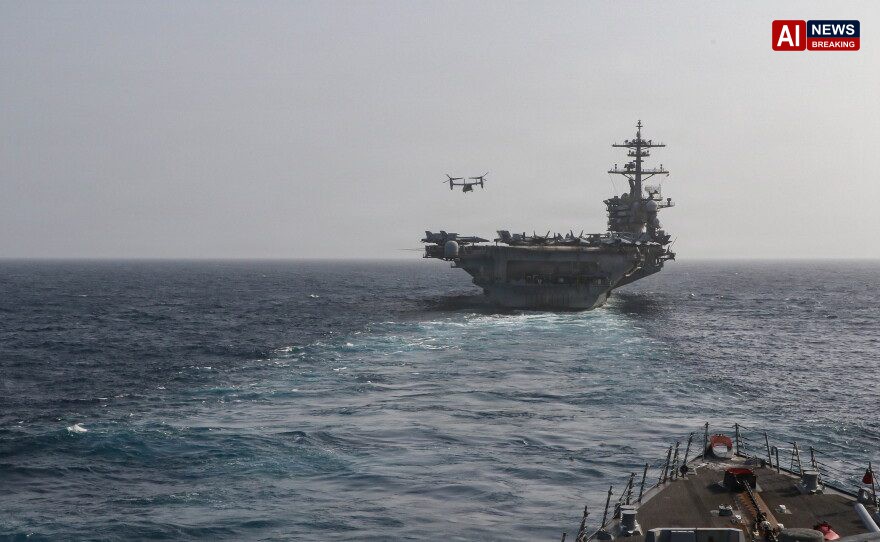
trump says abraham lincoln:
US President Donald Trump has dismissed concerns over the record-length deployment of the USS Abraham Lincoln, saying its more than 260-day mission in the Middle East was “not nearly long enough.” His comments came as lawmakers, military families and others raised questions about reported deteriorating conditions and mental-health concerns among the carrier’s crew.
Key Highlights:
- Trump dismissed concerns about the USS Abraham Lincoln‘s exceptionally long deployment.
- The carrier has spent more than 260 days deployed, including more than 200 days in a combat zone.
- Reports have raised concerns about crew fatigue, living conditions and mental-health support.
- Trump said the Lincoln would be relieved by another aircraft carrier.
- The USS George Washington is moving toward the Middle East as part of the expected carrier rotation.
- The controversy has prompted lawmakers to seek answers about the sustainability of extended deployments.
Trump Defends Lengthy USS Lincoln Deployment
US President Donald Trump has sparked controversy after dismissing concerns about the exceptionally long deployment of the USS Abraham Lincoln, saying the aircraft carrier’s mission in the Middle East had been “not nearly long enough.”
Trump made the remark on August 14 while speaking to reporters at Joint Base Andrews. He was asked whether the carrier had been deployed for too long amid reports that families of sailors were worried about conditions aboard the ship.
Trump rejected the premise.
“No, they are not,” he said when asked whether family members were concerned. When pressed about whether the deployment had gone on too long, Trump responded that it had not — and added that it was “not nearly long enough.”
The comments came as the Lincoln approached the end of an extraordinary deployment that has lasted more than 260 days and included more than 200 days in a combat zone. The carrier has been supporting US military operations connected to the war with Iran.
Trump also indicated that the Lincoln would be relieved and replaced by another aircraft carrier, suggesting that the Navy was preparing to rotate the force rather than simply extend the Lincoln‘s mission indefinitely.
A Record-Breaking Mission
The USS Abraham Lincoln left San Diego in November 2025 and has remained deployed for roughly nine months. Its mission has been extended well beyond the typical duration expected for an aircraft-carrier deployment because of the military requirements associated with the conflict involving Iran.
Reuters reported that approximately 5,000 sailors and Marines are aboard the carrier. The ship has spent more than 200 days without a port call, contributing to concerns about fatigue, morale and the physical and psychological burden on its crew.
The operational demands have also been extraordinary. The Lincoln has reportedly conducted more than 10,000 sorties during the deployment, making the mission one of the most intense extended carrier operations in recent US military history.
For the crew, however, operational success does not necessarily eliminate the effects of prolonged deployment.
Aircraft carriers are effectively floating military cities. Thousands of personnel live and work in confined spaces for months at a time, often under demanding schedules. When a ship remains away from port for an unusually long period, opportunities for rest, recreation and contact with the outside world become more limited.
That makes the length of a deployment an important factor in maintaining morale and readiness.
Concerns Over Conditions Aboard the Carrier
Trump’s comments came amid reports raising questions about conditions aboard the Lincoln.
Military families and lawmakers have described concerns about the physical and mental strain affecting sailors after months at sea. Reports have included claims involving shortages of certain supplies, limited access to fresh food and increasing pressure on mental-health resources.
Some reports have also described incidents involving sailors experiencing severe mental-health distress.
The Navy has acknowledged mental-health cases aboard the ship but has pushed back against characterisations of a broader crisis. Acting Navy Secretary Hung Cao has defended the crew and emphasised its ability to continue carrying out its mission despite the extraordinary operational demands.
The distinction is important.
A long deployment does not automatically mean that a ship is being operated unsafely or that every sailor is experiencing serious psychological difficulties. Aircraft carriers are specifically designed for extended operations, and crews receive medical, chaplaincy and other support.
However, unusually long deployments can increase pressure on both personnel and equipment, particularly when a carrier has limited opportunities to visit ports.
Families Seek Answers
The controversy has increasingly involved the families of sailors serving aboard the Lincoln.
Family members have expressed concern about the prolonged separation and the reported conditions on board. Some have argued that the issue is not simply how long the ship has been deployed, but whether sailors have adequate access to food, supplies, medical care, communication and mental-health support.
Those concerns have attracted the attention of lawmakers.
Democratic lawmakers have called for answers from the administration and the Pentagon regarding the carrier’s conditions and the length of the deployment. Senator Richard Blumenthal, among others, has questioned whether the Navy’s current force structure is capable of sustaining such prolonged operations without placing excessive pressure on crews.
Senator Ruben Gallego has also criticised the administration’s handling of the issue, while other lawmakers have demanded greater transparency regarding the sailors’ welfare.
The political dispute therefore extends beyond Trump’s single comment. At its core is a broader question about how the United States should balance operational demands with the welfare and readiness of military personnel.
Why the USS Lincoln Has Stayed at Sea So Long
The Abraham Lincoln‘s extended deployment is closely connected to the wider US military posture in the Middle East.
The carrier has been supporting operations during the ongoing conflict with Iran. Its aircraft and escort vessels have played an important role in maintaining American military capabilities in the region.
Removing the carrier without a replacement could create a significant gap in US naval power.
That is why the Navy has been preparing another carrier to take over the mission.
The USS George Washington has been moving toward the Middle East from the Pacific, with accompanying naval assets, according to reports. Its deployment is expected to help relieve the Lincoln after its unusually long mission.
The rotation illustrates a fundamental problem facing the US Navy: maintaining a global military presence while having a finite number of aircraft carriers and crews.
The United States currently relies on its carrier fleet to support operations across multiple strategic regions. When a major conflict emerges, ships may have to remain deployed longer than originally planned.
That can create a chain reaction.
One carrier stays longer.
Another carrier is diverted from another region.
Maintenance schedules become more difficult.
Crews face longer deployments.
And commanders have fewer options when additional crises emerge elsewhere.
The Human Cost of Extended Deployments
The debate over the Lincoln highlights a fundamental reality of modern naval warfare: advanced technology does not eliminate the human limitations of military operations.
An aircraft carrier may be capable of remaining at sea for extended periods, but the people operating it still require rest, recreation and sustained access to physical and psychological support.
Extended deployments can affect sleep, family relationships, morale and mental health.
They can also affect operational safety.
A tired sailor or maintenance worker operating complex equipment under pressure may face greater risks than someone who has received regular opportunities for recovery.
This is why military planners traditionally seek to balance operational requirements with crew rotation and maintenance.
The challenge becomes particularly difficult during wartime.
A commander cannot simply withdraw a strategically important carrier because the deployment has become inconvenient. At the same time, keeping personnel at sea indefinitely carries its own risks.
The Lincoln has become a visible example of that dilemma.
Trump’s Comments Trigger Wider Debate
Trump’s statement that the deployment was “not nearly long enough” has intensified the debate because it appeared to conflict with reports concerning the sailors’ welfare.
Supporters of the administration could interpret the statement as an expression of confidence in the crew and its mission.
Critics, however, have argued that the president’s remarks underestimate the sacrifices being made by service members and their families.
The disagreement is partly political, but the underlying issue is operational.
How long can a carrier and its crew remain continuously deployed before the benefits of maintaining the ship on station are outweighed by the costs to personnel, equipment and future readiness?
There is no universal number.
A deployment during a major war may necessarily be longer than a peacetime patrol. Operational circumstances, availability of replacement ships, threat levels and strategic objectives all influence the decision.
Nevertheless, the Lincoln‘s more than 260-day deployment is exceptional.
Pentagon Pushes Back Against Crisis Claims
The Pentagon and Navy leadership have sought to counter the most severe descriptions of conditions aboard the carrier.
Defense Secretary Pete Hegseth has defended the Navy and rejected portrayals suggesting that the ship’s crew has been abandoned or that conditions are broadly unmanageable.
Acting Navy Secretary Hung Cao has similarly praised the sailors and highlighted the fact that the carrier has continued performing its mission under extraordinary circumstances.
US Central Command commander Admiral Brad Cooper also visited the Lincoln as the ship prepared for its eventual return from the region.
Cooper praised the crew’s performance during what has been described as one of the most intense deployments in modern US naval operations.
The military leadership’s message is therefore twofold: acknowledge the extraordinary nature of the deployment while maintaining that the crew has continued to meet its operational responsibilities.
The Importance of the Incoming Relief Carrier
The movement of the USS George Washington toward the Middle East could provide some relief for the Lincoln.
A carrier rotation would allow the Navy to preserve its military presence in the region without requiring the same crew to remain deployed indefinitely.
But the move also illustrates the pressure on America’s carrier fleet.
The United States has a limited number of nuclear-powered aircraft carriers. Each ship requires substantial maintenance, training and preparation between deployments.
Using carriers at extremely high operational tempos can therefore create long-term readiness challenges.
If one carrier is kept deployed for an exceptionally long period, the impact can extend beyond that individual ship.
Maintenance schedules may be compressed. Future crews may face longer preparation cycles. Other regions may temporarily receive less carrier coverage.
The Lincoln episode therefore raises questions that extend well beyond one vessel.
A Larger Test for US Naval Strategy
The situation comes at a difficult moment for US naval strategy.
Washington is attempting to maintain military influence in several parts of the world simultaneously, including the Indo-Pacific, Europe and the Middle East.
The US Navy is expected to respond rapidly to crises while protecting commercial shipping lanes and supporting allied operations.
But naval power depends on more than the number of ships on paper.
Readiness depends on crews, maintenance capacity, logistics and sustainable deployment schedules.
A carrier that remains at sea for months may provide enormous immediate military value. But if its crew becomes exhausted or the ship requires extensive maintenance afterward, some of that short-term advantage can translate into long-term costs.
The USS Lincoln‘s deployment therefore represents a test of how much operational pressure the US Navy can absorb.
Iran Conflict Adds Strategic Pressure
The carrier’s prolonged deployment cannot be separated from the broader Iran conflict.
The United States has maintained a significant military presence around the Middle East as tensions with Tehran have escalated.
Aircraft carriers provide Washington with a mobile air base that does not depend on host-nation permission in the same way as land-based facilities.
They can launch aircraft over long distances and support a wide range of missions.
That makes the Lincoln strategically valuable.
The problem is that strategic value can encourage commanders to keep a carrier deployed for longer than originally intended.
Once a ship is in a critical position, replacing it can be difficult.
The arrival of another carrier is therefore an important development.
It suggests that the Pentagon recognises the need to rotate the force while maintaining America’s regional military capability.
What Happens Next?
The immediate priority will be the safe relief and eventual return of the Lincoln and its crew.
The exact timing of the carrier’s return has not been publicly specified, although officials have indicated that it will be replaced and return home soon.
Once the ship returns, questions about its maintenance and the condition of its crew are likely to remain.
Lawmakers may seek additional information from the Pentagon about:
- The precise length of the deployment and changes to the original schedule.
- The number and nature of reported mental-health cases.
- Food and supply availability.
- Access to medical and psychological support.
- Maintenance requirements after the extended deployment.
- The impact on future Navy deployment schedules.
- Whether current carrier numbers are sufficient for America’s global commitments.
The answers could influence future decisions about US naval force structure and deployment policy.
Beyond the Political Argument
The political debate over Trump’s comments risks obscuring the broader strategic issue.
Whether one agrees with Trump’s assessment or not, the Lincoln deployment demonstrates the extraordinary demands placed on the US military during prolonged conflict.
The United States wants the ability to respond to threats quickly and maintain pressure on adversaries.
But military power ultimately depends on people.
A carrier cannot operate without sailors.
Aircraft cannot fly without maintenance crews.
Weapons systems cannot function without technicians.
And long-term military readiness cannot be sustained if personnel are continuously pushed beyond reasonable limits.
That is why the welfare of the Lincoln‘s crew matters not only as a humanitarian issue but also as a strategic one.
The Meaning of “Not Nearly Long Enough”
Trump’s phrase is likely to remain at the centre of the controversy because of its starkness.
At a moment when families and lawmakers were raising concerns about an unusually long deployment, the president responded that the deployment had not been long enough.
The comment reflects Trump’s emphasis on military strength and operational persistence.
But it also raises a difficult question: How should a military power measure the success of a deployment — by the number of days a ship remains on station, or by whether the ship and its crew return home healthy and ready for the next mission?
For the Pentagon, the answer must ultimately include both.
Operational effectiveness without sustainable personnel management can weaken military readiness over time.
Conversely, excessive caution during a major conflict can undermine strategic objectives.
The challenge is finding the balance.
Conclusion
The USS Abraham Lincoln has become a symbol of the enormous demands created by the continuing US military confrontation with Iran.
Its more than 260-day deployment represents an extraordinary operational achievement, with the carrier supporting thousands of sorties and spending more than 200 days in a combat zone.
At the same time, reports about crew fatigue, living conditions and mental-health concerns have raised legitimate questions about the sustainability of such a mission.
Trump’s declaration that the deployment was “not nearly long enough” has brought those competing perspectives into direct conflict.
The arrival of another carrier to relieve the Lincoln may provide the immediate solution. But the larger debate is unlikely to disappear.
As the United States continues to pursue military operations across multiple regions, Washington will have to determine how much pressure its carrier fleet and personnel can sustainably absorb.
The experience of the USS Abraham Lincoln may ultimately serve as a warning that military readiness is not measured only by how long a ship can stay at sea. It is also measured by whether its sailors, aircraft and systems remain capable of performing when the next mission arrives.
AI Insight: The USS Abraham Lincoln controversy exposes a strategic tension at the heart of modern US military power: maintaining a persistent global presence while ensuring that the personnel and equipment providing that presence remain sustainable. Trump’s “not nearly long enough” remark underscores the administration’s emphasis on maintaining operational pressure, but the reports surrounding the carrier demonstrate why deployment duration cannot be judged solely by battlefield requirements. The incoming relief carrier could resolve the immediate problem, yet the episode raises a larger question about whether the US Navy has enough ships, crews and logistical capacity to meet simultaneous demands in the Middle East, Indo-Pacific and other theatres. In the long term, the effectiveness of American naval power will depend not simply on keeping carriers deployed longer, but on creating a rotation system that protects crew welfare, preserves maintenance readiness and keeps the fleet available for the next crisis.