 Tamil Nadu CM orders Chennai flood‑prevention review.
  India and Bangladesh work
  Shikhar Mohan in India A squad for last two four-dayers against New Zealand A
  Belagavi police arrest two MES leaders.
  Arms Race Intensifies in Korea as the North Is Emboldened by Russia Alliance
 Iran Announces 30,000 Bounty for US Soldiers, Doubles Reward for Women Amid Escalating War
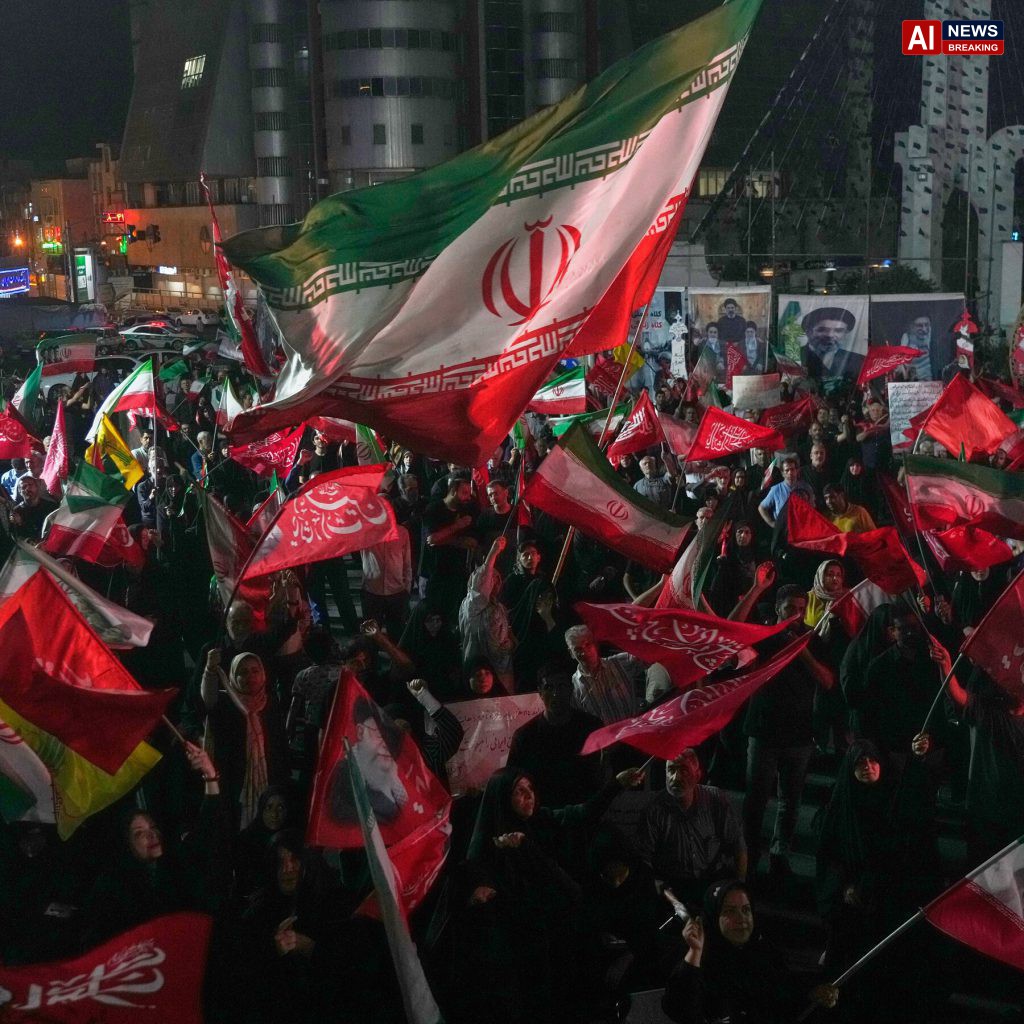
iran announces 30000 bounty:
Iran’s Army chief Amir Hatami has announced a $30,000 reward for anyone who captures or kills a US military personnel and hands them over to Iranian authorities, according to Iranian state media cited by AFP. The reward reportedly rises to $60,000 for Iranian women, while additional incentives include replacing the weapon used and paying twice its value.
Key Highlights:
- Iran’s Army chief Amir Hatami reportedly announced a $30,000 reward for capturing or killing US military personnel.
- The reported reward doubles to $60,000 for women who carry out the action.
- The weapon reportedly used could be bought for twice its value and replaced with a new weapon.
- Iran is demanding that US forces leave the Persian Gulf, Gulf of Oman and Strait of Hormuz.
- The report says 17 US military personnel have been killed since the war began, all outside Iran.
- The announcement comes as the fragile US-Iran ceasefire and negotiations face renewed pressure.
Iran Puts $30,000 Price on US Soldiers
Iran has announced a controversial bounty targeting US military personnel as the conflict between Tehran and Washington continues to simmer despite an earlier ceasefire agreement.
Iranian Army chief Amir Hatami reportedly said that anyone who captures or kills an “invading American military personnel” and hands them over to the Islamic Republic’s Army would receive a reward equivalent to $30,000, or 5 billion Iranian tomans.
The announcement was reported by Iranian state news agency IRNA and cited by AFP, according to NDTV. Hatami said the initiative had been developed after what Iranian authorities described as a large number of requests from people seeking to participate.
The announcement represents a dramatic escalation in the rhetoric surrounding the US-Iran conflict. Rather than being directed at conventional military targets alone, the reward explicitly encourages individuals to target American personnel.
According to the report, Iranian authorities did not specify where or when such actions were expected to take place.
Women Offered Double Reward
One of the most striking elements of the announcement is the different reward offered to women.
Hatami said that Iranian women who successfully capture or kill and hand over US military personnel would receive double the standard reward.
That would place the reported reward at approximately $60,000.
“Courageous Iranian women” were specifically singled out in the announcement, according to the report.
The unusual incentive structure has added international attention to the announcement, particularly because it appears designed to encourage participation beyond conventional military forces.
The policy also reportedly offers additional material benefits to anyone who successfully carries out such an act.
Weapon Used in Attack Could Bring Another Reward
The bounty reportedly goes beyond the cash payment for capturing or killing a US soldier.
According to a report cited by NDTV, Hatami said the weapon used in the action would itself be purchased by the Iranian authorities for twice its price.
The person would then receive a replacement weapon.
Hatami also reportedly said the weapon used would eventually be preserved in a planned museum.
The combination of cash, weapons and symbolic recognition suggests that the Iranian announcement is intended not simply as a financial incentive but also as a propaganda message portraying attacks against US personnel as acts of resistance.
No Known US Ground Deployment Inside Iran
The announcement comes with an important qualification.
According to the NDTV report, there has been no known deployment of US forces on the ground inside Iran since the beginning of the conflict, apart from the incident involving an American airman whose aircraft went down.
That means the practical circumstances surrounding the bounty remain unclear.
US forces have been conducting operations in and around the region, while American personnel have also been stationed at military bases in neighbouring countries.
The reported deaths of American service members have occurred outside Iran, including in countries such as Iraq and Jordan, according to the report.
As a result, the announcement could have implications for American personnel operating across the wider Middle East rather than only troops physically inside Iranian territory.
17 US Military Personnel Reported Killed
The latest figure cited in the report puts the number of US military personnel killed since the beginning of the US-Iran war at 17.
Importantly, the report says that none of those deaths occurred inside Iran.
Some American service members were killed in attacks in neighbouring countries, including Iraq and Jordan.
The deaths have already produced strong reactions from Washington.
US President Donald Trump previously warned that Iran would “pay” heavily for the deaths of American soldiers. Trump said that every time Iran killed an American soldier, Iran would pay for that killing “many times over.”
That earlier warning and Iran’s latest bounty announcement illustrate how quickly rhetoric between the two governments has intensified.
Trump Had Threatened Severe Retaliation
The Iranian announcement follows Trump’s own threats of retaliation.
In July, after several American service members were killed, Trump said Iran would pay many times over for every American soldier killed.
He said the directive had been passed to senior US military leadership, including Defense Secretary Pete Hegseth and Chairman of the Joint Chiefs of Staff General Dan Caine.
The warning came as the United States launched another round of strikes against Iranian military targets.
US Central Command said at the time that the strikes were intended to degrade Iranian military capabilities used to threaten commercial shipping in the Strait of Hormuz.
The latest Iranian announcement therefore comes amid an already established cycle of threats, military action and retaliation.
Fragile Ceasefire Under Pressure
The bounty announcement also comes at a sensitive diplomatic moment.
According to NDTV, Iran and the United States agreed to a temporary ceasefire and further negotiations under the Islamabad Memorandum of Understanding, signed on June 17.
The agreement was intended to provide a pause after weeks of fighting and create space for negotiations toward a longer-term settlement.
However, the ceasefire has remained fragile.
The report says negotiations have not progressed and the two sides have continued exchanging sporadic fire, particularly in southern Iran and around the Strait of Hormuz.
That makes the bounty announcement particularly significant.
A ceasefire can only function if both sides retain some degree of confidence that the other will observe its terms. Public calls for civilians to target military personnel can make that environment considerably more difficult.
Strait of Hormuz Remains a Major Flashpoint
The Strait of Hormuz is central to the broader conflict.
The narrow waterway connecting the Persian Gulf with the Gulf of Oman is one of the world’s most important energy corridors.
Any prolonged disruption could affect global oil and gas markets, shipping costs and inflation.
Iran has repeatedly emphasised its strategic importance and has sought to prevent the United States from maintaining unrestricted military access to the region.
Hatami reportedly declared that the United States no longer had permission to enter the Persian Gulf, Gulf of Oman or Strait of Hormuz.
Such language reflects Tehran’s broader objective of challenging America’s military presence in the region.
For Washington, however, maintaining freedom of navigation and protecting commercial shipping remain major strategic priorities.
A New Dimension to the Conflict
The reported bounty introduces a different dimension to the US-Iran confrontation.
Modern interstate warfare is generally fought primarily through organised military forces. A direct financial incentive for civilians to target enemy personnel potentially expands the conflict beyond conventional military operations.
That creates additional risks.
US personnel could become targets not only during combat operations but also while travelling, working at regional bases or interacting with local populations.
It could also complicate security arrangements for American diplomatic and military facilities.
For Iran, the announcement may serve multiple purposes.
It can be used to demonstrate defiance against Washington, reinforce the government’s resistance narrative and encourage domestic mobilisation.
But for the United States, it could be interpreted as an explicit threat against American service members.
Psychological Warfare and Propaganda
The monetary figure itself may be less important than the political message behind it.
By putting a publicly announced price on American personnel, Tehran is attempting to portray US military power as vulnerable.
Hatami reportedly said American claims about their military power had been exposed during the war with Iran.
That statement is consistent with a broader pattern of psychological warfare.
Both sides have sought to demonstrate that they can impose costs on the other.
Washington has emphasised its superior military capabilities and threatened severe retaliation.
Tehran has emphasised resistance, missile capabilities, regional alliances and its ability to challenge American forces and shipping.
The bounty announcement fits into that competition over perception.
What the Announcement Could Mean for US Forces
The immediate practical impact could be increased security precautions for American personnel in the region.
Military commanders are likely to treat any public bounty against service members as a serious threat indicator.
The greatest concern may not necessarily be a large-scale attack against a military formation.
Instead, individual personnel could potentially face greater risks while outside heavily protected installations.
US forces operating in Iraq, Jordan, Gulf states and other regional locations could therefore face additional security concerns.
The situation could also affect how American personnel interact with local communities.
The reported bounty effectively puts an incentive into the conflict that did not previously exist at this level.
Iran’s Wider Message to Washington
Hatami’s comments were not limited to the bounty.
He also called for the United States to withdraw from the Middle East and argued that American military claims had been exposed during the conflict.
The message is therefore fundamentally strategic.
Iran wants Washington to understand that Tehran does not intend to accept an expanded or permanent American military presence in the region.
The Persian Gulf, Gulf of Oman and Strait of Hormuz are being presented by Iranian officials as areas where Tehran expects greater control or influence.
That position directly conflicts with Washington’s long-standing regional strategy.
Why the Timing Matters
The timing of the announcement could be particularly important because the temporary ceasefire’s future remains uncertain.
The 60-day period associated with the Islamabad memorandum is approaching, while negotiations have stalled, according to the report.
That creates a narrow diplomatic window.
If the ceasefire collapses, both sides could return to sustained military operations.
If negotiations resume, statements such as the bounty announcement could become an obstacle to rebuilding trust.
Either way, the announcement demonstrates how fragile the current situation remains.
US Response Could Shape the Next Phase
The key question now is how Washington responds.
The United States could treat the announcement primarily as propaganda and avoid escalating its rhetoric.
Alternatively, American officials could interpret it as a direct declaration of hostility toward US personnel and increase military pressure on Iran.
Trump’s earlier statements suggest that his administration is prepared to respond aggressively when American troops are killed.
That makes any future incident involving US personnel potentially explosive.
If an American soldier were killed under circumstances linked to an individual responding to the Iranian bounty, pressure for retaliation could increase sharply.
Such a scenario could make diplomacy considerably more difficult.
Global Implications
The dispute extends far beyond Washington and Tehran.
The Middle East remains crucial to the global economy, and the Strait of Hormuz is particularly important to energy markets.
Any significant escalation could affect:
- Global oil prices
- Natural gas markets
- Commercial shipping
- Insurance costs for vessels
- Inflation in energy-importing countries
- Regional investment
- Airline and transportation routes
- Security conditions across the Gulf
Countries such as India, China, Japan and South Korea have significant economic interests in maintaining stable energy supplies and maritime trade.
For India in particular, disruption in the Gulf could have implications for crude oil imports, shipping costs, inflation and the safety of Indian nationals working across the region.
The Risk of a Wider Regional Conflict
Another concern is the possibility that the conflict could spread.
American forces operate from or alongside partners across the Middle East. Iran also maintains relationships with armed groups and political allies throughout the region.
A single attack on US personnel could therefore trigger a broader response.
The danger is not necessarily that Washington or Tehran wants an unlimited war.
The danger is that individual attacks could produce a chain reaction that becomes increasingly difficult to control.
That is why statements such as the Iranian bounty announcement are being closely watched.
Diplomatic Options Are Narrowing
The latest development highlights the shrinking space for diplomacy.
Both sides have publicly demonstrated willingness to impose costs on the other.
At the same time, neither side has completely abandoned the possibility of negotiations.
That contradiction is at the heart of the current crisis.
Washington wants to maintain pressure on Tehran while securing American interests.
Tehran wants the United States to withdraw while protecting its own strategic position.
A negotiated settlement would require both governments to compromise on issues they have publicly portrayed as fundamental.
The bounty announcement makes that challenge even more difficult.
What to Watch Next
Several developments will determine whether the current escalation remains contained or develops into another major phase of the conflict.
1. The fate of the ceasefire
The first major indicator will be whether the temporary ceasefire survives beyond its current deadline.
2. US military response
Washington’s reaction to the bounty could reveal whether the administration sees it as primarily propaganda or a direct operational threat.
3. Iranian military activity
Any increase in attacks against US bases or personnel would likely trigger a significant American response.
4. Strait of Hormuz
The status of shipping through the waterway remains one of the most important indicators of regional stability.
5. Diplomatic negotiations
A resumption of direct or mediated negotiations could lower tensions. Continued diplomatic deadlock would increase the risk of renewed fighting.
Iran’s reported decision to offer $30,000 for the capture or killing of US military personnel, with the reward doubled for women, marks a dramatic development in the increasingly bitter confrontation between Tehran and Washington. The additional reported incentives involving weapons make the announcement even more striking.
The announcement comes after months of military confrontation, American troop deaths and repeated threats of retaliation from President Donald Trump.
It also arrives as a fragile ceasefire faces uncertainty and negotiations remain stalled.
The immediate significance may be psychological and political rather than operational. Iran is signalling that it wants the United States to withdraw from the region and is portraying American military power as vulnerable.
But the risks are real.
If the bounty encourages an attack on an American service member, Trump’s previous promise that Iran would pay “many times over” could become highly consequential.
That possibility illustrates the central danger facing both countries: once threats become tied to specific deaths, retaliation can rapidly create a cycle that overwhelms diplomatic efforts.
For the wider world, the stakes are even higher. Any renewed escalation around Iran, the Persian Gulf or the Strait of Hormuz could affect energy markets and global shipping.
The reported bounty is therefore not simply another provocative statement in the US-Iran conflict. It is another sign that the fragile space between ceasefire and renewed war remains extremely narrow.
AI Insight: Iran’s reported $30,000 bounty is best understood as a combination of psychological warfare, domestic mobilisation and strategic signalling rather than simply a conventional military incentive. The decision comes at an especially sensitive moment because the US-Iran ceasefire remains fragile and Washington has already threatened severe retaliation for American military deaths. The most dangerous consequence would be a successful attack linked directly to the bounty: such an incident could create intense political pressure on President Trump to retaliate, potentially triggering another escalation cycle. For India and other major Asian economies, the broader concern is the Strait of Hormuz. If US-Iran tensions again disrupt shipping or energy flows, the consequences could extend rapidly from the battlefield to oil prices, freight costs, inflation and global economic stability. The immediate priority for both sides should therefore be preventing individual attacks and retaliatory actions from destroying the remaining diplomatic space.