 Floods force evacuations and rooftop rescues
  Revival Rugs Birthday Sale: 20 Percent Off Sitewide Through Sunday
  Ohio mayor says employee error caused chemical leak, lifts evacuation orders
  Nabi, Rashid and quicks lead Afghanistan to tri-series title
  How a U.K. Official’s Wife Set Off a Debate Over Free Speech and Palestinians
 UAE Suspends All Trade and Financial Ties With Iran, Regional Tensions Escalate
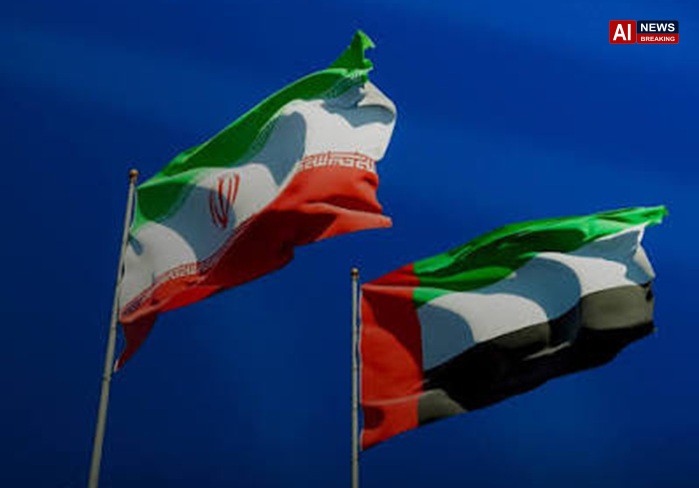
UAE Suspends All Trade and Financial Ties With Iran, Regional Tensions Escalate - AI News Breaking
suspends trade financial ties:
Abu Dhabi, August 19, 2026: The United Arab Emirates has suspended all trade activities, commercial exchanges and financial transactions with Iran until further notice, marking a major escalation in relations between the two Gulf neighbours after the UAE accused Tehran of launching two ballistic missiles towards the country.
The UAE Foreign Ministry said the decision was taken amid regional escalation that it believes is undermining peace and security. The announcement came shortly after the UAE Defence Ministry reported that its air-defence systems had detected two ballistic missiles launched from Iran. Both missiles fell into the sea, with one landing inside UAE territorial waters and the other outside them.
UAE accuses Iran of missile launches
According to the UAE Defence Ministry, the missiles were assessed to have been targeting maritime traffic. The ministry said the UAE remained on high alert and was prepared to respond firmly to any attempt to threaten the country’s sovereignty, security, stability or maritime navigation.
The latest incident triggered emergency alerts in parts of the UAE, although the missiles fell into the sea and there were no reported casualties from the incident. The UAE said its air-defence systems were able to monitor and respond to the threat.
The reported missile launch is particularly significant because it comes after weeks of heightened tensions in the Gulf and follows earlier attacks and threats involving shipping in and around the strategically important Strait of Hormuz.
Iran rejects UAE allegations
Iran has strongly denied the UAE’s accusation.
Iranian Foreign Ministry spokesman Esmaeil Baghaei described the UAE’s claim that two ballistic missiles had been launched from Iranian territory as baseless. Tehran has rejected responsibility for the incident and questioned the UAE’s account of what happened.
The competing claims mean that the origin and intended target of the missiles remain disputed between the two governments. For that reason, the UAE’s attribution should be treated as an official allegation rather than an independently established fact.
The dispute nevertheless carries significant regional implications because the UAE and Iran have maintained important commercial links despite years of political disagreements and international sanctions against Tehran.
UAE takes unprecedented economic step
The decision to halt trade, commercial exchanges and financial transactions represents a major economic escalation.
The UAE has traditionally been one of Iran’s most important commercial gateways, with Dubai in particular serving as a major regional hub for the movement of goods and business between Iran and international markets.
Before the current conflict, the UAE accounted for more than 30 per cent of Iran’s imports and about 13 per cent of its exports, according to Associated Press reporting. That makes the latest decision potentially significant for Iran’s already pressured economy.
Iran has been operating under extensive US-led sanctions for years, while the wider regional conflict has added further pressure through disruptions to shipping, energy supplies and trade.
The suspension of financial transactions could therefore have consequences beyond conventional bilateral trade, particularly for businesses that rely on UAE-based financial and commercial infrastructure to conduct transactions involving Iran.
Dubai’s role as Iran’s commercial gateway
For decades, the UAE has maintained a complicated relationship with Iran.
Political and security tensions have periodically strained ties between Abu Dhabi and Tehran, but commercial relations have remained substantial. Dubai’s proximity to Iran and its position as a major global logistics and financial centre have made it an important destination for Iranian businesses and a key re-export market.
The UAE’s commercial relationship with Iran has also attracted scrutiny from Western governments because of concerns about sanctions evasion and the movement of restricted goods.
The latest suspension puts that longstanding economic relationship under severe pressure.
The move also demonstrates how quickly commercial ties can become secondary when Gulf states perceive a direct threat to their territory, infrastructure or maritime interests.
Maritime security becomes central issue
The UAE’s statement that the missiles were targeting maritime traffic adds another dimension to the confrontation.
The Strait of Hormuz is one of the world’s most strategically important shipping routes and is critical to global energy markets. Any threat to vessels moving through the waterway can have consequences far beyond the Gulf.
Recent attacks and disruptions involving commercial shipping have already raised concerns among energy companies, insurers and international governments.
The UAE has previously reported attacks affecting vessels linked to its national energy sector. Abu Dhabi National Oil Company, or ADNOC, has said that several of its vessels were attacked by missiles and drones while transiting the Strait of Hormuz during the current conflict.
The latest missile incident therefore comes at a particularly sensitive time for regional shipping.
UAE remains on high alert
Despite suspending economic relations, the UAE has continued to signal that its primary objective is protecting national security and maintaining stability.
The Defence Ministry said its forces remain on high alert and are prepared to address potential threats.
The UAE has also emphasized the importance of maritime security and the protection of its national interests as tensions surrounding the wider conflict continue.
The latest measures do not, however, necessarily amount to a complete diplomatic break with Tehran. Current reporting indicates that the UAE has suspended economic and financial dealings while continuing to emphasize regional dialogue and stability.
That distinction could become important if diplomatic efforts resume.
Impact on Iran’s economy
The economic consequences could be particularly serious for Iran.
The UAE is a major source of goods entering Iran and has historically provided Iranian businesses with access to international trading networks. A prolonged suspension could make it more difficult and expensive for Iranian companies to source goods, conduct payments and maintain international commercial links.
Iran is already facing significant economic pressure from sanctions, inflation, disruptions to trade and the broader regional conflict.
The loss of normal commercial access to the UAE could therefore add another layer of pressure at a time when Tehran is already attempting to maintain essential imports and keep its economy functioning amid severe external restrictions.
For UAE businesses, the consequences could also be significant, particularly for companies involved in re-export, logistics, shipping, banking and cross-border trade with Iran.
Gulf markets react to rising tensions
Financial markets reacted cautiously to the latest developments.
The Abu Dhabi main stock index fell around 0.9 per cent on Wednesday, while Dubai’s benchmark declined around 0.2 per cent, according to Reuters. The moves reflected investor concerns over the potential impact of renewed regional tensions on trade, shipping and the wider Gulf economy.
The market reaction was relatively contained, but investors remain highly sensitive to developments around the Strait of Hormuz because prolonged disruption could affect oil exports, shipping costs and regional economic activity.
Oil prices have also remained elevated as uncertainty surrounding the waterway continues to influence global energy markets.
A major setback for UAE-Iran economic ties
The UAE’s decision represents a serious setback for the economic relationship between the two countries.
For years, the two sides have attempted to maintain commercial engagement despite disagreements over regional security, sanctions and Iran’s relations with other Gulf states.
The current escalation demonstrates the limits of that economic pragmatism when security concerns become acute.
The UAE’s move could also influence other Gulf states that are closely monitoring developments involving Iran, particularly those whose economies depend heavily on maritime trade and energy exports.
What happens next?
The immediate priority for the UAE will be preventing further attacks and protecting maritime traffic.
For Iran, the challenge will be managing the diplomatic and economic consequences of the UAE’s decision while continuing to deal with the broader regional conflict and international sanctions.
A prolonged suspension of trade and financial transactions could significantly affect businesses on both sides, particularly if other Gulf states adopt similar restrictions.
At the same time, the competing accounts over the missile incident leave room for further diplomatic confrontation. Abu Dhabi maintains that the missiles were launched from Iran and posed a threat to maritime traffic, while Tehran rejects the allegation as baseless.
The immediate crisis may therefore depend on whether further military incidents occur and whether regional diplomatic channels can prevent the latest confrontation from expanding.
For now, the UAE’s decision has transformed a military-security dispute into a major economic confrontation, putting one of Iran’s most important regional commercial relationships at risk.
The suspension of trade, commercial exchanges and financial transactions will remain in place until further notice, according to the UAE, leaving the future of one of the Gulf’s most important Iran-linked trading relationships uncertain.