 Albany resident fires warning shot to stop school shooter.
  Floods force evacuations and rooftop rescues
  Revival Rugs Birthday Sale: 20 Percent Off Sitewide Through Sunday
  Ohio mayor says employee error caused chemical leak, lifts evacuation orders
 Haryana Congress demands regularization of Nigam contract staff
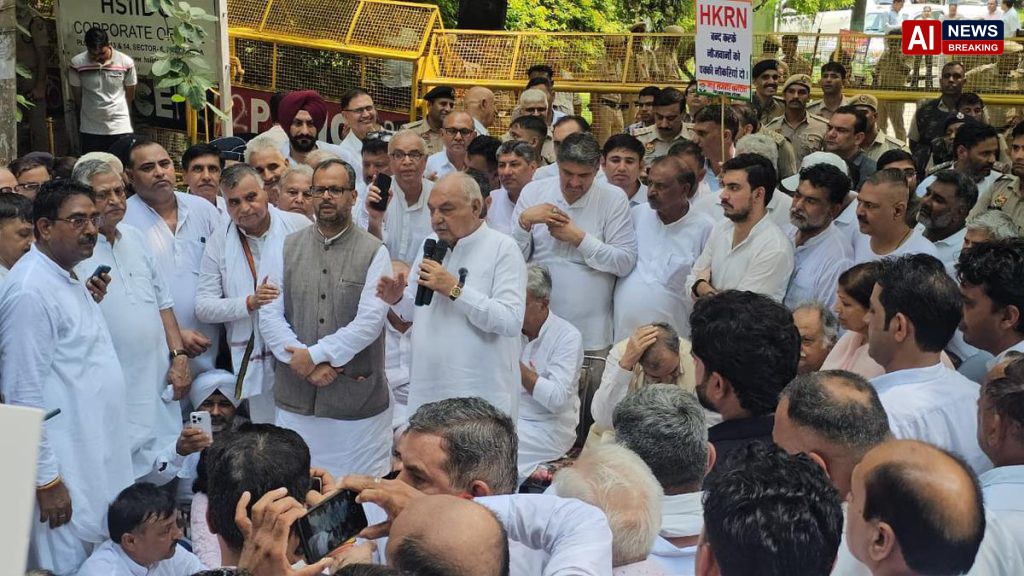
Haryana Congress demands regularization of Nigam contract staff - AI News Breaking
The political landscape in the north Indian state of Haryana has been sharply divided in recent days following a contentious demand by the opposition Congress party for the regularisation of government staff recruited through the Haryana Kaushal Rozgar Nigam. This state-owned enterprise, originally established to manage skill development and employment initiatives, has become the focal point of a brewing crisis within the public administrative sector. The Congress leadership has issued a stern warning to the ruling Bharatiya Janata Party administration, asserting that the continued employment of thousands of workers on contractual bases is not only unsustainable but also fundamentally unfair to those who have served the state with dedication for years..
The pressure is mounting on the state government to provide a definitive timeline and a concrete policy framework that would grant these temporary employees permanent status, social security benefits, and job security consistent with their length of service and contributions to public service delivery.At the heart of this dispute is a fierce allegation leveled by former Chief Minister Bhupinder Hooda, a prominent figure within the Congress party, against the current BJP-led administration. Hooda has publicly accused the government of deliberately promoting a contract-based system to bypass statutory recruitment rules and undermine the constitutional provisions regarding reservations. According Hooda, the government is filling even gazetted posts, which traditionally require competitive examination and permanent appointment, through the Nigam as a temporary measure that has now become a permanent fixture..
He argues that this strategy indirectly sidesteps the reservation quotas mandated for Scheduled Castes, Scheduled Tribes, Other Backward Classes, and economically weaker sections, thereby diluting the social justice framework that is central to the state’s commitment to equitable opportunity. This accusation strikes at the core of the political identity of the BJP, which often positions itself as a party that respects constitutional mandates while prioritizing economic efficiency.The Haryana Kaushal Rozgar Nigam was initially conceptualised as a dynamic entity designed to bridge the gap between skill development and employability in the surge of technological and industrial growth within the state. Its mandate included organizing training programs, facilitating job placements, and managing various skill-related ventures..
However, over time, the scope of its recruitment activities expanded significantly, with the state government increasingly relying on the Nigam to fill vacancies in various departments, including healthcare, education, and administrative offices. Critics argue that this expansion was not accompanied by adequate oversight or a clear exit strategy, leading to a situation where thousands of employees are working in roles that demand expertise and experience yet remain without the job security of permanent appointments. The lack of permanent status has left these workers in a state of precarious existence, with no assurance of their future despite their integral role in the functioning of critical state services.The scale of the issue is vast, involving thousands of employees who have been serving in various capacities for decades..
Many of these workers were recruited during different phases of administrative needs, often when immediate manpower was required to handle specific projects or to fill sudden vacancies caused by retirements or resignations. Over the years, these temporary assignments have stretched into long-term engagements, with employees performing the same duties as their permanent counterparts but receiving significantly lower wages and lacking access to essential benefits such as pension schemes, health insurance, and paid leave. The disparity in treatment has created a deep sense of resentment among these workers, who feel that their loyalty and hard work are being exploited by a system that refuses to acknowledge their status as permanent civil servants..
This sentiment has now been amplified by the political opposition, which sees an opportunity to rally popular support by championing the cause of these marginalized public employees.Bhupinder Hooda’s statement has injected a new level of urgency into the debate, particularly given the broader political context in Haryana. With state assembly elections looming on the horizon, every administrative decision is scrutinized for its political ramifications. The Congress party argues that the BJP government’s reliance on contract labor is a cynical ploy to reduce long-term financial liabilities and maintain a flexible workforce that can be easily managed or dismissed without the complexities of permanent civil service regulations..
Hooda contends that by continuing to treat gazetted positions as temporary contracts, the government is not only violating the spirit of reservation policies but also creating a two-tier system within the public sector. This system, he claims, advantages a select few who are recruited through traditional means while keeping a larger pool of workers in a state of perpetual uncertainty, thereby fostering discontent and instability within the administrative machinery.The government has not remained silent in the face of these accusations. Officials from the ruling party have defended their actions by emphasizing the need for flexibility and efficiency in public administration..
They argue that the Nigam model allows for quicker recruitment processes, which are essential for addressing immediate manpower shortages in critical sectors. Furthermore, they maintain that the contractual nature of these appointments is a global trend aimed at optimizing resources and reducing the fiscal burden of maintaining a bloated permanent workforce. The administration points out that many of these workers are paid salaries that are competitive within the private sector and that the Nigam provides them with opportunities for skill enhancement and professional development that might not be available in traditional government jobs..
Despite these assertions, the opposition remains unconvinced, arguing that temporary measures should not become permanent fixtures without rigorous evaluation and regulatory compliance.Legal experts and constitutional scholars have weighed in on the issue, noting that the Supreme Court of India has previously ruled on similar matters in other states, often mandating the regularization of contract employees who have worked for extended periods. The judiciary has consistently held that if employees are performing substantial work for a long duration, they cannot be treated as mere temporary hires indefinitely. These legal precedents add weight to the Congress party’s demands, suggesting that the government may be on shaky legal ground if it continues to resist regularization..
However, the path to regularization is complex, involving issues of budgetary allocation, policy formulation, and potential backlash from permanent employees who may view regularization as an unfair advantage to those who bypassed competitive exams. The government must navigate these sensitivities carefully to avoid further legal challenges and administrative disruptions.The social implications of the dispute are profound, particularly given the demographic composition of the workforce. A significant portion of the Nigam employees belong to marginalized communities, including Dalits and Other Backward Classes..
If the allegations of undermining reservation provisions are true, the issue transcends mere employment rights and touches upon fundamental questions of social justice and equity. The Congress party argues that by bypassing reservation quotas, the government is disenfranchising the very communities it claims to uplift. This narrative resonates with a large section of the electorate in Haryana, where social identities play a crucial role in political alignments..
The potential for this issue to mobilize vote banks is high, making it a critical battleground for both parties in the upcoming elections.Protests and rallies organized by various employee unions have added to the pressure on the government. These demonstrations, often led by the Congress party, see thousands of workers gathering in state capitals.
Updated: August 19, 2026
By weaponizing the regularization crisis, the opposition transforms an administrative backlog into a potent electoral weapon against the ruling party’s equity commitments.
This strategic framing forces the government to choose between fiscal pragmatism and political survival in a contest over social justice.