 CPI(M) turns the heat on Keralam govt. over SMA drug controversy
 Finnish puppy livestream boosts pet ownership and sales.
 Punjab CM alleges he was made to sit at Delhi airport, officials told him they were ‘under pressure from above’
CPI(M) turns the heat on Keralam govt. over SMA drug controversy
**
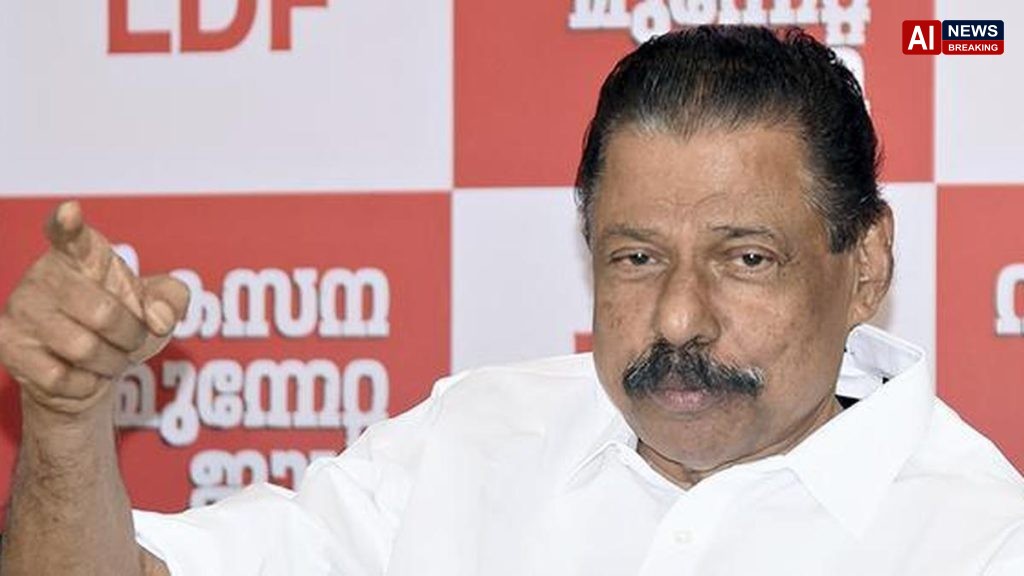
CPI(M) turns the heat on Keralam govt. over SMA drug controversy - AI News Breaking
cpim turns heat keralam:
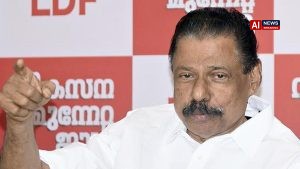
The Communist Party of India (Marxist) has intensified its attack on the Kerala state government, accusing it of advancing a covert privatisation agenda in the health sector through its handling of the controversial SMA (Spinal Muscular Atrophy) drug case. In a press conference held in Thiruvananthapuram, CPI(M) State ary M.V. Govindan warned that the administration’s policies were eroding the public health framework that the state has long prided itself on, and that the recent episode surrounding the procurement and pricing of the life‑saving medication was a stark illustration of this shift.Govindan’s remarks came after the Health Department announced a new procurement arrangement for the SMA drug, a therapy that has been hailed globally for its ability to halt disease progression in infants afflicted with a rare genetic disorder..
The government’s decision to source the drug through a private pharmaceutical firm, rather than through the state‑run health supply chain, sparked immediate backlash from opposition parties, patient advocacy groups and segments of the medical community. Critics argue that the move not only bypasses established procurement norms but also risks inflating costs for patients who already face substantial financial strain.“The Kerala model of health care, built on the pillars of accessibility, affordability and public ownership, is being undermined,” Govindan said, pointing to the state’s recent policy documents that, in his view, subtly encourage private sector participation in areas traditionally managed by the public sector. “What we are witnessing is not a genuine effort to improve service delivery, but a calculated strategy to open the doors for private profit at the expense of the most vulnerable.” He urged the government to revert to the earlier procurement protocol, which involved direct purchase through the state medical supplies corporation, a system that has historically secured lower prices through bulk buying and transparent tendering processes.The SMA drug controversy erupted when the Health Department disclosed that it had entered into a memorandum of understanding (MoU) with a multinational pharmaceutical company to obtain the medication for a select group of patients..
The agreement, officials claimed, was necessary to expedite access given the drug’s limited availability and the urgency of treatment. However, the MoU also stipulated a price point that was significantly higher than the cost reported in other Indian states where the drug is procured through public channels. This disparity prompted questions about the criteria used to justify the higher expenditure, and whether the decision was influenced by external lobbying.Patient organisations quickly mobilised, staging protests outside the Health Department’s headquarters and demanding a transparent investigation..
“Our children’s lives should not be a bargaining chip in a political game,” said Anita Nair, president of the Kerala SMA Support Forum. “The government must ensure that the drug is procured at the most affordable price, without compromising on quality. The current arrangement feels like a back‑door entry for private interests.” Nair’s group, alongside several medical professionals, submitted a petition to the state’s High Court, seeking an injunction against the MoU and calling for a review of the procurement process.In response, the Health Minister defended the decision, stating that the arrangement was a one‑off measure designed to address an immediate need..
“We are dealing with a rare condition that requires swift action. The private partnership allowed us to secure the drug within weeks, whereas the conventional public tender would have taken months, potentially endangering the lives of infants who can only benefit from early intervention,” the minister explained. He also asserted that the price negotiated was in line with international market rates and that the state would absorb the cost to prevent any financial burden on families.The CPI(M) seized upon the minister’s justification, highlighting a pattern it claims is evident across several sectors..
Over the past two years, the government has introduced a series of reforms aimed at attracting private investment in health infrastructure, ranging from the establishment of public‑private partnership (PPP) models for hospital upgrades to the liberalisation of licensing norms for private clinics. While the administration portrays these steps as efforts to modernise the health system and reduce waiting times, the opposition argues that they erode the foundational ethos of a publicly funded health service.Analysts note that the debate mirrors a broader national discourse on the role of the private sector in Indian healthcare. Proponents of privatization argue that state resources are insufficient to meet growing demand, especially for cutting‑edge treatments like gene‑therapy‑based drugs..
Opponents, however, warn that unchecked private involvement can lead to price escalation, reduced accountability, and a two‑tiered system where quality care becomes contingent on one’s ability to pay. Kerala, often lauded for its high health indices, now finds itself at a crossroads, with the SMA episode acting as a litmus test for the state’s policy direction.Legal experts have pointed out that the procurement controversy may have implications for the state’s compliance with the Central Goods and Services Tax (CGST) Act and the Public Procurement (Preference to Make in India) Order, both of which prescribe specific procedures for acquiring essential medicines. “If the MoU circumvents the mandated tendering process, it could expose the government to legal challenges and potential financial penalties,” remarked Advocate R..
Sreedharan, who represents a coalition of civil society groups. He added that a judicial review could compel the administration to disclose the terms of the agreement, including the cost breakdown and any ancillary benefits granted to the private partner.Meanwhile, the Kerala government has announced the formation of an expert committee to examine the procurement framework for high‑cost drugs. The committee, chaired by a former senior bureaucrat, is tasked with evaluating the feasibility of a centralized state procurement mechanism that could negotiate better prices through bulk purchases and pooled demand..
In a statement, the Health Department clarified that the committee’s mandate includes reviewing existing MoUs to ensure they align with the state’s fiscal policies and ethical standards.The CPI(M) has welcomed the move, describing it as a “step in the right direction” but cautioning that the committee must be genuinely independent and free from political interference. “We will monitor the proceedings closely and demand that any recommendations be implemented without delay,” Govindan asserted. He also called for an immediate suspension of the current MoU until a comprehensive audit is completed, arguing that the health of children with SMA cannot be held hostage to procedural delays.Public sentiment appears divided..
A recent opinion poll conducted by a local research agency indicates that 58 % of respondents support the government’s intent to secure the drug quickly, while 42 % express concerns about the pricing and lack of transparency. Among healthcare professionals, the split is sharper, with many senior doctors echoing the opposition’s call for a more robust public procurement system, while younger clinicians emphasise the urgency of treatment and the practical challenges of navigating bureaucr.
Updated: October 23, 2026
CPI(M) leader M.V. Govindan accused Kerala’s health ministry of covertly privatizing drug procurement after it signed a costly private deal for the life‑saving SMA medication, warning that such moves threaten the state’s affordable public‑health model. The government defended the one‑off arrangement as a rapid response to a rare disease, while patient groups and opposition demand a transparent audit and a return to state‑run purchasing.
Insight: Kerala’s slip toward private‑led drug procurement threatens to erode the egalitarian health model that underpins its development narrative, signaling a shift from collective welfare to market‑driven decision‑making.
If unchecked, this precedent could open the floodgates for profit‑centric contracts across the public sector, entrenching inequality and inviting costly legal challenges that undermine both fiscal prudence and public trust.