
 Phillies Cut Ties With 11-Year MLB Shortstop After Disappointing Season
  Billion-Dollar Ballers: Two New Athletes Hit $1 Billion In Career Earnings
  Brazil votes to decide between Lula and Bolsonaro
  Woman APEPDCL engineer found dead on road near Rajam; family says it was no accident
  Tamil Nadu minister reviews Villupuram monsoon preparedness.
 Back-to-back floods push Odisha disaster management to limits
Odisha’s disaster management infrastructure is being severely tested by back-to-back floods as a second wave of heavy monsoon rains submerges areas still recovering from the initial surge. The consecutive deluges have devastated Kharif crops, damaged urban and rural infrastructure in districts like Balasore and Cuttack, and led to a spike in health crises, leaving officials and residents struggling to cope with the relentless pressure.
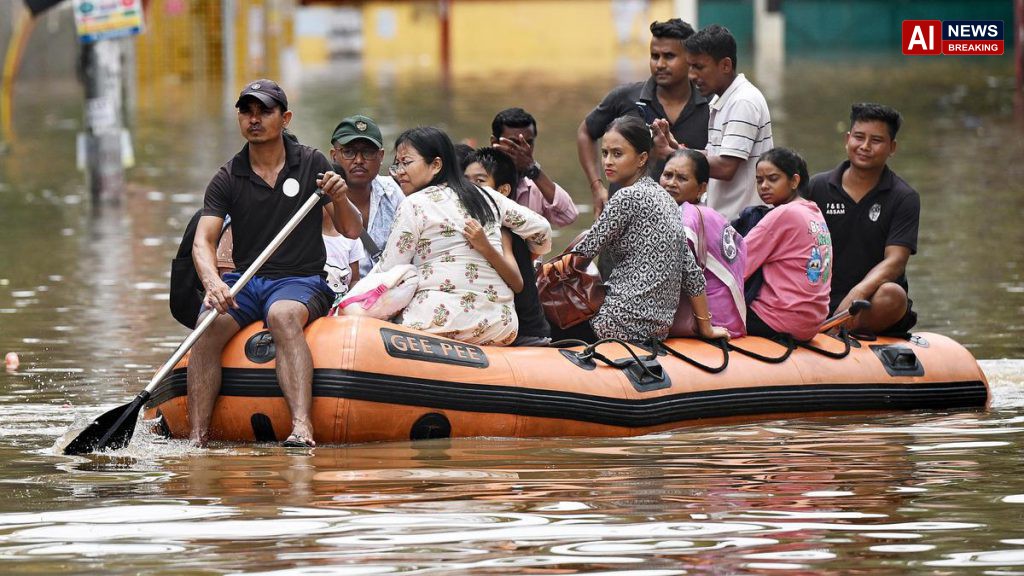
Assam Flooding Leaves at Least 99 Dead and Over 7 Lakh Affected. - AI News Breaking
backtoback floods push odisha:
Back-to-back floods: How a relentless monsoon is testing OdishaThe monsoon season in Odisha has long been anticipated as a period of agricultural renewal, but for communities in the northern and coastal districts, this year’s rainfall has transformed into a narrative of relentless pressure and exhaustive recovery. For many households, the memory of clearing thick layers of mud and repairing structural damage from an initial surge is still fresh. Before the debris could be fully cleared and the psychological toll of the first disaster assessed, a second, more voluminous deluge arrived, submerging what little progress had been made..
This back-to-back flooding has pushed the state’s disaster management infrastructure to its limits, raising urgent questions about the efficacy of existing mitigation strategies in the face of increasingly erratic weather patterns.The geography of northern Odisha, characterized by a basin-like topography that channels water from the Chhota Nagpur plateau, renders it particularly vulnerable to such consecutive extremes. The Brahmani, Baitarani, and Mahanadi river systems, which are the lifelines of the region, swelled beyond their banks with alarming speed during the first downpour. Official warnings were issued, and evacuations were carried out, but the sheer volume of water left behind a legacy of silted fields and compromised infrastructure..
Residents who had survived the initial crisis were still living in temporary shelters or makeshift repairs when the second wave of rains began, washing away some displaced families’ remaining belongings and rendering their homes uninhabitable once more.In the coastal districts of Kendrapada, Jagatsinghpur, and Battagaon, the compounding effect of high tides and heavy rainfall created a scenario of compounded distress. Sea walls, recently reinforced after previous cyclonic events, held firm against the surge, but the inland drainage systems failed under the sustained pressure. The convergence of river water flowing downstream and rainwater unable to drain into the ocean created stagnant pools across vast stretches of paddy fields and residential neighborhoods..
Local administrators report that the continuity of the crisis has disrupted the traditional rhythm of disaster response, where recovery typically begins once the waters recede. Here, there has been no gentle retreat, only a pause before the next surge.The agricultural sector, which employs the majority of the rural population in these regions, faces a catastrophic outlook. Kharif crops, which are sown during the monsoon, were either submerged or damaged by the force of the flowing water during the first flood..
Farmers were hesitant to replant, fearing a repeat of the disaster, and were only beginning to sow when the second wave arrived. The duration of water stagnation has led to root rot and the proliferation of pests, threatening food security for millions. Government agricultural experts are currently visiting damaged regions to assess the extent of the loss, but the window for effective intervention is closing rapidly, leaving many cultivators facing unprecedented financial ruin.Health concerns have also escalated due to the prolonged presence of stagnant water..
Waterborne diseases such as cholera, jaundice, and diarrhea have seen a sharp spike in remote villages where access to clean drinking water was already strained by the first flood. Medical camps set up by the state health department are operating at capacity, yet the reach is limited by damaged roads and flooded terrains. The mental health toll is equally significant, with reports indicating rising levels of anxiety and depression among survivors who feel that the state’s support mechanisms are failing to keep pace with the disaster’s intensity..
The psychological fatigue of repeated displacement is a silent crisis that often goes unaddressed in immediate post-disaster reports.The infrastructure damage extends beyond rural areas, affecting urban centers in districts like Balasore and Cuttack. Roads have turned into impassable stretches of mud and debris, hindering the movement of essential goods and emergency services. Power outages, caused by submerged transformers and damaged lines, have left thousands without electricity for days, complicating efforts to pump out water and maintain communication..
In several towns, schools have been used as relief camps, disrupting the education of thousands of children. The repetitive nature of the damage means that repair crews are often forced to dismantle recently fixed structures to clear new debris, wasting resources and time.State officials have established high-level task forces to coordinate the response, invoking the State Disaster Management Authority to oversee relief operations. The distribution of food grains, non-food items, and cash assistance has been prioritized, but logistical challenges remain severe..
Helicopters and boats have been deployed to reach isolated villages cut off by floodwaters, but the sheer scale of the affected area stretches these resources thin. Critics argue that while the political will to respond is present, the administrative machinery is bogged down by the complexity of managing two simultaneous disaster cycles, leading to delays in the delivery of aid to the most vulnerable communities.The economic implications of these consecutive floods extend beyond the immediate loss of property and crops. The disruption of local supply chains has led to inflation in essential commodities, affecting even those who were not directly inundated..
Markets in district headquarters have seen sporadic trading, with merchants hesitant to bring in stock due to uncertain accessibility. The tourism industry, which relies on the region’s natural landscapes, has also suffered, with visitors cancelling plans and local businesses closing down. The long-term economic recovery will require significant investment, not just in reconstruction, but in reviving the confidence of investors and traders who are wary of the region’s increasing climatic volatility.International and national NGOs have stepped in to supplement government efforts, bringing in specialized teams for water purification, sanitation, and temporary shelter construction..
These organizations play a crucial role in filling the gaps left by overwhelmed state resources, often reaching areas that government officials struggle to access. Collaborative efforts between local communities and aid agencies have been vital in setting up temporary bridges and drainage systems. However, there is a growing consensus among aid workers that reactive measures are no longer sufficient..
The recurring nature of these disasters underscores the urgent need for a shift towards long-term, climate-resilient infrastructure and urban planning.Climate scientists point to the changing patterns of the monsoon as a primary driver behind this increased frequency and intensity of flooding. Global warming is altering atmospheric conditions, leading to heavier rainfall events in shorter durations. Odisha’s location on the Bay of Bengal makes it a hotspot for cyclonic activity, and the combination of cyclones and heavy monsoon rains exacerbates the flooding risk..
Experts emphasize that without significant investment in early warning systems, improved drainage infrastructure, and climate-adaptive agricultural practices, the state will continue to face similar crises. The data from this year’s floods serves as a stark indicator of the vulnerabilities inherent in current development models.Despite the overwhelming challenges, stories of community resilience emerge from the floodwaters. Neighbors helping neighbors clear debris, volunteers distributing food, and local leaders organizing makeshift ambulances highlight the social fabric that holds these communities together..
This grassroots response is often the first line of defense in the absence.
Odisha’s consecutive floods expose the fragility of reactive disaster management, signaling an urgent need to pivot toward climate-resilient infrastructure. As traditional recovery cycles are abolished by relentless weather, immediate relief efforts must evolve into long-term adaptive strategies to survive the new normal of erratic monsoons.