
 Legal action ordered against officials over irregularities in voter list in Pilibhit
  Floods force evacuations and rooftop rescues
  Revival Rugs Birthday Sale: 20 Percent Off Sitewide Through Sunday
  Ohio mayor says employee error caused chemical leak, lifts evacuation orders
  Nabi, Rashid and quicks lead Afghanistan to tri-series title
 Iran condemns Trump’s new sanctions, calls them ‘economic terrorism,’ ‘crimes against humanity’
** The White House’s new sanctions targeting Iran’s energy, shipping and banking sectors have been fiercely condemned by Tehran as “economic terrorism” and a “crime against humanity.” Iranian officials argue the measures violate international law, threaten the nation’s economy and healthcare system, and risk destabilizing regional markets, while the U.S. maintains they are needed to curb Iran’s malign activities.
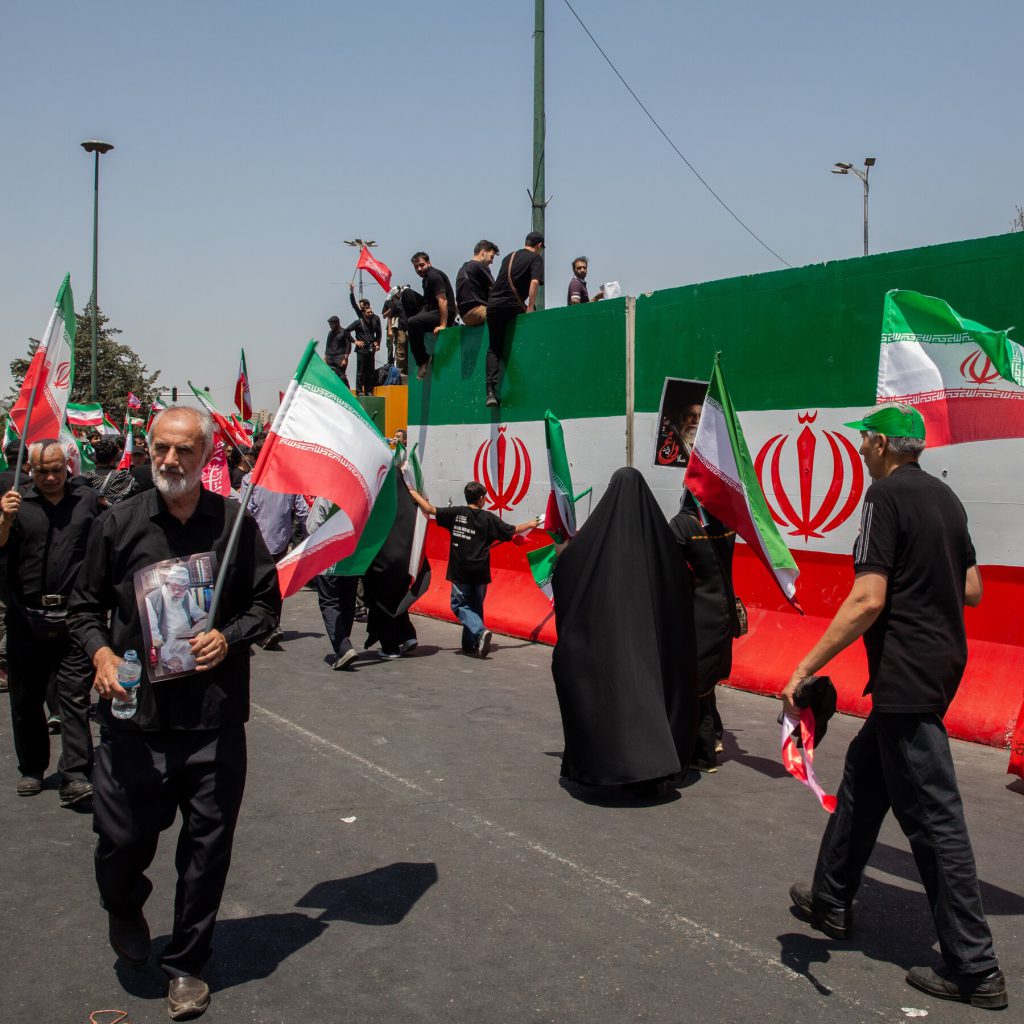
Iran Sets Tough Conditions to Reopen Strait of Hormuz as US Deal Remains Elusive - AI News Breaking
iran condemns trumps sanctions:
The diplomatic tensions between the United States and Iran have escalated to a critical juncture following the announcement of extensive new economic sanctions by the White House. These measures, which target critical sectors of the Iranian economy including energy, shipping, and banking, have been met with fierce condemnation from Tehran. Iranian officials have characterized the move not merely as a geopolitical dispute, but as an act of ‘economic terrorism’ and a profound crime against humanity..
This stark rhetoric underscores the deepening rift between the two nations and signals a potential shift toward more hardened positions on both sides of the conflict. The implications of these sanctions extend far beyond Bilateral relations, threatening to destabilize regional markets and exacerbate humanitarian concerns that have long plagued the Iranian populace.At the heart of the controversy is a directive issued by President Donald Trump, which explicitly warned of sweeping economic consequences for any country that provides what he described as “any type of lifeline to Iran.” This threat serves as a coercive mechanism designed to isolate Tehran on the global stage by targeting its financial lifelines. The administration argues that these measures are necessary to counter what it perceives as Iran’s threatening behavior in the Middle East, including its ballistic missile program and support for proxy militias..
However, critics argue that the scope of these secondary sanctions is overly broad, effectively punishing third-party nations and private entities that engage in legitimate commerce with Iran. The ambiguity of the term ‘lifeline’ has left many international businesses and governments in a state of uncertainty, unsure of what constitutes compliance and what will trigger secondary penalties.In response, Iranian authorities have launched a vigorous diplomatic offensive, condemning the sanctions as illegal under international law. The Foreign Ministry issued a statement asserting that such punitive measures violate the sovereignty of the Islamic Republic and constitute a form of collective punishment against the Iranian people..
Officials emphasized that the sanctions disproportionately affect ordinary citizens, leading to skyrocketing inflation, currency devaluation, and shortages of essential goods. By labeling the policy as ‘economic terrorism,’ Tehran aims to frame the United States not as a defender of global order, but as an aggressor intent on destabilizing a sovereign nation through economic strangulation. This narrative is being actively promoted across Iranian state media and through diplomatic channels to garner support from sympathetic nations in the Global South.The designation of these actions as ‘crimes against humanity’ is a particularly serious accusation, one that carries significant weight in international legal discourse..
Human rights organizations have previously highlighted the severe impact of sanctions on access to healthcare, medicine, and nutrition in Iran. Iranian lawmakers have pointed to rising cases of kidney failure due to contaminated water supplies and a lack of affordable dialysis treatments as direct results of economic isolation. They argue that by cutting off access to international banking systems, the United States is preventing the import of life-saving medical equipment and pharmaceuticals..
While US officials maintain that humanitarian goods are exempt from sanctions, critics contend that the fear of inadvertent violation has led banks to engage in ‘overcompliance,’ effectively blocking even legitimate medical transactions.The global reaction to these developments has been mixed, reflecting the complex web of economic and political interests in the region. Major European powers, including France, Germany, and the United Kingdom, have expressed concern over the extraterritorial reach of US sanctions. These nations, which were part of the previous Joint Comprehensive Plan of Action, argue that unilateral measures undermine multilateral diplomacy andinternational law..
They fear that the new sanctions could derail any future attempts at nuclear negotiations by with Tehran. Meanwhile, Asian powers such as China and India, which are significant importers of Iranian oil, have sought to navigate the delicate balance between maintaining energy supplies and avoiding US penalties. Some have turned to alternative payment mechanisms, such as barter systems or digital currencies, to circumvent the financial restrictions.Within Iran, the government is leveraging this external pressure to consolidate domestic power..
The ruling elite often uses the narrative of Western hostility to justify internal crackdowns on dissent and to rally nationalist sentiment. By portraying the sanctions as an existential threat, the leadership can frame any economic hardship as a sacrifice for national independence and dignity. This strategy has proven effective in recent years, helping to maintain political stability despite widespread economic grievances..
However, the mounting pressure on the middle class, who have seen their purchasing power eroded by chronic inflation, poses a long-term risk to the regime’s legitimacy. The gap between the official rhetoric of sovereignty and the daily reality of economic struggle continues to widen, creating a potent undercurrent of dissatisfaction.The economic impact of these sanctions is already becoming evident in global energy markets. Although the US is not a major consumer of Iranian oil, the threat of secondary sanctions on shipping and insurance companies has had a chilling effect on global trade flows..
Insurance premiums for ships carrying Iranian oil have risen sharply, and many major logistics companies have ceased operations in the region to avoid risk. This disruption contributes to global supply chain uncertainties, potentially driving up energy prices for consumers worldwide. The International Energy Agency has noted that while Iran’s export volumes have declined, the remaining supply continues to fuel global markets, albeit through less transparent channels..
The opacity of these transactions raises concerns about market distortion and the potential for illicit activities.Diplomatic efforts to ease the tensions appear to be stalled, with little prospect for immediate relief. The US administration has made it clear that the sanctions will not be lifted until Iran addresses its regional activities and nuclear ambitions. Tehran, in turn, has insisted that any dialogue must begin with the full restoration of sanctions relief..
This fundamental deadlock has left the door closed for constructive engagement. Backchannel talks, which had previously occurred through intermediaries in Oman and Switzerland, have largely dried up in the face of this aggressive posturing. The lack of a clear pathway to de-escalation increases the likelihood of miscalculation and further incidents in the Strait of Hormuz, one of the world’s most critical chokepoints for oil transportation.Regulatory bodies and financial institutions are now grappling with the operational challenges posed by the new rules..
Banks around the world are tightening their due diligence processes, resulting in delays for legitimate trade finance. Small and medium-sized enterprises, which lack the resources to navigate complex compliance requirements, are being disproportionately affected. The legal landscape for international trade has become increasingly perilous, with companies facing the dual threat of regulatory fines and reputational damage..
Legal experts warn that the ambiguity of the sanctions’ language could lead to prolonged litigation and uncertainty, further chilling investment in the region. This environment of fear and caution is reshaping global trade dynamics, encouraging firms to diversify their supply chains away from sanctioned entities.Humanitarian experts continue to urge the international community to monitor the human cost of these measures. Reports from within Iran indicate that the cost of basic food items has soared, pushing millions into poverty..
The healthcare system, already strained by internal inefficiencies, is facing a crisis of resource allocation due to the inability to import specialized medicines..
Updated: August 20, 2026
US‑backed sanctions hitting Iran’s energy, shipping and banking sectors have deepened the rift between Washington and Tehran, with Iran branding the measures “economic terrorism” and warning of humanitarian fallout. The move is prompting worldwide compliance confusion, spurring European criticism, prompting Asian work‑arounds, and stoking fears of higher energy prices and further diplomatic deadlock.