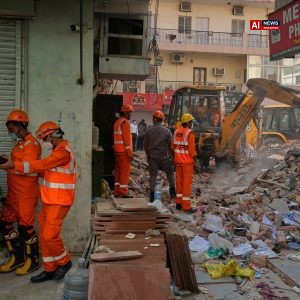
 New Delhi housing collapse kills 7; rescue operations continue
  Thousands mourn war criminal Ratko Mladic in Banja Luka despite private funeral order
  Israeli strikes kill nine in Lebanese city
  Germany’s AfD enters Saxony-Anhalt cabinet, breaking political firewall
  Tamil Nadu Assembly halts over Vijay’s feud with DMK over Veeranam project
 New Delhi housing collapse kills 7; rescue operations continue
**
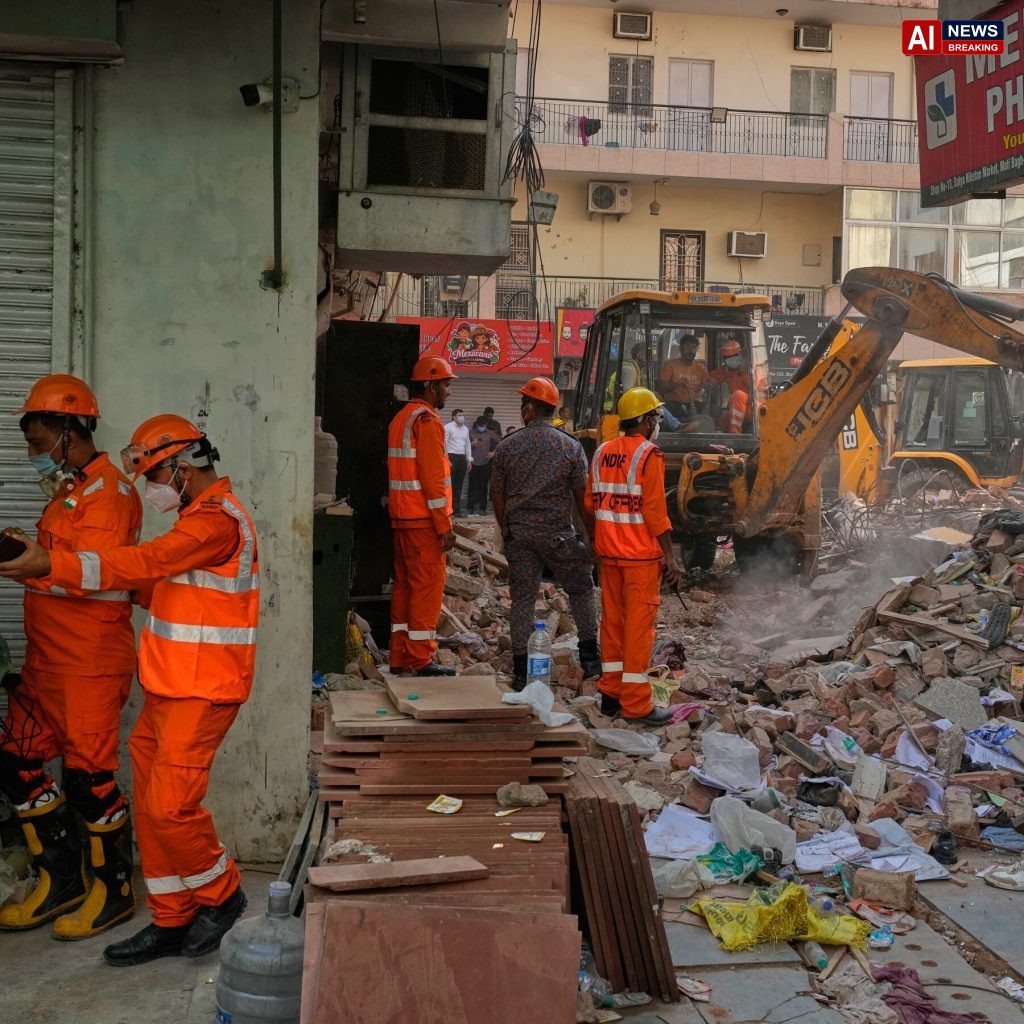
Building Housing Students Collapses in New Delhi, Killing at Least 7 - AI News Breaking
Building Housing Students Collapses in New Delhi, Killing at Least 7 Rescue teams arrived at the scene of the four‑storey student housing block in the Delhi neighbourhood of Laxmi Nagar shortly after the structure gave way at approximately 09:30 local time on Sunday. Emergency services, including the Delhi Fire Service, the National Disaster Response Force and local police, set up a command centre on the street and began a coordinated effort to locate survivors beneath the rubble. Witnesses described a loud crack followed by a cloud of dust, and families of the students rushed to the site, fearing the worst..
The building, constructed in the early 2000s, housed over one hundred undergraduate and postgraduate students from nearby universities. Authorities say it was originally approved for a mixed‑use purpose, with commercial spaces on the ground floor and residential units above. Over the years, the demand for affordable accommodation in the capital led to a steady increase in occupancy, often exceeding the capacity for which the structure was designed..
Preliminary investigations suggest that illegal modifications to the building’s internal layout may have compromised its structural integrity. Residents reported the addition of makeshift partitions, extra rooms and even temporary extensions to the balconies without proper engineering oversight. Such alterations are known to place uneven loads on load‑bearing walls, a risk that is compounded in older constructions that may already suffer from material fatigue..
The Delhi Municipal Corporation has launched an inquiry into the collapse, with the city’s chief engineer stating that a “comprehensive audit” of similar student housing facilities will be undertaken. The audit will focus on compliance with the National Building Code, the presence of fire safety systems and the validity of occupancy certificates. Officials have warned that any building found to be in violation could face immediate closure and legal action against owners and managers..
Family members of the victims gathered outside the rescue site, holding candles and chanting prayers. Among the dead, officials confirmed at least seven students, while dozens more remain unaccounted for. Hospitals across the city have reported receiving injured patients with fractures, crush injuries and respiratory problems due to inhalation of dust..
The health ministry has dispatched additional trauma teams to assist local hospitals overwhelmed by the sudden influx of casualties. The collapse has reignited a long‑standing debate in India about the safety of student housing, particularly in metropolitan areas where affordable accommodation is scarce. Student unions and activist groups have called for stricter enforcement of building regulations and for the government to invest in purpose‑built dormitories..
They argue that the reliance on private landlords, often operating with minimal oversight, creates a climate where profit is placed above the well‑being of young tenants. In response, the Ministry of Housing and Urban Affairs issued a statement expressing “deep sorrow” over the loss of life and pledging to “accelerate the implementation of safety standards” across the nation’s rental market. The ministry highlighted recent amendments to the Rental Housing Act, which aim to improve tenant rights and increase penalties for owners who neglect maintenance obligations..
It also announced a fund to support families of victims and to provide temporary shelter for displaced students. Legal experts note that the liability for such collapses can be complex, involving building owners, contractors, and sometimes municipal authorities if permits were improperly issued. Under Indian law, criminal negligence can be pursued if it is demonstrated that the parties involved ignored statutory safety requirements..
However, proving culpability often requires extensive forensic analysis and the cooperation of multiple agencies, a process that can extend over several months. International observers have pointed to similar incidents in other rapidly urbanising nations, where the surge in demand for low‑cost housing outpaces regulatory capacity. Comparisons have been drawn with collapses in Bangladesh and Nigeria, prompting calls for a global framework to monitor construction quality in informal housing sectors..
The United Nations’ Habitat program has offered technical assistance to Indian authorities, emphasizing the need for data‑driven risk assessments and community awareness campaigns. As the rescue operation enters its third day, teams continue to sift through the debris with sniffer dogs and thermal imaging equipment, hoping to locate any remaining survivors. The operation is being hampered by unstable sections of the collapsed structure, requiring engineers to carefully reinforce sections before further entry..
Families are being kept informed through a hotline established by the police, while counselors are made available to help them cope with the trauma of the disaster. The incident has also sparked a broader conversation about urban planning in Delhi, a city already grappling with congestion, pollution and a housing shortage that affects millions. Urban planners argue that the city must balance the need for rapid development with the imperative of safety, suggesting measures such as stricter zoning laws, mandatory periodic structural audits and incentives for developers to incorporate robust safety features..
In the weeks ahead, the focus will shift from emergency response to accountability and prevention. The findings of the municipal audit, the outcomes of legal proceedings and the implementation of new housing policies will determine whether similar tragedies can be averted. For now, the city mourns the loss of its young scholars and awaits answers that may help protect future generations from such preventable disasters..
Updated: September 7, 2026
The tragedy exposes how Delhi’s chronic housing squeeze has turned private rentals into a de‑facto safety loophole, where profit‑driven alterations outrun any regulatory check. Unless the promised audits become enforceable, the city will keep trading youthful ambition for preventable rubble.