 NASA outlines Artemis III test flight plan
  Sacha Baron Cohen Says Donald Trump Has ‘Elements of Brilliance’ and ‘We Were Too Easy to Dismiss Him as a Nincompoop’
  Legal action ordered against officials over irregularities in voter list in Pilibhit
  Floods force evacuations and rooftop rescues
  Revival Rugs Birthday Sale: 20 Percent Off Sitewide Through Sunday
 Modi visits Uzbekistan, Kyrgyzstan for SCO Summit
Prime Minister Narendra Modi has embarked on a diplomatic tour of Uzbekistan and Kyrgyzstan, attending bilateral talks in Tashkent and the 26th Shanghai Cooperation Organisation (SCO) Summit in Bishkek. The visit focuses on strengthening strategic partnerships, enhancing trade and energy cooperation with Uzbekistan, and advocating for a unified regional approach to counterterrorism and security within the SCO framework.
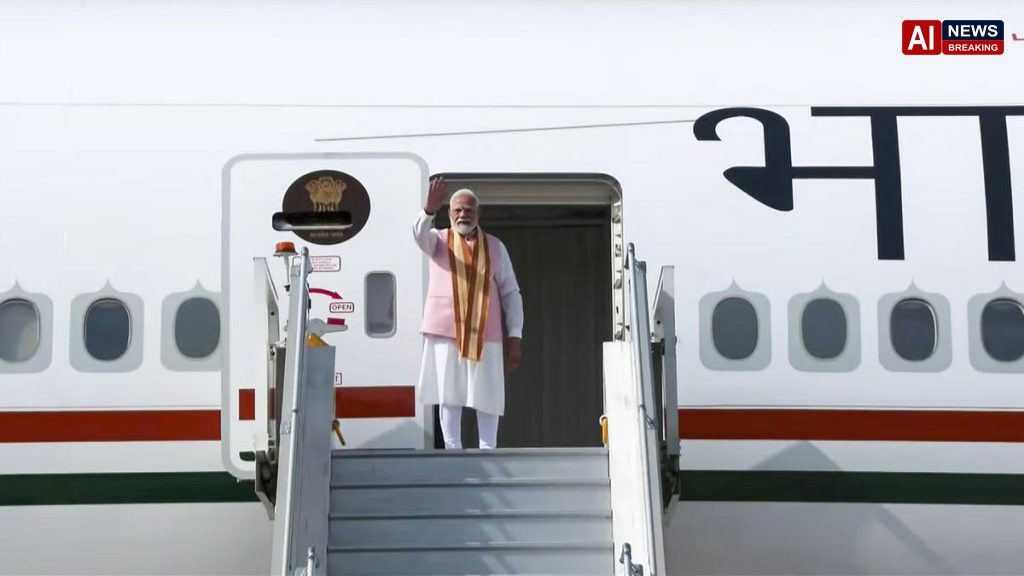
Modi visits Uzbekistan, Kyrgyzstan for SCO Summit - AI News Breaking
modi visits uzbekistan kyrgyzstan:
Prime Minister Narendra Modi has departed for Central Asia, embarking on a diplomatic journey aimed at reinforcing India’s strategic partnerships in the region while advocating for a unified approach to counterterrorism. His visit to Uzbekistan and Kyrgyzstan marks a significant engagement with the Shanghai Cooperation Organisation, underscoring New Delhi’s commitment to fostering stability and security across Eurasia. The itinerary includes high-level meetings in Tashkent followed by travel to Bishkek for the 26th SCO Summit, where regional leaders will convene to discuss pressing geopolitical issues..
Modi has emphasized that the visit is not merely ceremonial but is designed to advance India’s vision of a region free from terrorism, extremism, and separatism, reflecting a broader agenda of multilateral cooperation and shared security responsibilities.The Prime Minister’s arrival in Tashkent was greeted by enthusiastic crowds, signaling the enduring warmth of Indo-Uzbek relations. These two nations share a deep historical connection, rooted in centuries of cultural and diplomatic exchange, which has evolved into a robust modern partnership. Modi held talks with President Shavkat Mirziyoyev, focusing on enhancing trade connectivity, energy cooperation, and infrastructural links..
The dialogue highlighted the growing economic interdependence between the two countries, with both leaders expressing a desire to unlock the full potential of bilateral ties through increased investment and people-to-people contacts. This engagement serves as a foundational step before the broader regional discussions that await in Bishkek.Central Asia has increasingly become a focal point for India’s expanding foreign policy footprint, driven by its connectivity initiatives and energy security needs. The region acts as a crucial bridge between South Asia and Europe, offering strategic pathways for trade and transit..
By strengthening ties with key players like Uzbekistan, India aims to diversify its energy sources and reduce dependency on traditional routes. Furthermore, the location’s geopolitical significance cannot be overstated, especially in the context of shifting global alliances and the ongoing reconfiguration of international relations. The Prime Minister’s presence in Tashkent reinforces India’s role as a reliable partner in this vibrant and rapidly developing part of the world.Following his engagements in Uzbekistan, Mr..
Modi traveled to Bishkek, the capital of Kyrgyzstan, to attend the 26th Shanghai Cooperation Organisation Summit. The SCO has emerged as a vital forum for dialogue among major Asian powers, providing a platform to address common security challenges and promote economic collaboration. The summit brings together leaders from member states and observer countries, creating an environment conducive to consensus-building on complex issues..
Modi’s participation underscores India’s active role within the organization, advocating for reforms that reflect contemporary realities and ensure the group remains relevant in addressing modern threats. The gathering in Bishkek serves as a critical juncture for shaping the future trajectory of regional cooperation.Security remains the paramount concern for the SCO, with terrorism and cross-border crime posing persistent threats to regional stability. Modi has consistently articulated the need for a comprehensive strategy to combat these challenges, emphasizing intelligence sharing and coordinated law enforcement actions..
He argued that terrorism knows no borders and requires a unified response from all member states. The Prime Minister stressed that ideological radicalization and financial networks supporting terrorist groups must be dismantled through collective effort. His remarks reflected a broader consensus among member states regarding the urgency of addressing these security vulnerabilities, which have the potential to undermine decades of progress in peace and development.In addition to security, economic cooperation forms a significant pillar of the SCO agenda..
Modi highlighted the importance of enhancing trade facilitation, digital connectivity, and sustainable development initiatives. He proposed initiatives aimed at boosting intra-regional trade and reducing barriers that hinder economic growth. The focus on digital infrastructure and emerging technologies reflects a forward-looking approach to economic partnership, recognizing the transformative potential of the digital economy..
By fostering innovation and technological exchange, member states can unlock new opportunities for growth and prosperity. This economic dimension complements the security objectives, creating a holistic framework for regional collaboration that benefits all participants.The Prime Minister also addressed the importance of cultural and educational exchanges within the SCO framework. Recognizing that people-to-people ties are the bedrock of lasting peace, he advocated for programs that promote mutual understanding and appreciation of diverse cultures..
Educational collaborations, student exchanges, and artistic initiatives can help build bridges between communities, fostering a sense of shared identity and common purpose. Modi noted that investing in human capital and cultural dialogue is essential for preventing the spread of extremist ideologies. By nurturing a generation that values diversity and cooperation, the region can build resilience against divisive narratives and promote social cohesion across national boundaries.Environmental sustainability and climate change have also taken center stage in recent SCO discussions, with Mr..
Modi urging member states to collaborate on green initiatives. He emphasized the urgent need to address environmental challenges through joint research, technology transfer, and policy coordination. The region faces significant threats from climate-induced disasters, water scarcity, and ecological degradation, which require a coordinated response..
Modi proposed the establishment of joint working groups to tackle these issues, leveraging scientific expertise and innovative solutions. This commitment to environmental stewardship aligns with India’s broader climate goals and demonstrates the SCO’s willingness to address non-traditional security threats that impact human welfare and economic stability.As the summit proceedings unfolded, Mr. Modi engaged in bilateral meetings with counterparts from other SCO member states, including China and Russia..
These interactions provided an opportunity to deepen diplomatic ties and explore new areas of cooperation. The dynamics within the SCO are complex, shaped by the varying interests and priorities of its members. However, the shared commitment to regional stability and mutual benefit serves as a unifying force..
Modi’s diplomatic outreach aimed to strengthen these bonds, ensuring that India’s voice is heard and that its interests are represented in the formulation of collective decisions. The ability to navigate these complexities effectively is crucial for India’s standing within the multilateral architecture of Central and West Asia.The visit also highlighted India’s growing role in the global South, advocating for a multipolar world order that respects sovereignty and promotes equitable development. Modi’s engagement in Bishkent reinforced India’s position as a leading voice for emerging economies, championing reforms in global governance structures..
By aligning with SCO principles of non-interference and mutual respect, India seeks to build a more inclusive international system. This approach resonates with many developing nations that aspire to greater autonomy and agency in global affairs. The Prime Minister’s advocacy for a balanced and fair international order reflects India’s foreign policy philosophy of strategic autonomy and positive multilateralism.Looking ahead, the outcomes of the 26th SCO Summit are expected to set the tone for future regional cooperation..
The agreements reached and initiatives launched will have lasting implications for security, economics, and diplomacy in Eurasia. Modi’s visit to Uzbekistan and Kyrgyzstan has strengthened India’s position in the region, laying the groundwork for deeper engagement..
Updated: August 29, 2026
Modi’s pivot to Central Asia signals India’s shift from passive observer to active architect of Eurasian security. By marrying hard geopolitics with cultural bonds, New Delhi is building a resilient buffer against instability.