 NASA outlines Artemis III test flight plan
  Sacha Baron Cohen Says Donald Trump Has ‘Elements of Brilliance’ and ‘We Were Too Easy to Dismiss Him as a Nincompoop’
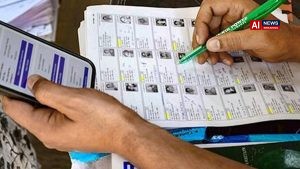
  Legal action ordered against officials over irregularities in voter list in Pilibhit
  Floods force evacuations and rooftop rescues
  Revival Rugs Birthday Sale: 20 Percent Off Sitewide Through Sunday
 Modi accelerates India’s diplomatic diversification amid US election uncertainty
**
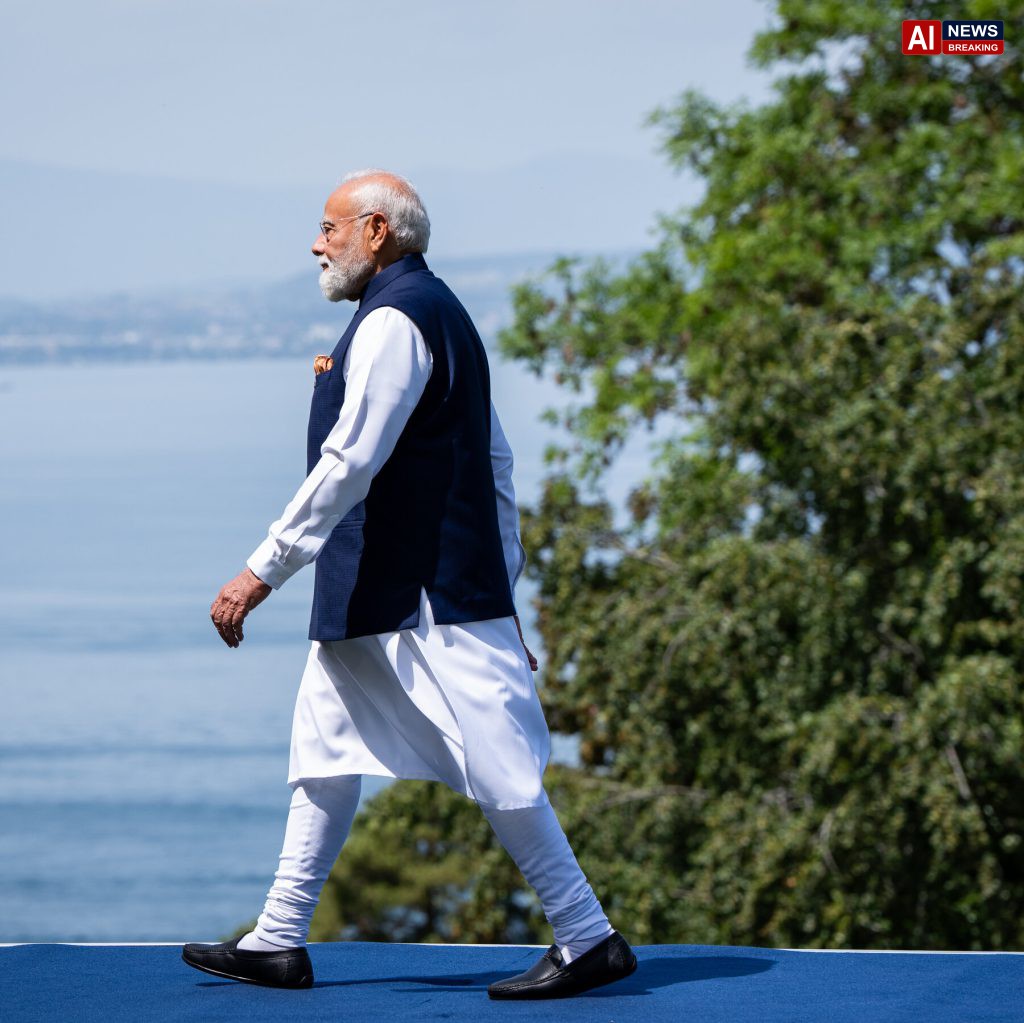
Modi accelerates India’s diplomatic diversification amid US election uncertainty - AI News Breaking
modi accelerates indias diplomatic:
New Delhi, a city historically defined by its cautious and intricate diplomatic ballet, has recently accelerated its pace of movement. Prime Minister Narendra Modi’s diplomacy over the past twelve months has been characterized not by ideological rigidity, but by a pragmatic, aggressive pursuit of tangible economic and strategic commitments. This shift represents a calculated recalibration of India’s foreign policy architecture..
As the United States, once viewed as a steady anchor in global affairs, exhibits signs of domestic volatility and unpredictable international engagement, New Delhi is systematically diversifying its portfolio. The objective is clear: to ensure that India’s economic growth and security architecture are not held hostage by the whims of any single power, particularly one led by an administration that views multilateralism with skepticism.The shadow of Donald Trump’s potential return to the White House looms large over this diplomatic surge. For New Delhi, the prospect of a second Trump term is not merely a political curiosity; it is a strategic risk that demands immediate mitigation..
The Trump era was marked by transactional diplomacy, where allies were often treated as adversaries and trade deficits were weaponized. Indian leaders recall the tariffs imposed on steel and aluminum, and the perceived lack of support during moments of diplomatic friction. Consequently, Modi is hedging his bets by deepening ties with rival blocs and neutral powers, creating a buffer zone around India’s interests..
This is not an abandonment of the United States, but a reinforcement of India’s strategic autonomy, ensuring that Washington cannot leverage its aid or access as a blunt instrument of coercion.Europe has emerged as a primary beneficiary of this recalibrated approach. Modi’s visits to the continent have yielded more than just ceremonial handshakes; they have produced binding agreements that lock in long-term energy and industrial partnerships. The EU-India Global Trade Committee, recently established, signals a mutual desire to decouple supply chains from volatile regions..
By securing commitments for green hydrogen supplies and critical minerals, India is positioning itself as an indispensable partner to a Europe anxious about its own energy security and industrial competitiveness. These deals are designed to be resilient, embedding Indian infrastructure and industry into the European economy in a way that makes disengagement difficult for any future administration in Washington or Brussels.Simultaneously, India has intensified its engagement with the Middle East, a region traditionally viewed through the lens of energy security and diaspora remittances. However, under Modi, these ties have evolved into comprehensive strategic partnerships..
The India-Middle East-Europe Economic Corridor, although currently facing geopolitical headwinds due to regional conflicts, symbolizes India’s ambition to connect markets directly. Beyond grand infrastructure, India has secured significant oil and gas deals with Saudi Arabia and the UAE, often bartering finished pharmaceuticals, textiles, and defense equipment for reliable energy flows. This reciprocity reduces India’s vulnerability to oil price shocks and provides Gulf states with a reliable alternative market, diversifying their own dependence on West European and East Asian consumers.The success of this hedging strategy is nowhere more evident than in the realm of defense procurement..
For decades, India relied heavily on Russian hardware, followed by a gradual pivot to Western systems. Today, the trend is reversing in a nuanced manner. While Russia remains a key partner for immediate security needs, India is aggressively pursuing joint ventures with France, Israel, and Germany..
The purchase of Rafale fighters, Scorpene submarines, and patrol vessels is part of a broader industrial cooperation strategy. By inviting European defense giants to manufacture within India’s Make in India framework, New Delhi is building domestic capacity while reducing its long-term dependence on any single supplier. This dual-track approach ensures that even if political relations with one partner sour, military readiness remains unaffected.Meanwhile, relations with Russia have not been discarded but rather repurposed..
As Moscow faces unprecedented isolation from the West due to the war in Ukraine, India has stepped in as a crucial economic lifeline for Russia. By purchasing discounted oil and engaging in counter-trade arrangements, India has strengthened its hand in bilateral negotiations. This pragmatic engagement allows New Delhi to access Russian technology and energy at favorable rates while maintaining its strategic partnership with the United States..
It is a delicate balancing act, often criticized by Western capitals but defended by Indian policymakers as a matter of national interest rather than ideological alignment. The diversification prevents India from choosing sides in the emerging cold war dynamics between Washington and Moscow.The Asia-Pacific region also features prominently in this hedging strategy. With China’s economic slowdown and territorial aggressiveness, India has sought to strengthen ties with other regional powers..
The deepening relationship with Japan, including trilateral partnerships with Australia and the United States, provides a counterweight to Chinese influence in the Indo-Pacific. However, India has also engaged constructively with ASEAN, recognizing the bloc’s importance in trade and supply chain resilience. By integrating into regional value chains, India is insulating its economy from the disruptions caused by great power competition..
This regional engagement ensures that India is not isolated but remains a central node in the Asia-Pacific economic ecosystem.Domestically, these foreign policy moves are supported by a narrative of self-reliance, or Atmanirbhar Bharat. The government argues that securing external deals is essential to boosting internal manufacturing capabilities. By attracting foreign direct investment through favorable terms and regulatory reforms, India is transforming itself into a global manufacturing hub..
Companies relocating out of China due to geopolitical tensions are finding India an attractive alternative, bolstered by the government’s diplomatic efforts to assure investors of stability and protection. This industrial policy is inextricably linked to foreign policy; secure borders and stable diplomatic relations are prerequisites for global investors to commit long-term capital.Critics argue that this hedging strategy complicates India’s relationship with its traditional allies, particularly the United States. There are concerns that by engaging too closely with Russia or China, India undermines the democratic alliances led by Washington..
However, proponents of the current policy maintain that India’s rise is inevitable and that it cannot afford to alienate any major power. The goal is not to create a multipolar world based on ideological blocs, but to create a flexible system where India can navigate between powers to maximize its national interests. This approach requires a high degree of diplomatic finesse and a willingness to tolerate criticism from all sides.The uncertainty surrounding the upcoming US elections adds urgency to these diplomatic maneuvers..
If Donald Trump retains or regains the presidency, his administration’s approach to international trade and security alliances could shift dramatically. Tariffs could return, and commitments to Indo-Pacific security could be questioned. By securing deals that are embedded in long-term contracts and economic interdependence, India is creating friction costs for any administration that wishes to disengage..
These deals are not just about immediate economic gain; they are diplomatic anchors that bind major powers to India’s success.Furthermore, the global economic landscape is fragmenting, with companies and governments alike prioritizing security over efficiency. India is positioning itself as a safe harbor.
With US political volatility looming, India is aggressively diversifying its global partnerships to safeguard its strategic autonomy. By locking in binding economic and defense deals with Europe, the Middle East, and rival powers, New Delhi ensures its growth remains resilient against shifting geopolitical winds.
New Delhi is transforming diplomatic engagement from a reactive balance into a structural lock-in, using deep economic interdependence to immunize itself against Western political volatility. By embedding its infrastructure within European and Middle Eastern supply chains, India converts strategic autonomy into a tangible asset that no single power can easily unravel.