
 Tao Tokyo Spring 2027
  Karnataka SIR: Teaching on the back burner
  Trump administration offers mixed messages on limits to Ukraine’s Starshield access
  US Treasury proposes a rule to crack down on high-tech investments in China, other adversaries
  Calley Means, a key MAHA advocate, resigns as a top RFK Jr. adviser
 Bengaluru civic revenue plan falls short of expectations.
**
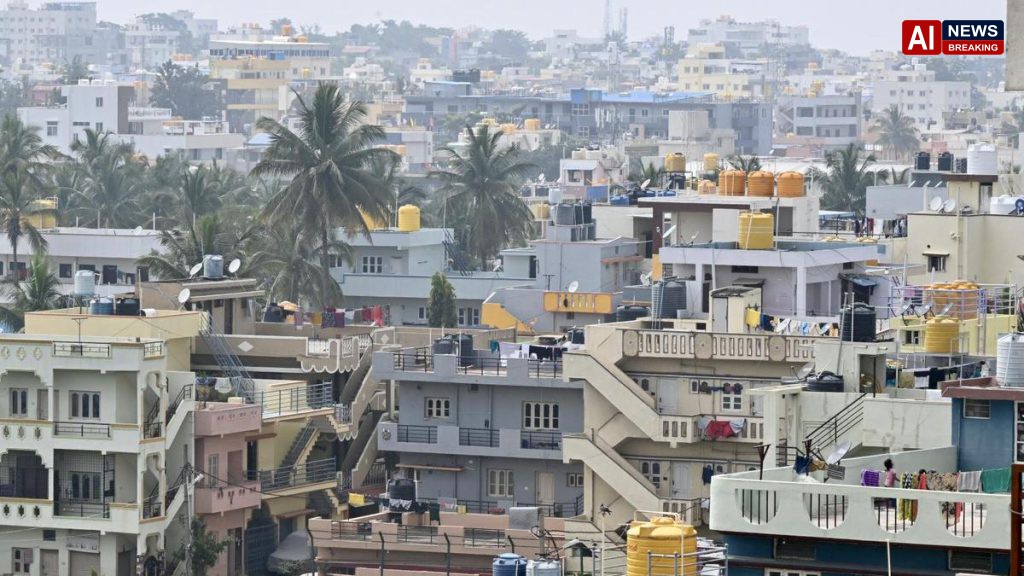
In Bengaluru, new civic setup fails to unlock new revenue avenues - AI News Breaking
Bengaluru’s civic administration stands at a critical juncture, grappling with the complex realities of urban governance in India’s rapidly expanding technology capital. For months, city officials and local residents alike had pinned their hopes on a restructured municipal framework that promised to unlock significant financial resources. The anticipation was not merely bureaucratic optimism but a desperate necessity for a city buckling under the weight of infrastructure deficits, widespread water scarcity, and crumbling public services..
The new setup was envisioned as a fiscal powerhouse, capable of generating the substantial revenue required to fund ambitious development projects and improve the quality of life for millions of citizens. However, as the initial months of operation draw to a close, the reality on the ground tells a markedly different story, revealing that the anticipated financial windfalls have yet to materialize.The central premise of the new civic strategy rested on three primary pillars of revenue generation: the monetization of advertisement spaces, the implementation of premium Floor Area Ratio (FAR) policies, and the systematic conversion of informal B-Khatas into formal A-Khatas. These mechanisms were selected for their potential to create steady and scalable income streams without immediately imposing sharp tax hikes on the general populace..
Officials argued that by leveraging the city’s commercial appeal and formalizing its sprawling informal sector, the corporation could build a robust financial foundation. This approach was praised by urban planners and economic analysts who viewed it as a modern, market-oriented solution to the perennial crisis of municipal funding in Indian megacities.One of the most touted sources of income was the regulation and monetization of outdoor advertising. Bengaluru, as one of India’s premier commercial hubs, boasts a dense concentration of digital billboards, hoardings, and transit advertisements that line its major arterial roads and metro stations..
The corporation estimated that a rigorous audit and streamlined licensing process for these advertisements could yield hundreds of crores of rupees annually. The logic was simple yet compelling: developers and advertising agencies already pay for visibility in this high-footfall market, and the municipality merely needed to enforce compliance and capture a fair share of these transactions. Preliminary projections suggested that this alone could plug a significant portion of the city’s annual budget deficit.However, the execution of this plan has been fraught with administrative delays and legal ambiguities..
Disputes over valuation models and jurisdictional overlaps with other transport and property authorities have slowed the rollout of the new licensing regime. Many advertising companies are hesitant to renew permits or upgrade their installations without clear, stable regulatory guidelines. Furthermore, the lack of a unified digital platform to track and bill these advertisements has resulted in significant leakages..
Instead of the projected surge in income, the corporation has faced a sluggish uptake, with only a fraction of potential ad spaces being formally registered and taxed in the initial phase.The second pillar of the revenue strategy involved charging premium rates for additional Floor Area Ratio, a policy designed to capitalize on the high demand for commercial and residential space in prime locations. Under this scheme, developers could pay extra fees to build beyond the standard permissible height and area, theoretically allowing the city to capture some of the rent gap created by urban growth. This mechanism is common in global cities like New York and London, where density bonuses generate substantial public funds..
Bengaluru hoped to replicate this success, targeting high-value corridors in areas like Electronic City and Whitefield, where land values are sky-high and construction activity is relentless.Yet, the ground reality has significant flaws in this approach. Developers argue that the premium charges are disproportionate to the actual infrastructure benefits they receive, citing a lack of corresponding improvements in roads, drainage, and public transport in these dense zones. Consequently, many private builders have slowed down approvals or sought exemptions, arguing that the financial burden outweighs the commercial viability of their projects..
The corporation has struggled to strike a balance between maximizing revenue and maintaining an attractive environment for investment, leading to a slowdown in new construction permits. This hesitation has directly impacted the expected flow of premium FAR income, leaving coffers lighter than anticipated.Perhaps the most ambitious and politically sensitive aspect of the new strategy was the drive to convert B-Khata properties into A-Khatas. In Bengaluru, a B-Khata denotes properties that exist on land where legal ownership or land use regularizations are incomplete or pending..
These properties are numerous, forming a significant portion of the city housing stock, particularly in semi-urban fringes. The government promises a pathway to regularization, allowing these owners to obtain A-Khata, which grants full legal legitimacy, access to formal credit, and accurate property valuation. In return, owners must pay regularization fees, water connection charges, and back taxes, creating a massive one-time revenue surge.The promise of this conversion scheme initially created a frenzy among property owners eager to legitimize their assets..
However, the process has been mired in red tape, contradictory notifications, and bureaucratic inertia. Many applicants have found themselves trapped in a labyrinth of documentation requirements that often conflict with older land records. Appeals against sudden hike in regularization fees have flooded local courts, creating legal uncertainty that deters many from completing the process..
The lack of transparency in calculating these fees has further fueled public mistrust, with accusations of arbitrary valuation practices undermining the credibility of the initiative.Consequently, the volume of conversions has fallen sharply short of the targets set by the civic body. Instead of a revenue bonanza, the corporation has witnessed a trickle of applications, insufficient to make a dent in the budgetary gaps. The delay is not merely administrative but structural, stemming from deeper issues related to land tenure security and the complex history of Bangalore’s urban sprawl..
Without resolving the underlying legal disputes regarding land acquisition and agrarian land records, the B-Khata scheme remains a dormant potential rather than an active income source.The failure to unlock these three revenue avenues has severe implications for the city’s development agenda. With the anticipated funds not materializing, the municipality finds itself unable to finance critical upgrades in drainage systems, waste management, and public transit. The shortfall forces officials to either divert funds from other essential services or rely increasingly on loans, which adds to the long-term debt burden..
This financial constraint exacerbates the existing infrastructure crisis, leading to further public dissatisfaction and in the new corporate structure.Critics argue that the new civic setup was designed with a focus on revenue extraction rather than service delivery, ignoring the fundamental need to build trust with citizens. By focusing heavily on monetizing informal sectors and commercial activities without providing immediate, visible improvements in public services, the corporation has alienated potential payers. Property owners and businesses are reluctant to pay premiums or regularization fees when they see little return in terms of better roads, reliable water supply, or efficient civic response..
This psychological barrier is as significant as the administrative hurdles in stifling revenue growth.Moreover, the broader economic context of Bengaluru cannot be ignored. The global tech downturn and shifting investment.
Updated: September 4, 2026
Bengaluru’s “revenue‑first” makeover exposes a classic catch‑22: without visible service upgrades, businesses and residents balk at new fees, turning the city’s fiscal gamble into a trust deficit. The lesson is clear—quick cash grabs can’t substitute the long‑term credibility that under