 Trump administration offers mixed messages on limits to Ukraine’s Starshield access
  US Treasury proposes a rule to crack down on high-tech investments in China, other adversaries
  Calley Means, a key MAHA advocate, resigns as a top RFK Jr. adviser
  Spotify Tightens Family Plan Controls with QR Code Verification
  Use of Chief Minister C. Joseph Vijay’s deep fake videos to collect money: Rajasthan youth moves Madras High Court seeking bail
 Karnataka govt withdraws Parks Amendment Bill following protests
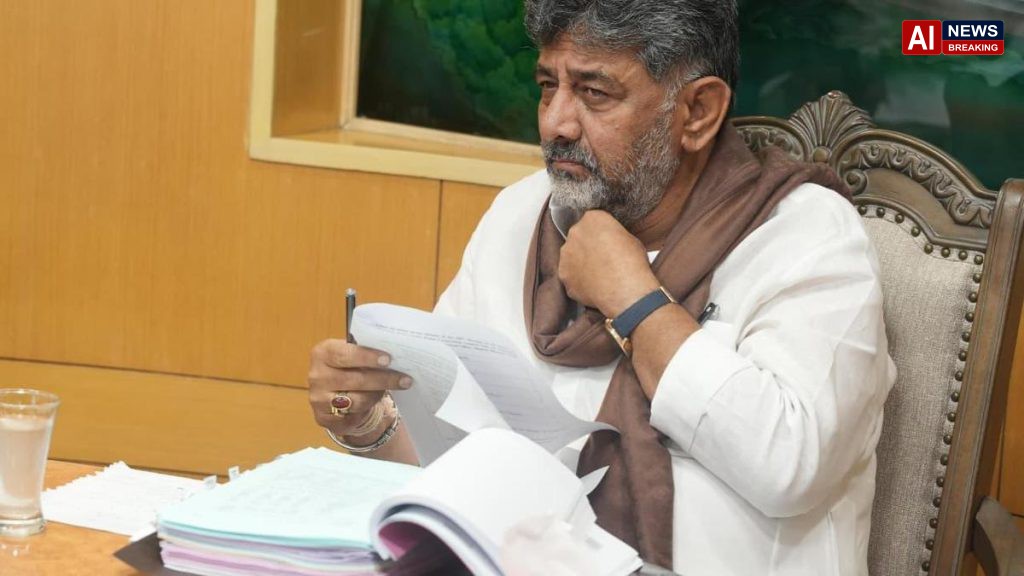
Why should I make a U-turn?: Karnataka CM D.K. Shivakumar on parks amendment Bill - AI News Breaking
Karnataka’s chief minister, D.K. Shivakumar, has sparked a fresh round of debate after he announced a reversal of his government’s stance on the state’s Parks Amendment Bill. In a press conference held in Bengaluru on Thursday, Shivakumar explained that the decision to backtrack was motivated by a desire to “respect public sentiment” and to create space for a broader discussion on the legislation’s future..
The move comes after weeks of protests by environmental groups, local residents and opposition parties who argued that the original bill would dilute protections for the state’s dwindling green spaces.The Parks Amendment Bill, first introduced in the Karnataka Legislative Assembly in March, sought to amend existing regulations governing the declaration, management and development of public parks and protected areas. Proponents within the ruling party argued that the changes would streamline administrative procedures, allow for the repurposing of under‑used plots, and facilitate infrastructure projects deemed essential for the state’s economic growth. Critics, however, warned that the amendments could open the door to commercial exploitation of parkland, undermine biodiversity, and erode the rights of communities that rely on these spaces for recreation and livelihood.Shivakumar’s reversal was signalled by his reference to a “U‑turn” that, in his words, was “necessary to maintain the trust of the people of Karnataka”..
He noted that the government had received “overwhelming feedback” from civil society organisations, academic experts and ordinary citizens who felt excluded from the drafting process. By withdrawing the bill, the chief minister said, the administration aims to “re‑engage with stakeholders, reassess the impact of the proposed changes, and ensure that any future legislation reflects a balanced approach to development and conservation”.The chief minister’s remarks were met with cautious optimism from several quarters. The Karnataka State Forum for Environment, a coalition of NGOs that had organised a series of protests earlier this month, welcomed the decision as a “positive step”..
Meera Nair, told reporters that while the withdrawal was encouraging, the real test would be the government’s willingness to conduct a transparent, evidence‑based review. “We hope the administration will commission independent studies, hold public hearings in all affected districts, and publish the findings before any new draft is tabled,” she said.Opposition parties have been quick to frame the reversal as evidence of the ruling party’s vulnerability. The Indian National Congress in Karnataka released a statement describing the U‑turn as “an admission that the original bill was ill‑conceived and out of touch with the aspirations of Karnataka’s people”..
The Bharatiya Janata Party, which controls the state’s opposition benches, called for a “full parliamentary debate” on the issue, suggesting that the government’s backpedalling could set a precedent for other states seeking to push through contentious environmental reforms without adequate consultation.Legal experts have weighed in on the procedural implications of the move. According to Advocate Ramesh Kumar, who specialises in environmental law, withdrawing a bill at this stage does not automatically reset the legislative timetable. “If the government decides to re‑introduce the amendment, it will still have to navigate the same procedural hurdles, including committee reviews and possible judicial scrutiny,” he explained..
“However, the political capital lost during the initial rollout may compel the administration to adopt a more cautious, consensus‑building approach.”The broader context of the Parks Amendment Bill ties into a series of development initiatives championed by Shivakumar’s government since taking office in 2023. Over the past two years, the state has launched a major urban renewal program aimed at improving transportation corridors, expanding affordable housing, and attracting foreign investment in technology parks. Supporters argue that flexible land‑use policies are essential to sustain this growth trajectory, especially in rapidly expanding cities such as Bengaluru, Mysuru and Mangalore..
Detractors, however, contend that the rush to modernise has come at the expense of environmental safeguards, citing rising air‑quality indices, shrinking forest cover and increased incidents of human‑wildlife conflict.In response to these concerns, the chief minister outlined a “multi‑pronged strategy” that would, he said, integrate green‑infrastructure planning into all future development projects. Among the measures proposed are mandatory ecological impact assessments for any public‑land acquisition, the creation of a state‑wide digital inventory of parks and protected zones, and the establishment of a dedicated “Green Advisory Council” comprising scientists, community leaders and urban planners. Shivakumar asserted that these steps would “ensure that progress does not come at the cost of our natural heritage”.The episode has also reignited a national conversation about the balance between economic ambition and ecological stewardship..
Across India, several states are grappling with similar tensions as they seek to accommodate burgeoning populations while preserving dwindling ecosystems. Recent court rulings, such as the Supreme Court’s 2024 verdict on the protection of mangroves in coastal Andhra Pradesh, have underscored the judiciary’s willingness to intervene when legislative actions appear to jeopardise environmental rights. Observers suggest that Karnataka’s experience may serve as a cautionary tale for other regional governments contemplating swift regulatory changes without thorough stakeholder engagement.As the dust settles on the immediate controversy, the next steps remain uncertain..
The chief minister’s office confirmed that a technical committee has been tasked with reviewing the withdrawn bill and drafting a revised proposal within the next three months. Meanwhile, environmental activists have pledged to monitor the process closely, emphasizing the need for “real accountability” rather than symbolic gestures. The coming weeks will likely determine whether Shivakumar’s U‑turn translates into substantive policy reform or merely a temporary political pause in the ongoing debate over Karnataka’s parks and public spaces..
Updated: September 4, 2026
This retreat proves that in Karnataka, ecological guardianship has become a potent social veto rather than just a legal hurdle. The government now faces the harder task of rebuilding trust, as procedural delays cannot simply heal the wound of perceived exclusion.