
 Karnataka SIR: Teaching on the back burner
  Trump administration offers mixed messages on limits to Ukraine’s Starshield access
  US Treasury proposes a rule to crack down on high-tech investments in China, other adversaries
  Calley Means, a key MAHA advocate, resigns as a top RFK Jr. adviser
  Spotify Tightens Family Plan Controls with QR Code Verification
 Alberta honey producers face yield decline amid US tariffs.
**
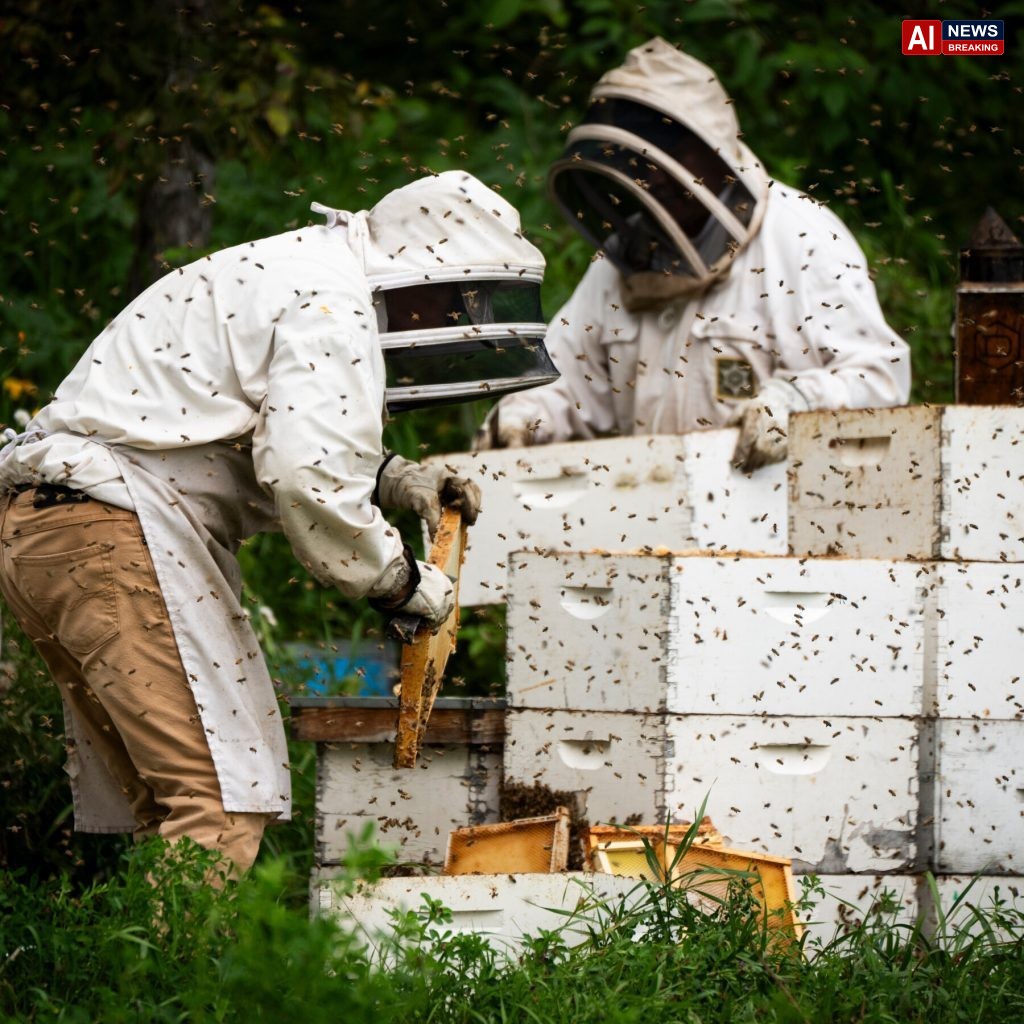
Alberta honey producers face yield decline amid US tariffs. - AI News Breaking
The golden hue of Canada’s most celebrated export is at risk, caught in the crosshairs of an unprecedented convergence of climatic volatility and geopolitical friction. For decades, the honey industry in Alberta has served as a reliable pillar of the Canadian agricultural economy, producing approximately forty percent of the nation’s total output. Farmers in this vast prairie province have long relied on the predictable rhythms of spring blooms and stable international trade relations to sustain their apiaries..
However, the current season has introduced a dual threat that threatens to decimate yields and bankrupt operations. Unseasonal torrential rains have suppressed floral nectar production across the Prairies, creating a biological shortfall just as President Donald Trump’s aggressive tariff policies have dismantled the primary market for these surplus goods. The result is a compounding crisis that has left provincial officials, beekeepers, and economists scrambling for contingency plans that may no longer be viable.The impact of the weather has been immediate and devastating across the Canadian Honey Belt, a region stretching through central Alberta and into Saskatchewan..
Beekeepers report that bees, unable to forage due to extended periods of heavy precipitation, are rapidly depleting their internal energy reserves. Nectar flows, which typically peak in mid-June through July, have been significantly reduced or entirely absent in many pockets of the province. The lack of nectar means that hives are not only failing to produce surplus honey for harvest but are also struggling to maintain the brood necessary for colony survival..
Beekeepers are now forced to supplement their colonies with sugar water to prevent starvation, a costly measure that erodes profit margins before a single drop of honey is harvested. This biological failure represents the first leg of a two-pronged assault on an industry already operating on thin margins.Compounding the natural disaster is the resurgence of trade barriers under the Trump administration, which has returned to office with a strategy heavily reliant on protectionist economic measures. The United States remains the dominant consumer of Canadian honey, absorbing a substantial majority of the country’s annual production..
However, recent executive orders have imposed steep tariffs on a wide array of Canadian agricultural products, including high-fructose corn syrup and raw honey. These tariffs, framed by the White House as necessary protections for American beekeepers facing their own domestic challenges, have effectively closed the most lucrative door for Canadian exporters. The sudden shift in trade policy has created a vacuum in the market, leaving Canadian producers with no immediate alternative for their existing stockpiles and no clear path for future sales.The timing of these tariffs could not be more unfortunate for Alberta’s beekeepers..
Normally, the industry benefits from a counter-cyclical relationship where surpluses in one region can be offset by shortages in another. If American bees suffer from poor weather, Canadian honey becomes more valuable, allowing Canadian farmers to bolster their incomes during lean years. This year, however, the two crises have aligned perfectly..
While Canadian bees struggle with rain American bees have also faced challenges, prompting the Trump administration to seek protectionist measures rather than seeking efficient global supply chains. The synergistic effect of poor harvests on both sides of the border has led to a global tightening of supply, but the artificial barrier of tariffs prevents the natural market mechanisms from balancing the equation for Canadian producers.Economic analysts within the Canadian Department of Agriculture warn that the financial fallout could be severe for small and medium-sized apiaries, which form the backbone of the sector. Unlike large industrial operations, smaller beekeepers lack the capital reserves to weather extended periods of market isolation..
The cost of maintaining hives remains fixed regardless of yield, meaning that a poor harvest combined with an inability to export existing reserves creates a cash flow crisis that can lead to insolvency. Many farmers are facing the painful decision of whether to invest in feeding their bees through the winter or to sell their equipment and exit the industry entirely. The psychological toll on these multi-generational farming families is profound, as they watch decades of expertise and investment being undermined by forces entirely outside their control.In response to the mounting pressure, provincial governments have begun to explore emergency relief measures..
The Government of Alberta has initiated consultations with industry associations to identify immediate steps that can mitigate the impact of the tariffs. These discussions include potential subsidies for feed supplies to help keep hives alive during the low-nectar season and grants to assist with the retooling of operations for domestic consumption. However, ministers caution that these measures are stopgaps and cannot permanently offset the loss of access to the American market..
The federal government in Ottawa is simultaneously engaging in diplomatic negotiations with Washington, seeking exemptions for agricultural products or a reduction in tariff rates. These talks are expected to be contentious, given the broader political context of the trade relationship between the two nations.Beyond the direct financial impact, the implications for the wider agricultural ecosystem are significant. Bees are critical pollinators for a variety of crops, including canola, sunflowers, and various fruits and vegetables..
A decline in the health and number of bee colonies could have ripple effects throughout the Alberta agricultural sector, potentially reducing yields for other staple crops. The stress on colonies caused by poor forage and the uncertainty of their economic viability means that apiaries are less likely to offer commercial pollination services in the coming seasons. This creates a secondary risk for farmers who depend on rented hives to maximize their crop outputs, further destabilizing the rural economy.The global context of the honey market adds another layer of complexity to the crisis..
With Canada and the United States effectively turning inward, other major honey-producing nations such as Argentina and Ukraine are positioned to capture the void in the global market. However, these nations face their own logistical and political hurdles, meaning that the global supply of honey is likely to tighten rather than expand. This tightening could drive up world prices, theoretically benefiting countries that remain open to trade..
Yet, without a resolution to the tariff dispute, Canadian honey remains stranded in warehouses, unable to compete on the international stage where American buyers now favor domestic or tariff-free sources.Industry leaders emphasize that the resilience of the honey sector has been tested before, but never under such simultaneous biological and economic stress. Previous droughts or market fluctuations allowed for recovery through the opposite condition; if one year was dry, the next was wet, or if one market closed, another opened. The current scenario presents a perfect storm where both natural and economic conditions are antagonistic..
This lack of a counterbalance means that recovery will not be automatic but will require sustained intervention and structural change. The industry is calling for a long-term strategy that diversifies markets beyond North America, though building new trade relationships takes time and significant investment.Consumer behavior in Canada is also shifting in response to the crisis. Domestic prices for honey have begun to rise as local retailers anticipate supply shortages..
Citizens are increasingly viewing honey not just as a commodity but as a product tied to environmental and economic stability. There is a growing movement to support local beekeepers.
Updated: September 6, 2026
The twin blow of climate‑driven crop failure and Trump‑era tariffs exposes how fragile a commodity can become when its ecological and market lifelines are simultaneously severed, forcing Alberta’s beekeepers into a survival gamble. Unless Canada diversifies beyond a single export corridor and builds climate‑resilient pollinator systems, the honey crisis will echo across its entire agricultural backbone, reshaping food security and rural livelihoods.