
 1 killed, 4 injured after man opens indiscriminate fire from car in Paris
  Open to alliance with parties that agree with SAD’s ideology: Sukhbir Singh Badal
  Palestinian Gunmen Open Fire on Israelis in the West Bank, Officials Say
  Russians across
  Jagan to move Supreme Court again over ‘obstruction’ of YSRCP nominees in Andhra local body polls
 Punjab urges Centre to halt Mishra’s oath as Punjab HC chief justice
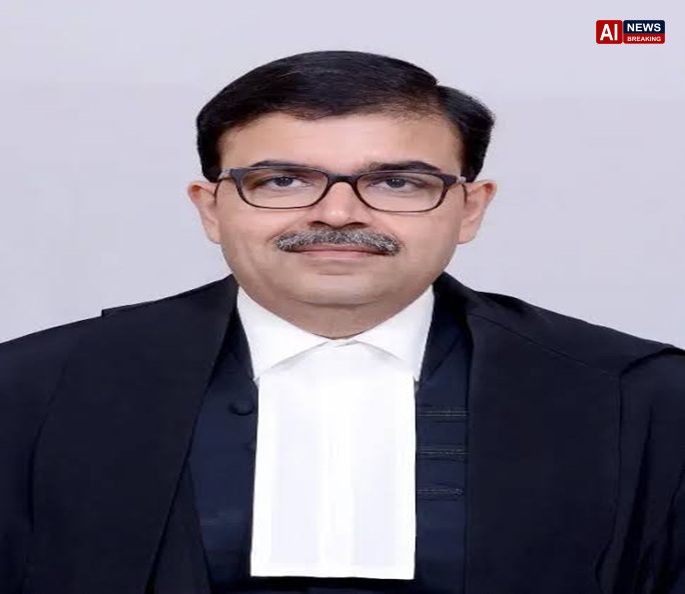
Punjab urges Centre to halt Mishra's oath as Punjab HC chief justice - AI News Breaking
punjab urges centre halt:
The Punjab government has formally objected to the appointment of Ashwani Kumar Mishra as chief justice of the Punjab and Haryana High Court, and has urged the Union Ministry of Law and Justice to postpone the oath‑taking ceremony until the state’s concerns are examined.
In a statement released after a meeting of the state cabinet, the administration said it had resolved that “the appointment and administration of oath should be put on hold until Punjab’s views are obtained and duly considered.” The move marks an unusual intervention by a state government in a judicial appointment that is normally the prerogative of the central executive and the collegium of senior judges.The controversy stems from the fact that Mishra, who is a sitting judge of the Delhi High Court, was recommended for elevation by the Supreme Court collegium in its latest list of appointments. The collegium, which comprises the chief justice of India and the four senior-most judges of the Supreme Court, has traditionally enjoyed deference from both the Centre and the states when it comes to the selection and transfer of high court judges..
However, the Punjab cabinet’s objection about the extent to which state governments can influence the process, especially in a context where the Supreme Court has recently asserted its primacy over the executive in matters of judicial appointments.Punjab’s chief minister, Bhagwant Mann, addressed the issue in a press conference following the cabinet meeting. He said the state had “serious reservations” about Mishra’s appointment, citing concerns over his alleged proximity to certain political figures and a perceived lack of transparency in the selection process. “We respect the independence of the judiciary,” Mann said, “but we also have a duty to safeguard the integrity of the institution that serves the people of Punjab..
If there are doubts about a candidate’s impartiality, it is our responsibility to raise them.” He added that the state would forward a detailed memorandum to the Centre outlining its objections and requesting a reconsideration of the appointment.Legal experts note that the Constitution of India does not explicitly grant state governments a veto over high court appointments. Article 124 and Article 217 outline the appointment process, which involves the President acting on the advice of the Prime Minister and the collegium. Yet, the Supreme Court’s 1993 judgment in the “Second Judges’ Case” gave the collegium the final say in appointments, while also acknowledging that the executive could seek clarification or return a recommendation for reconsideration..
The Punjab government’s request to halt the oath ceremony, however, is unprecedented, and it could set a new precedent for states seeking a more active role in vetting nominees.The Centre’s response has been cautious. A spokesperson for the Ministry of Law and Justice said that the government “takes the concerns raised by the Punjab administration seriously” and that “the matter is being examined in consultation with the concerned authorities.” The statement stopped short of confirming whether the oath ceremony would be delayed, but indicated that a decision would be communicated in due course. The Union Law Minister, Kiren Rijiju, also reiterated that the judiciary’s independence remains sacrosanct, and that any action would be guided by constitutional propriety.The opposition parties have seized upon the development, framing it as a test of federalism and the balance of power between the Centre and the states..
The Indian National Congress, which is the principal opposition in the national parliament, issued a statement urging the central government to respect the collegium’s recommendation and warning against political interference. “Judicial appointments must be insulated from partisan considerations,” the Congress said. The Aam Aadmi Party, which governs Punjab, has echoed the state’s concerns, describing the appointment as “potentially compromising the impartiality of the high court”.Civil society groups have also weighed in..
The Centre for Legal Aid and Human Rights in Delhi released a note cautioning that politicisation of judicial appointments could erode public confidence in the legal system. “While transparency and accountability are essential, the process must not be weaponised by state executives to further partisan agendas,” the note read. Conversely, a coalition of former judges and senior advocates argued that the collegium system itself lacks transparency and that state input could serve as a check against nepotism..
“A more collaborative approach could enhance the legitimacy of appointments,” said former Supreme Court judge R.C. Lahoti, who is not directly involved in the case but has advocated for reforms.The timing of the dispute adds another layer of complexity. Mishra’s appointment was slated to coincide with the retirement of Justice Maninder Singh, the incumbent chief justice of the Punjab and Haryana High Court..
If the oath ceremony is postponed, the high court could face a leadership vacuum at a time when several high‑profile cases, including matters relating to agricultural reforms and state‑centre disputes, are pending. Legal practitioners in Chandigarh have expressed anxiety over potential delays in case management and the impact on the court’s docket.In the background, the Supreme Court has been grappling with its own internal debates about the collegium system. Critics have long argued that the lack of a transparent, codified procedure for appointments undermines accountability..
In 2014, the Supreme Court introduced the National Judicial Appointments Commission (NJAC) as an alternative, but the legislation was struck down as unconstitutional by a 4:1 majority. Since then, the collegium has continued to function, but calls for reform remain persistent. The Punjab episode may reignite discussions about introducing a more structured framework that balances judicial independence with democratic oversight.For now, the fate of Ashwani Kumar Mishra’s elevation hangs in the balance..
The state’s demand for a “hold” on the oath ceremony underscores a growing tension between the judiciary’s self‑governance and the political considerations of state governments. Observers note that any decision by the Centre will be closely scrutinised for its implications on the separation of powers. If the appointment proceeds despite Punjab’s objections, it could be viewed as a reaffirmation of the collegium’s dominance..
Conversely, a delay or withdrawal could signal a shift towards a more consultative model, potentially reshaping the dynamics of judicial appointments across the country.The episode also raises broader questions about the role of state governments in safeguarding the integrity of institutions that serve their jurisdictions. While the Constitution envisages a federal structure, the judiciary has traditionally operated above the fray of day‑to‑day politics. Yet, the Punjab government’s stance reflects a perception that the high court, as the apex legal body for the state, must be attuned to local sensibilities..
Whether this perception translates into a lasting procedural change remains to be seen.As the dialogue between the state cabinet, the Union Law Ministry, and the Supreme Court’s collegium unfolds, legal scholars anticipate that the outcome will be cited in future debates on judicial reform. In the meantime, the administrative machinery of the Punjab and Haryana High Court.
Punjab seeks to halt the swearing-in of Ashwani Kumar Mishra as chief justice, challenging the collegium’s traditional authority. The standoff tests federal dynamics amidst fears of political interference in judicial appointments.
Punjab’s intervention transforms a routine elevation into a constitutional stress test, challenging the entrenched primacy of the judicial collegium. If the Centre yields, it invites permanent political friction; if it refuses, it risks eroding trust by appearing indifferent to federal voices.