Indonesia denies foreign claim to rescued orangutans
 Turkey hosts COP31 climate talks in Antalya.
 Pope meets Argentine bishops.
 APOD: 2026 November 8 – Major Fireball Meteor
 Indonesian Horror Hit ‘Pabrik Gula’ Gets 2028 Sequel as MD Entertainment Lines Up Three Imax Films
Afghan Woman Is Among Dozens to Be Deported to Afghanistan
** A U.S.‑organized flight will send more than fifty Afghan nationals—including a 34‑year‑old former teacher—to Kabul, prompting fierce condemnation from human‑rights organizations and lawmakers who argue the deportations breach international non‑refoulement standards and endanger those who fled Taliban oppression.
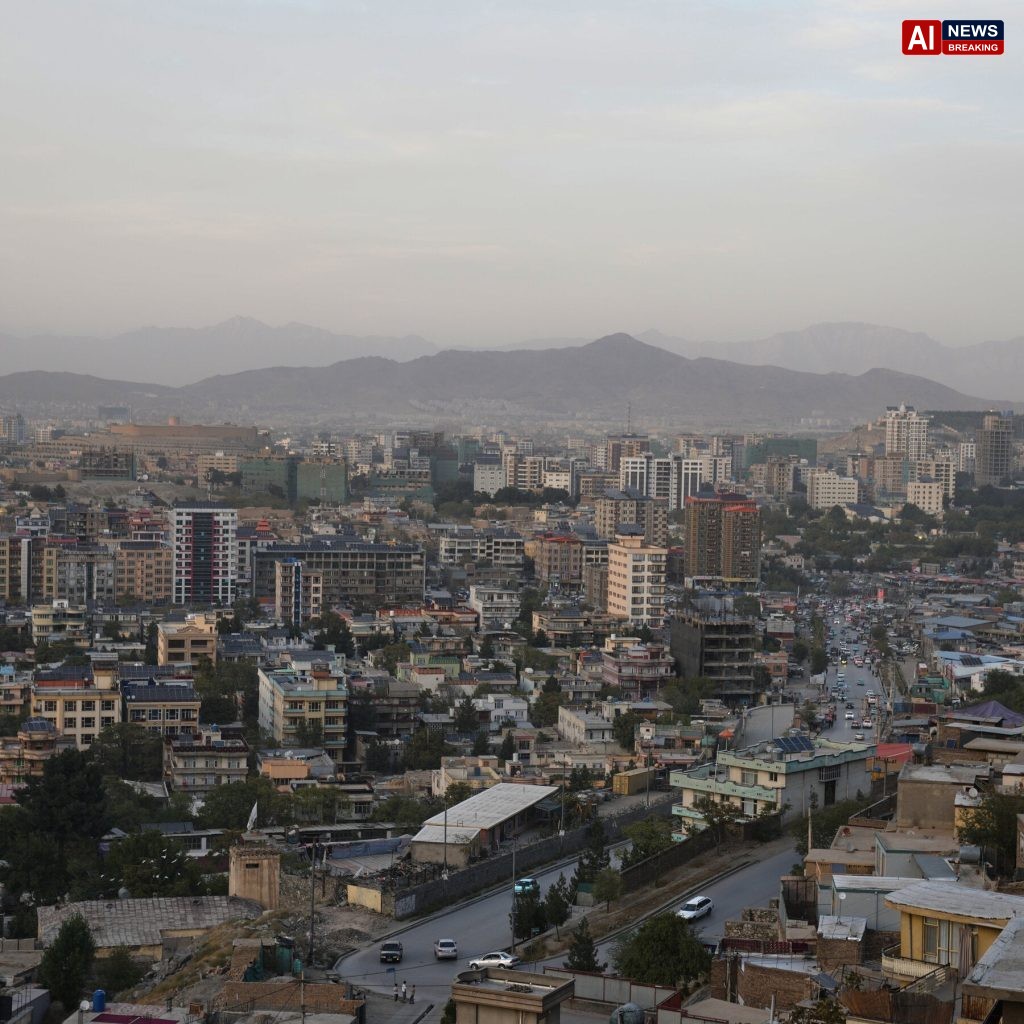
Afghan Woman Is Among Dozens to Be Deported to Afghanistan - AI News Breaking
afghan woman among dozens:
A flight organised by the United States government this week will return more than fifty Afghan nationals, including a woman who fled the country after the Taliban seized power in August 2021. The deportees are set to board a commercial aircraft bound for Kabul on Friday, a move that has drawn criticism from human‑rights organisations, legal experts and members of Congress who argue that the United States is violating its own refugee‑protection obligations. The administration says the individuals are not eligible for asylum or other forms of relief under U.S..
immigration law, but advocates contend that the decision ignores the heightened danger they face under the Taliban’s re‑imposition of strict social controls and punitive measures against former government employees, journalists and women who worked for international NGOs.The group includes a 34‑year‑old teacher from Kabul who, according to her attorney, was forced to abandon her profession after the Taliban banned secondary education for girls. She had been living in a small apartment in the Washington, D.C. area for the past two years, supported by a network of community volunteers and a modest stipend from a resettlement agency..
Her case was initially reviewed by an immigration judge who denied her request for asylum, citing insufficient evidence of a well‑founded fear of persecution. The judge’s ruling was affirmed by the Board of Immigration Appeals, and the Department of Homeland Security subsequently placed her on a “voluntary return” list, a designation that many legal scholars say is a misnomer when the individual’s departure is effectively compulsory.The Department of State confirmed that the aircraft, chartered by the Department of Homeland Security, will make a single stop in Istanbul before landing at Hamid Karzai International Airport. Officials say the passengers will be provided with a brief orientation on the current security situation in Afghanistan and will be escorted by a small contingent of U.S..
Upon arrival, they will be handed over to Afghan authorities, who are expected to process them through standard immigration channels. The United Nations High Commissioner for Refugees, which operates in Afghanistan under a fragile security arrangement, has not been consulted about the deportations, raising concerns about the lack of coordination with the international protection framework.Human‑rights groups have warned that the return of these individuals could expose them to arbitrary detention, torture, or even execution. Amnesty International released a statement on Tuesday urging the United States to halt the flight, noting that the Taliban’s recent crackdown on dissent has included the arrest of former teachers and the re‑imposition of severe restrictions on women’s mobility and employment..
“The United States cannot claim to champion freedom while sending people back to a regime that systematically violates their basic rights,” the statement read. Similar concerns were echoed by Human Rights Watch, which cited recent reports of forced disappearances and summary punishments meted out to anyone perceived as collaborating with the previous government or foreign actors.Congressional reaction has been swift. A bipartisan group of senators wrote to the ary of Homeland Security, demanding a pause on the deportations pending a thorough review of each case under the Refugee Act of 1980..
They argue that the administration’s reliance on a “voluntary return” category circumvents the procedural safeguards that normally protect individuals facing a credible threat of persecution. Representative Rashida Tlaib, a member of the House Foreign Affairs Committee, called the flight “a stark betrayal of the promises made to Afghans who risked their lives to support the United States during the two‑decade war.” She announced plans to introduce legislation that would require any removal of Afghan nationals to be contingent on a verified assessment of personal risk and the availability of protective measures in Afghanistan.Legal experts point out that U.S. law, as interpreted by the courts, obliges the government to consider the principle of non‑refoulement, which prohibits returning a person to a country where they are likely to face torture or persecution..
While the administration maintains that each case has undergone a “full and fair” adjudication, critics note that the rapid processing timelines and limited access to evidence—particularly in conflict zones—can undermine the robustness of those determinations. Professor Elena Kagan of Georgetown Law’s Immigration Clinic highlighted that “the standard of proof required for asylum is already high; adding the burden of proof that the home country is unsafe during a volatile period makes the bar virtually impossible to meet.”The situation also underscores broader diplomatic tensions between Washington and Kabul. Since the Taliban’s takeover, the United States has maintained a limited diplomatic presence, primarily focused on counter‑terrorism cooperation and humanitarian assistance..
The Taliban’s insistence on controlling all entry points and its refusal to recognise the legitimacy of the previous Afghan government have complicated any effort to negotiate safe‑return mechanisms for refugees. Embassy in Kabul, which was closed in August 2021, now operates out of a regional office in Qatar, and its capacity to monitor the treatment of returnees is severely constrained.For the Afghan woman at the centre of the flight, the prospect of returning is fraught with personal peril. Her lawyer, Michael O’Leary, told reporters that she had received credible threats from Taliban informants who accused her of “collaborating with foreign forces” because she had previously taught at a school funded by an American charity..
He added that the woman had been placed on a list of former educators targeted for re‑education programmes that could involve forced labour or confinement. Despite these risks, the immigration court’s decision was final, and the Department of Homeland Security has indicated that there are no further avenues for appeal.The United Nations refugee agency, which has been warning of a looming humanitarian crisis in Afghanistan, has called on the United States and other donor nations to honour their commitments to those who assisted allied forces. A spokesperson for UNHCR said that “the safety and dignity of Afghan returnees must be a priority, and any deportation must be accompanied by concrete guarantees of protection, which at present are lacking.” The agency has offered to provide temporary shelter and legal assistance to those who are forced to go back, but it acknowledges that its resources are stretched thin amid rising displacement across the region.In the meantime, advocacy groups are organising rapid‑response campaigns to raise public awareness of the deportations..
A petition on Change.org urging the Biden administration to halt the flight has amassed over 150,000 signatures within 48 hours. Community organisations in the D.C. area have arranged to meet the families of the deportees, offering logistical support and counseling..
While these efforts may not alter the immediate schedule, they aim to pressure policymakers to reconsider the broader approach to Afghan refugees, especially as the United States continues to grapple with its own immigration backlogs and political debates over asylum policy.The episode reflects a.
Updated: November 3, 2026
The hasty “voluntary return” flight reveals how U.S. immigration policy is being weaponized to sidestep non‑refoulement duties, turning legal technicalities into a de‑facto deportation.
If the administration ignores the Taliban’s proven track record of targeting former educators, it risks