Europe warns of Russia’s hybrid attacks but struggles to counter them
  Former chief election commissioner calls SIR scheme illegal.
  A Corruption Scandal Is Reshaping Brazil’s Presidential Election
  US citizen injured in Illinois after ICE agents mistook him for fugitive, tried to arrest him
  At 10 years old, Smithsonian’s Black museum is undaunted amid pressure from Trump administration
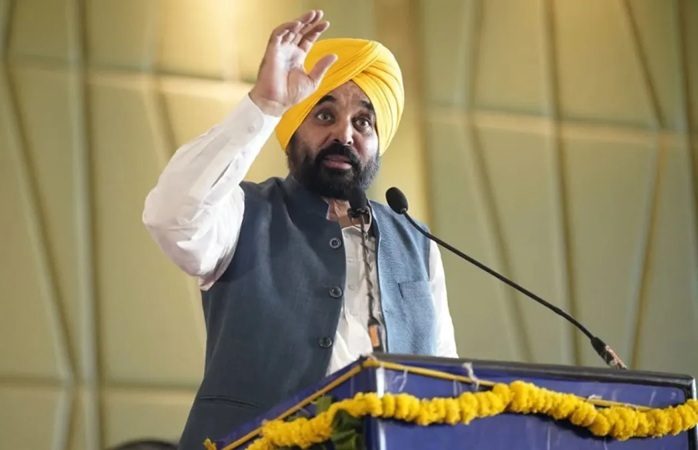
 Akal Takht vs Punjab CM Bhagwant Mann: Understanding the Jathedar’s Role in Sikh Politics and Panthic Affairs
akal takht punjab bhagwant:
The latest confrontation between the Akal Takht and Punjab Chief Minister Bhagwant Mann has once again brought the spotlight onto the institution of the Jathedar, one of the most influential figures in Sikh religious and political life. The controversy underscores the complex relationship between faith, governance, and identity politics in Punjab, where the Akal Takht has historically played a pivotal role in shaping panthic discourse.
A fresh dispute between the Akal Takht, the highest temporal seat of Sikh authority, and Punjab Chief Minister Bhagwant Mann has reignited discussions about the role and influence of the Jathedar in Sikh religious and political affairs. The episode has drawn attention to a centuries-old institution that continues to wield significant moral and symbolic authority among Sikhs worldwide.
While political disagreements between governments and religious institutions are not new in Punjab, the latest standoff highlights the enduring importance of the Akal Takht and its leadership in shaping panthic narratives. At the center of this influence is the Jathedar, who often finds himself navigating the intersection of religion, community sentiment, and political pressures.
The Akal Takht, literally meaning the “Throne of the Timeless One,” was established in 1606 by the sixth Sikh Guru, Guru Hargobind Sahib, in Amritsar. It stands opposite the Harmandir Sahib (Golden Temple) and symbolizes the Sikh doctrine of balancing spiritual authority with temporal responsibility.
Unlike the Golden Temple, which represents spiritual devotion, the Akal Takht serves as the seat of Sikh temporal authority. Historically, it has been the venue from which major religious directives, community decisions, and responses to political challenges have been issued.
Over the centuries, the institution has emerged as a powerful symbol of Sikh sovereignty, resistance, and collective decision-making.
The Jathedar of the Akal Takht is considered the chief custodian of Sikh temporal affairs. Although the position is not equivalent to a pope or supreme religious leader, the Jathedar enjoys immense influence because of the moral authority associated with the Akal Takht.
The Jathedar’s responsibilities include:
- Issuing religious directives and appeals.
- Addressing matters affecting the Sikh community globally.
- Interpreting panthic concerns and disputes.
- Convening meetings of Sikh clergy and scholars.
- Pronouncing decisions on issues involving Sikh doctrine and conduct.
- Representing the collective voice of the Sikh Panth during major crises.
The position derives its legitimacy not from political power but from religious and historical tradition.
The office of the Jathedar has often been at the center of Punjab’s political turbulence. From the Gurdwara Reform Movement of the 1920s to the Punjabi Suba agitation, the militancy era of the 1980s, and contemporary debates over sacrilege, farm protests, and Sikh identity, successive Jathedars have played influential roles.
During moments of political unrest, statements issued from the Akal Takht have frequently carried significant weight among Sikh organizations and sections of the public. Governments, regardless of political affiliation, have often had to respond carefully to positions taken by the institution.
This has led critics and supporters alike to debate whether the Akal Takht should remain strictly focused on religious matters or continue to engage actively in social and political issues affecting the Sikh community.
The Jathedar’s office occupies a unique space where religion and politics frequently overlap. Supporters argue that the Akal Takht has a duty to speak on matters affecting Sikh rights, identity, and justice.
Critics, however, contend that the institution sometimes becomes entangled in partisan politics. Questions have periodically been raised about the process through which Jathedars are appointed and the influence exercised by political parties and the Shiromani Gurdwara Parbandhak Committee (SGPC), which manages Sikh gurdwaras in Punjab.
These debates have intensified whenever disagreements emerge between state authorities and the Akal Takht.
The latest tensions involving Punjab Chief Minister Bhagwant Mann come at a time when Punjab’s political landscape is already witnessing renewed competition among regional parties, Sikh organizations, and religious institutions. Issues relating to governance, religious identity, federal rights, and community representation continue to shape public discourse.
For many observers, the current controversy is less about a single dispute and more about the broader question of how religious institutions and elected governments should interact in a democratic society.
The Akal Takht’s interventions are often viewed through both religious and political lenses, making every disagreement a matter of wider public significance.
Why the Jathedar Matters Beyond Punjab: The influence of the Akal Takht extends far beyond Punjab. Sikh communities across Canada, the United Kingdom, the United States, Australia, and other countries frequently look to the institution for guidance on major religious and community issues.
As a result, statements from the Jathedar often resonate internationally, affecting discussions within the global Sikh diaspora. This global dimension further elevates the importance of the office and ensures that developments at the Akal Takht attract attention far beyond India’s borders.
Continuing Relevance of the Akal Takht: More than four centuries after its establishment, the Akal Takht remains one of the most influential institutions in Sikh life. Its authority rests not on legal power but on historical legitimacy, religious symbolism, and the respect it commands among large sections of the Sikh community.
The recurring tensions between political leaders and the Akal Takht demonstrate that the institution continues to be a significant force in Punjab’s public sphere. As debates over identity, governance, and religious authority evolve, the role of the Jathedar is likely to remain central to panthic politics for years to come.
The renewed spotlight on the Akal Takht reflects a broader trend seen across democracies where religious institutions continue to influence public life despite the dominance of electoral politics. In Punjab, the Jathedar’s authority stems from historical and moral legitimacy rather than constitutional power, making the position uniquely influential. As political competition intensifies and questions of identity gain prominence, the relationship between the Akal Takht and elected governments will remain a key factor shaping Punjab’s socio-political landscape.