Europe warns of Russia’s hybrid attacks but struggles to counter them
  Former chief election commissioner calls SIR scheme illegal.
  A Corruption Scandal Is Reshaping Brazil’s Presidential Election
  US citizen injured in Illinois after ICE agents mistook him for fugitive, tried to arrest him
  At 10 years old, Smithsonian’s Black museum is undaunted amid pressure from Trump administration
 Allahabad High Court Slams Ram Temple Donation Theft Row, Says ‘Nothing Can Shame People Unfazed by It’
** The Allahabad High Court has made strong observations on the alleged theft of donations at the Ram Temple in Ayodhya, calling it the “nadir of Indians’ integrity” and urging tougher anti-corruption measures, including consideration of the death penalty for corruption-related offences, in a bid to combat the growing trend of corruption in India.
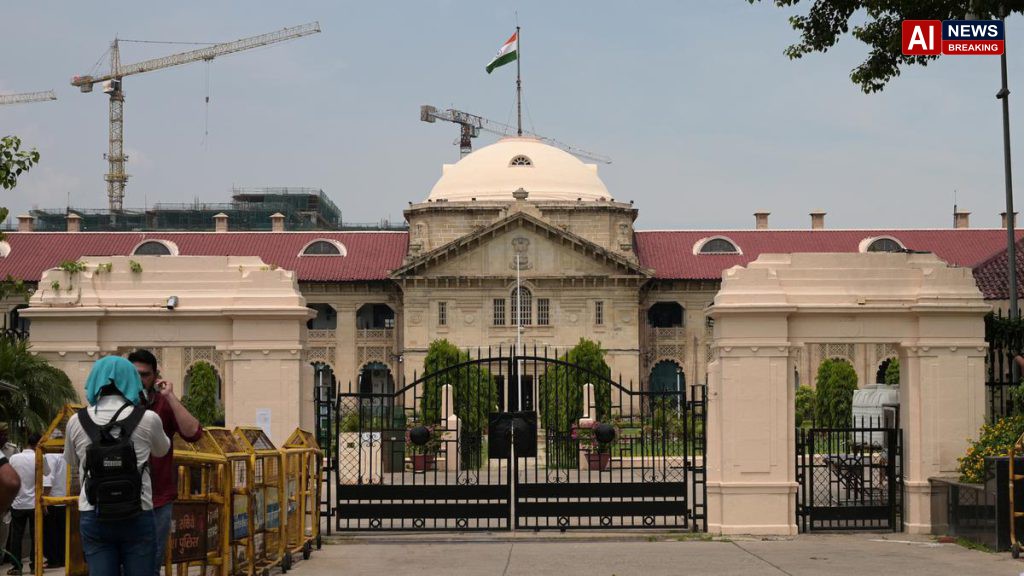
Nothing can shame people unfazed by Ram temple donation theft: Allahabad High Court - AI News Breaking
The Allahabad High Court has made strong observations on the alleged theft of donations at the Ram Temple in Ayodhya, calling it the “nadir of Indians’ integrity.” Justice Atul Sreedharan remarked that a society unmoved by such allegations cannot be shamed and urged tougher anti-corruption measures, including consideration of the death penalty for corruption-related offences.
In one of the strongest judicial observations in recent years on corruption and public morality, Justice Atul Sreedharan of the Allahabad High Court has stated that “nothing can shame people who remain unfazed by the theft at the Ram Temple,” describing the controversy as the “nadir of Indians’ integrity.”
The remarks were made in a 51-page opinion delivered as part of a split verdict in a case concerning so-called “bulldozer justice” and the demolition of properties belonging to accused persons under municipal laws. While discussing the broader issue of corruption in India, Justice Sreedharan referred to the alleged embezzlement of donations at the Ram Temple in Ayodhya as an example of how dishonesty has become normalized across institutions.
The observations have reignited a nationwide debate over corruption, accountability and the handling of donations made by millions of devotees to one of India’s most significant religious institutions.
Latest Developments
- Allahabad High Court Justice Atul Sreedharan described the Ram Temple donation theft controversy as the “nadir of Indians’ integrity.”
- “Nothing can shame people unfazed by Ram Temple donation theft,” Justice Sreedharan observed.
- The remarks were made in a split verdict relating to “bulldozer justice.”
- The judge suggested considering the death penalty for corruption-related offences.
- The Supreme Court has ordered an SIT probe into the Ram Temple donation case.
- The investigation into the alleged embezzlement of donations remains ongoing.
“The Last Straw on the Camel’s Back”
Justice Sreedharan did not mince words while addressing the issue.
Referring to the Ram Temple donation controversy, he observed:
“The recent controversy relating to the theft of donations at the Ram Temple is the proverbial last straw on the camel’s back. Nothing can shame people who remain unfazed by the theft at the Ram Temple which epitomises the nadir of the Indian’s integrity.”
The judge further remarked that corruption has become so deeply entrenched in society that many people no longer view it as morally wrong unless those responsible are caught and prosecuted.
According to the court, the normalization of corruption has affected every level of governance and public life, ranging from development authorities to administrative institutions.
The controversy surrounding donations to the Ram Temple in Ayodhya has remained in the national spotlight for several weeks.
Investigative agencies have been examining allegations involving the alleged misappropriation of cash, jewelry and other offerings made by devotees. Earlier this week, the Supreme Court directed the formation of a Special Investigation Team (SIT) and indicated that the matter should be treated strictly as a criminal case rather than a political issue.
The Supreme Court also ordered that records relating to donations received by the Shri Ram Janmabhoomi Teerth Kshetra Trust be preserved as part of the ongoing investigation.
The alleged theft has generated widespread public discussion because of the symbolic importance of the Ram Temple, which was inaugurated amid significant national attention and has attracted donations from millions of people across India and abroad.
Justice Sreedharan Calls for Tougher Anti-Corruption Laws
Perhaps the most striking aspect of Justice Sreedharan’s opinion was his suggestion that India consider significantly strengthening anti-corruption laws.
Expressing concern over what he described as an “abject morass of dishonesty,” the judge suggested that the State should consider amending the Prevention of Corruption Act, 1988, to include the death penalty for those convicted of corruption-related offences.
The observation, while not legally binding, has generated intense debate among legal experts and policymakers.
Justice Sreedharan wrote that if the government is genuinely serious about combating corruption, it must be willing to consider extraordinary legislative measures.
Legal observers, however, note that any such change would require parliamentary approval and would likely face constitutional scrutiny.
Comments Made During Bulldozer Justice Case
The remarks emerged during proceedings related to a separate issue involving the demolition of homes belonging to individuals accused of criminal offences.
Justice Sreedharan criticized the growing trend of what has popularly been termed “bulldozer justice,” arguing that such actions are often intended to satisfy public sentiment rather than uphold constitutional principles.
According to the judge, demolitions carried out immediately after allegations are made serve to satisfy the “perceived blood lust” of a society increasingly accustomed to punitive state action.
He further observed that authorities frequently allow unauthorized constructions to emerge through negligence, corruption or political patronage, only to later demolish them after decades.
In his opinion, the State itself can become complicit when it provides essential services such as electricity and water to illegal constructions while failing to enforce regulations consistently.
Corruption and Public Trust
The Allahabad High Court’s observations have resonated beyond the immediate controversy because they touch on a broader issue: public trust in institutions.
Justice Sreedharan noted that India’s position in international corruption rankings should be a matter of concern, but argued that society has become increasingly desensitized to allegations involving dishonesty and misuse of public resources.
The judge warned that unchecked corruption could result in:
- Greater concentration of wealth among a small section of society.
- Increased inequality between rich and poor.
- Erosion of public trust in institutions.
- Growing social unrest in the future.
- Weakening of democratic accountability.
His comments have since been widely discussed by lawyers, political analysts and social commentators across the country.
Supreme Court Monitoring the Investigation
Meanwhile, the legal proceedings surrounding the Ram Temple donation controversy continue.
The Supreme Court has taken an active interest in ensuring that the investigation proceeds transparently and has emphasized that the matter should not be politicized. The court has reiterated that the focus must remain on determining whether criminal misconduct occurred and, if so, ensuring accountability under the law.
Investigators are expected to continue examining financial records, donation receipts and surveillance material connected to the allegations.
No final conclusions have yet been reached, and the investigation remains ongoing.
Justice Atul Sreedharan’s remarks have struck a chord because they extend beyond a single controversy and address a deeper question confronting modern India: how much corruption is society willing to tolerate? While the Ram Temple donation case remains under investigation, the observations underscore the importance of transparency, institutional accountability and public trust. The coming months will determine not only the outcome of the investigation but also whether the broader concerns raised by the court lead to meaningful discussions on anti-corruption reforms.