Indonesia denies foreign claim to rescued orangutans
 Turkey hosts COP31 climate talks in Antalya.
 Pope meets Argentine bishops.
 APOD: 2026 November 8 – Major Fireball Meteor
 Indonesian Horror Hit ‘Pabrik Gula’ Gets 2028 Sequel as MD Entertainment Lines Up Three Imax Films
Arab parties win eight seats in Israeli election
**
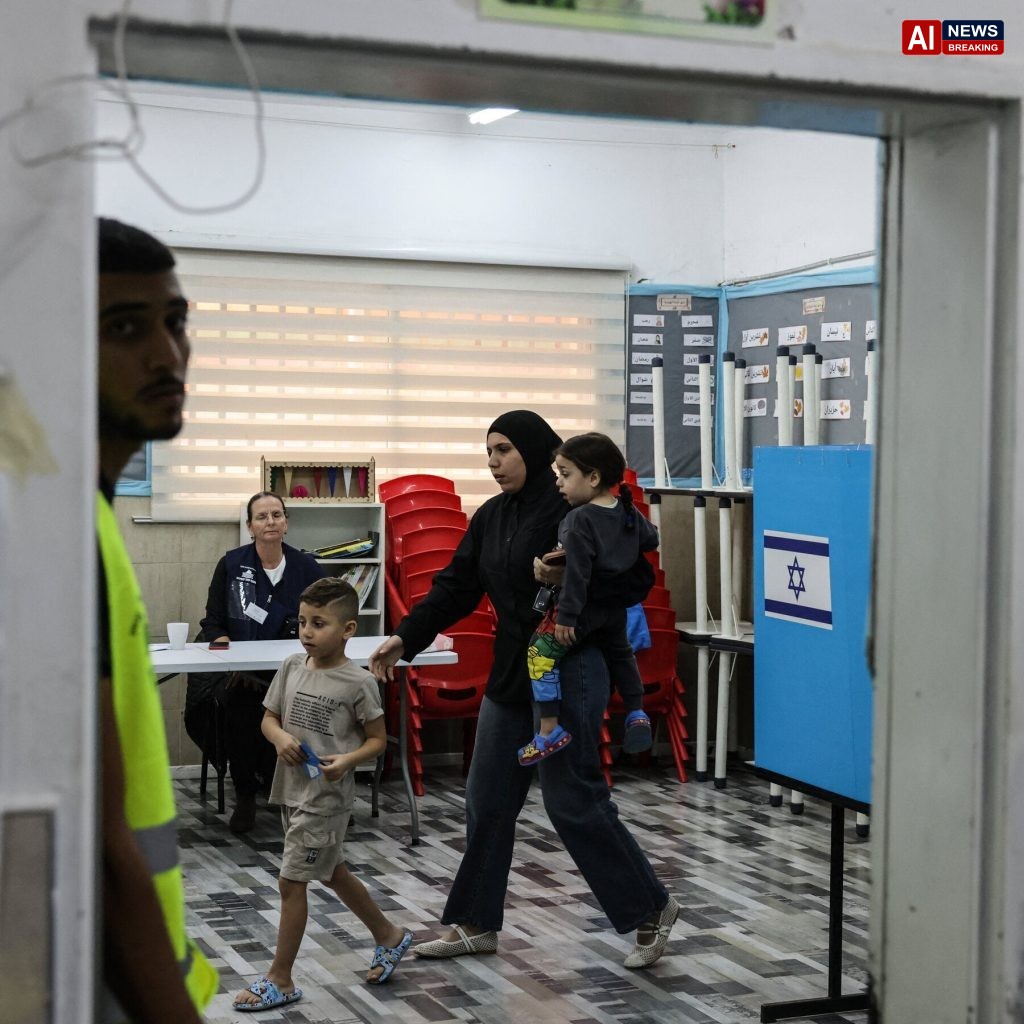
Arab parties win eight seats in Israeli election - AI News Breaking
arab parties eight seats:
The recent Israeli parliamentary election has produced an unexpected development that is reshaping the country’s political calculus: Arab parties, long relegated to the margins of national discourse, delivered a surge in voter participation that placed their constituencies at the centre of post‑election negotiations. While the overall composition of the Knesset remains fragmented, the Arab vote—particularly in mixed Arab‑Jewish districts—exceeded historical averages, compelling mainstream parties to reconsider their strategies ahead of coalition talks.In the run‑up to the election, many analysts predicted a modest performance for the Arab alliance, which had coalesced around a handful of parties representing Israel’s 20‑percent Arab minority. Polls consistently placed the bloc at around four to five seats, a figure that would have kept it outside the sphere of influence in a parliament dominated by larger Zionist parties..
However, the final tally showed the alliance securing eight seats, an increase of 60 per cent over the previous term, and a voter turnout that topped 60 per cent in Arab-majority localities—significantly higher than the 45 per cent recorded in the 2022 election.The surge can be attributed to several intertwined factors. First, a series of high‑profile incidents over the past year, ranging from clashes in mixed cities to the controversial judicial reforms championed by the government, have heightened a sense of political urgency among Arab citizens. Second, the coalition of Arab parties presented a unified platform that combined long‑standing demands—such as greater funding for Arab schools and hospitals—with a clear stance on national issues, including opposition to the judicial overhaul and calls for a ceasefire in Gaza..
Finally, an intensive grassroots campaign, leveraging social media and local community networks, succeeded in mobilising younger voters who had previously abstained.The impact of this turnout is already evident in the rhetoric of Israel’s major parties. Leaders of the right‑wing bloc, traditionally less inclined to engage with Arab representatives, have begun to acknowledge the necessity of addressing Arab concerns if they wish to secure a stable governing coalition. In a televised interview, the head of the leading right‑wing party said that “the voices of Arab Israelis cannot be ignored any longer, and any responsible government must find common ground on issues that affect all citizens.” Similar overtures have been made by centrist parties, which are positioning themselves as potential bridges between the Arab bloc and the more hard‑line factions.Nonetheless, the path to a formal partnership remains fraught with obstacles..
The Arab alliance has historically refused to join governments that support settlement expansion in the West Bank or that endorse policies perceived as discriminatory. In the current context, the bloc has signalled a willingness to back a coalition only if it secures concrete commitments on civil‑rights legislation, increased budget allocations for Arab municipalities, and an end to the discriminatory allocation of land and planning permits. Such demands, while specific, intersect with broader national debates on the balance between Israel’s Jewish character and its democratic obligations.Political scientists warn that the Arab surge could recalibrate the balance of power in ways that extend beyond the immediate post‑election period..
Yael Golan of the Institute for Democracy and Governance notes that “when a minority group moves from peripheral participation to a decisive voting bloc, it forces the entire system to adapt. The question now is whether the existing parties will integrate those demands into their platforms or whether they will attempt to marginalise the Arab bloc through procedural tactics.” She adds that the outcome will likely influence Israel’s international standing, especially in the eyes of European Union states that closely monitor minority rights.International observers have also taken note. The European Union’s diplomatic mission in Jerusalem released a brief statement highlighting the “remarkable democratic engagement of Arab citizens” and urging Israeli leaders to ensure that any coalition agreements respect the rights of all ethnic and religious groups..
The United States, while maintaining its traditional support for the Israeli government, has privately expressed concern that continued exclusion of Arab voices could exacerbate internal tensions and undermine regional stability.Within Arab communities themselves, the election result has sparked a mix of optimism and caution. In the city of Nazareth, local leader Amal al‑Hussein described the outcome as “a historic affirmation of our place in Israeli society,” while also reminding supporters that “voting is only the first step; real change requires sustained pressure on the institutions that make decisions.” In contrast, some younger activists argue that the Arab parties have not gone far enough in challenging the status quo, calling for a more radical restructuring of the political system that would give minorities a proportional share of power in the executive branch.The surge also raises practical questions about the mechanics of coalition building. Israel’s parliamentary system, with its low electoral threshold of 3.25 per cent, often produces fragmented Knessets that require complex bargaining..
The Arab bloc’s eight seats, while not enough to tip the balance alone, could become pivotal if the major parties are unable to form a majority without their support. Analysts project several scenarios: a centrist‑led coalition that incorporates the Arab bloc as a junior partner, a right‑wing government that seeks to appease Arab demands through targeted policy concessions, or a stalemate that forces another round of elections within months.In the immediate aftermath of the vote, the Arab alliance has announced a strategic plan focused on three priority areas: education, infrastructure, and legal reform. The education component calls for the integration of Arab schools into the national funding formula, ensuring parity in resources and teacher training..
Infrastructure proposals include upgrades to water and electricity networks in Arab towns, which have long suffered from underinvestment. The legal reform agenda seeks to address the “state of inequality” highlighted in recent reports by the Israeli Supreme Court, proposing amendments to anti‑discrimination statutes and the establishment of an independent oversight body to monitor compliance.The response from the Israeli government’s finance ministry has been cautiously positive. A senior official confirmed that “the budgetary process will consider the legitimate needs of all citizens, including the Arab community, and that allocations will be based on objective criteria.” However, critics argue that without binding legislative guarantees, such assurances may prove insufficient..
They point to past instances where promises of increased funding were diluted during the implementation phase, leaving Arab municipalities with only marginal improvements.As the nation awaits the formation of a new coalition, the Arab parties’ unexpected electoral performance serves as a reminder that Israel’s democratic fabric is increasingly being woven by voices that were once peripheral. Whether this moment translates into lasting policy shifts or remains a transient blip depends on the willingness of the dominant political forces to engage constructively, the persistence of Arab civil society, and the broader regional context that continues to shape public sentiment. What is clear is that the Arab minority has demonstrated a capacity for mobilising its electorate at.
Updated: October 28, 2026
The Arab bloc’s surge forces Israel’s power brokers to trade the illusion of a monolithic Jewish state for a new, negotiated reality—where minority demands are no longer footnotes but bargaining chips that could shape everything from budget formulas to settlement policy. If the major parties choose to treat the bloc’s