 Tao Tokyo Spring 2027
 Karnataka SIR: Teaching on the back burner
 Trump administration offers mixed messages on limits to Ukraine’s Starshield access
 US Treasury proposes a rule to crack down on high-tech investments in China, other adversaries
 Calley Means, a key MAHA advocate, resigns as a top RFK Jr. adviser
Army study found shock gloves purchased by ICE cause pain, compliance and fear
**
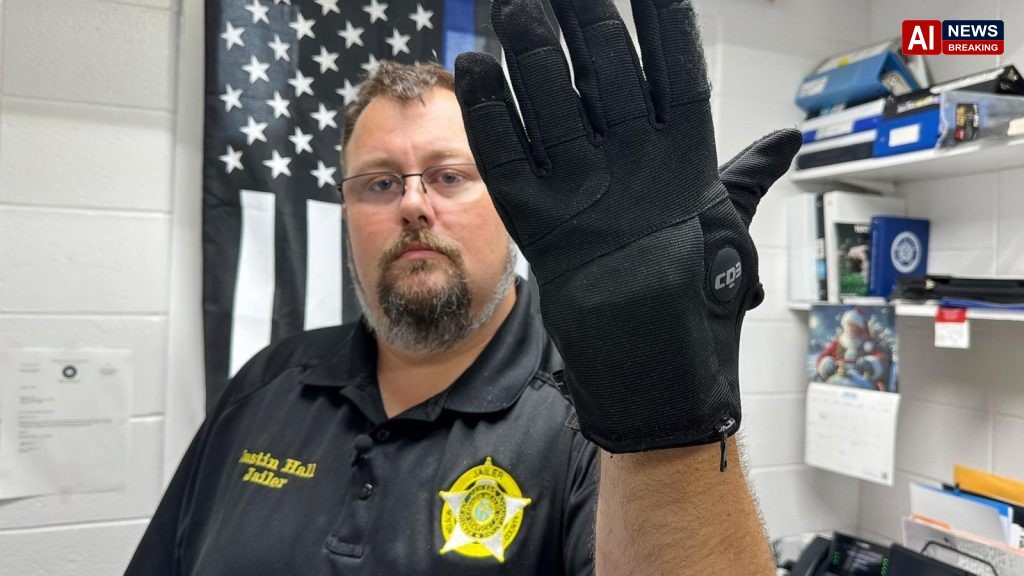
Army study found shock gloves purchased by ICE cause pain, compliance and fear - AI News Breaking
A recent internal review by the U.S. Army has raised serious concerns about a device marketed to immigration officials that delivers electric shocks to detainees. The study, conducted during a simulated operation in a controlled training environment, found that the so‑called “shock gloves” produced pain levels far exceeding the manufacturers’ specifications, leading participants to cease resistance, experience intense discomfort and express fear of further exposure..
The findings have prompted calls for a reevaluation of the equipment’s suitability for use by U.S. Immigration and Customs Enforcement (ICE) agents and have reignited a broader debate over the ethical limits of coercive tools in law‑enforcement settings.The gloves, which resemble a pair of standard tactical gauntlets, incorporate a compact high‑voltage battery and a series of electrodes that deliver a brief electric pulse when the wearer squeezes the hand‑grip. According to the supplier, the device is intended to provide a non‑lethal means of gaining compliance from individuals who are physically resisting arrest or pose a threat to officers..
The Army’s testing protocol involved 30 volunteers, all of whom were trained soldiers, who were instructed to simulate non‑compliant detainees in a series of staged encounters. The gloves were activated at the manufacturer’s recommended setting, which the review states is intended to produce a “sharp, startling sensation” without causing lasting injury.During the exercise, more than three‑quarters of the participants reported pain that they described as “severe” and “unbearable,” with several describing the sensation as comparable to a strong taser discharge. The majority of the volunteers reported that the shock caused them to immediately stop resisting, with a notable proportion indicating that they felt compelled to comply out of fear that further shocks would be administered..
In the post‑exercise debrief, many participants expressed lingering anxiety about the possibility of additional exposures, suggesting that the psychological impact of the device may extend beyond the moment of activation.The Army’s report also highlighted discrepancies between the device’s advertised specifications and its actual performance. While the manufacturer claims the gloves deliver a maximum voltage of 2,500 volts for a duration of 0.05 seconds, the testing team measured peak voltages reaching 3,200 volts and pulse durations extending to 0.12 seconds in some instances. These variations, the report notes, are likely due to inconsistencies in the internal circuitry and battery output, which can fluctuate under different temperature and pressure conditions..
The investigators warned that such variability could increase the risk of unintended injuries, particularly when the device is used on individuals with pre‑existing medical conditions.Legal experts have pointed out that the use of the gloves could potentially run afoul of existing statutes governing the treatment of detainees. Constitution’s Eighth Amendment prohibits cruel and unusual punishment, a principle that courts have extended to the conduct of law‑enforcement officers in custodial settings. Moreover, the Department of Homeland Security’s own policy manual requires that any force used be proportionate to the threat posed and that less‑intrusive alternatives be considered first..
Critics argue that deploying a device capable of inflicting severe pain without clear medical oversight may violate these standards.Human‑rights organisations have also weighed in, describing the gloves as a “dangerous escalation” in the toolbox of immigration enforcement. Amnesty International issued a statement cautioning that the technology could be used to coerce compliance from vulnerable populations, including children and people with disabilities, who may be less able to resist or articulate the effects of the shock. The group called for an independent review by the Office of Inspector General and for a moratorium on any further procurement until safety and ethical concerns are adequately addressed.ICE officials, who have not yet confirmed whether they have purchased or plan to purchase the gloves, responded to inquiries by emphasizing their commitment to “safe, humane, and effective” methods of managing detainee behavior..
A spokesperson for the agency said that any equipment considered for use undergoes a rigorous evaluation process that includes legal, medical and operational assessments. The agency added that it would review the Army’s findings carefully and determine whether adjustments to policy or equipment are warranted.The manufacturer, a privately‑held company based in Texas, defended its product, arguing that the gloves are designed to provide a “controlled, momentary stimulus” that is reversible and does not cause permanent injury. In a written response to the Army report, the firm asserted that the testing environment differed from real‑world conditions, noting that the volunteers were instructed to resist aggressively and that the device’s settings can be calibrated to lower intensities..
The company also offered to cooperate with further independent testing to verify safety claims.The Army’s study is part of a broader scrutiny of non‑lethal weapons that have proliferated across U.S. law‑enforcement agencies over the past decade. Similar evaluations of pepper spray, bean‑bag rounds and conducted energy weapons have sparked legislative hearings and, in some cases, restrictions on use..
Law‑makers on both sides of the aisle have expressed concern that the rapid adoption of such tools often outpaces the development of clear guidelines and oversight mechanisms.As the debate continues, policymakers, legal scholars and advocacy groups are urging Congress to consider legislation that would establish stricter standards for the acquisition and deployment of electric‑shock devices. Proposed measures include mandatory independent testing, transparent reporting of injury data and a requirement that agencies obtain explicit approval before integrating new technologies into routine operations. Until such frameworks are put in place, the Army’s findings serve as a cautionary reminder of the potential human cost of deploying powerful, pain‑inducing equipment without comprehensive evaluation..
Updated: October 6, 2026
An Army‑conducted test found that “shock‑glove” devices marketed to immigration officials deliver far more painful electric pulses than advertised, prompting concerns over safety, legality and ethical use. Law‑enforcement and human‑rights groups are now urging a halt to procurement and stricter oversight of such coercive tools.