Europe warns of Russia’s hybrid attacks but struggles to counter them
  Former chief election commissioner calls SIR scheme illegal.
  A Corruption Scandal Is Reshaping Brazil’s Presidential Election
  US citizen injured in Illinois after ICE agents mistook him for fugitive, tried to arrest him
  At 10 years old, Smithsonian’s Black museum is undaunted amid pressure from Trump administration
 Bengal’s Political Shift: How RSS Built the Groundwork for BJP’s Political Surge in West Bengal
bengals political shift built:
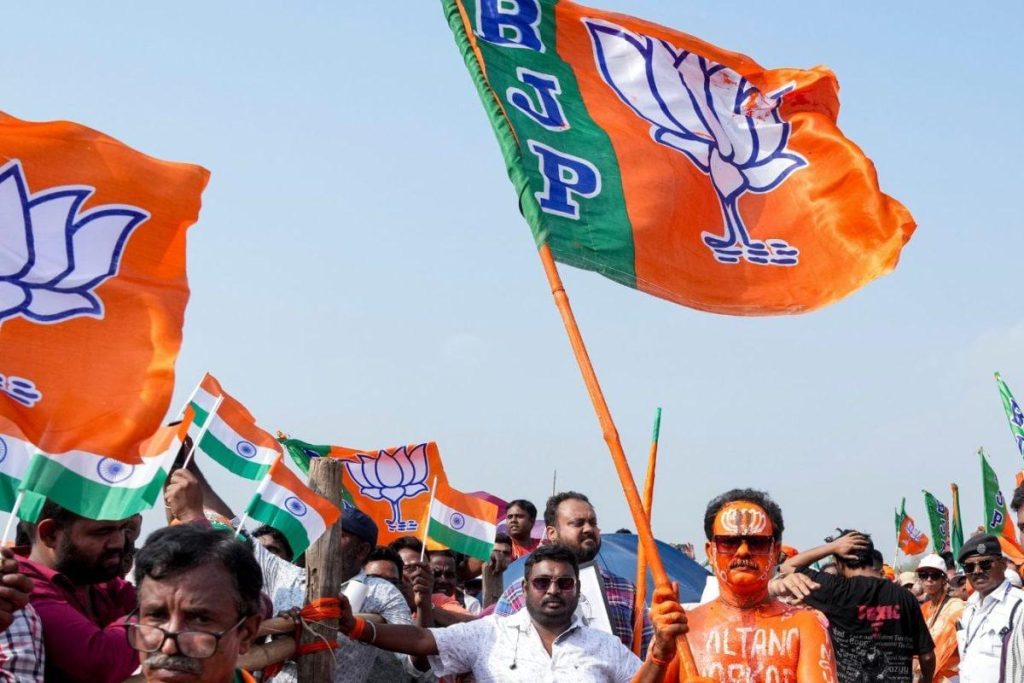
The Bharatiya Janata Party’s rise in West Bengal was not an overnight political event but the result of years of ideological groundwork, grassroots mobilization, and organizational expansion driven largely by the Rashtriya Swayamsevak Sangh (RSS). Long before electoral gains became visible, the RSS had quietly built networks across villages, tribal belts, border districts, and urban neighborhoods.
From running schools and relief operations to shaping cultural narratives and recruiting local cadres, the RSS created the social infrastructure that later enabled the BJP to emerge as the principal challenger to the Trinamool Congress in Bengal.
Inside the RSS Machine That Built the Ground for BJP’s Bengal Triumph
For decades, West Bengal appeared politically immune to the rise of the Bharatiya Janata Party (BJP). The state was seen as culturally distinct, politically Left-leaning, and deeply resistant to the brand of Hindutva politics that transformed large parts of northern and western India. The Communist Party of India (Marxist)-led Left Front ruled Bengal uninterrupted for 34 years. Even after the Left collapsed, Mamata Banerjee’s Trinamool Congress (TMC) emerged as the dominant political force, leaving little room for the BJP.
Yet beneath the surface of Bengal’s volatile political culture, another organization was patiently working for decades — not through elections, slogans, or television campaigns, but through a vast ideological and social network. That organization was the Rashtriya Swayamsevak Sangh (RSS).
The BJP’s dramatic rise in Bengal over the last decade cannot be understood merely through electoral arithmetic or campaign strategy. It was built upon an elaborate ecosystem developed by the RSS and its affiliates over generations. The electoral success was only the visible outcome of a much longer project involving social outreach, cadre development, cultural intervention, and identity politics.
The RSS did not suddenly arrive in Bengal after Narendra Modi became Prime Minister. Its presence dates back nearly a century. However, its transformation from a marginal ideological organization into the foundation of a powerful political machine represents one of the most significant political developments in modern Bengal.
This is the story of how the RSS quietly built the organizational ground that allowed the BJP to challenge Bengal’s entrenched political order.
The Early RSS Presence in Bengal
The RSS was founded in 1925 in Nagpur by K.B. Hedgewar. Bengal, with its strong intellectual culture and revolutionary history, was among the early regions where the organization attempted expansion. However, unlike Hindi-speaking northern states, Bengal posed unique challenges.
The state’s politics revolved around class struggle, anti-colonial nationalism, and linguistic identity rather than religious mobilization. Bengali intellectual traditions were shaped by figures such as Rabindranath Tagore, Subhas Chandra Bose, Ishwar Chandra Vidyasagar, and the Bengal Renaissance. This made overt Hindu nationalist politics less appealing for large sections of society.
For decades, the RSS remained confined to small pockets, primarily among upper-caste Hindu families, refugees from East Pakistan, and select urban centers. The organization struggled to gain mainstream traction during the dominance of Left politics.
Yet the RSS never abandoned Bengal.
Instead of focusing solely on elections, it concentrated on building long-term social infrastructure. This patient strategy eventually became its biggest strength.
Refugee Politics and the First Expansion
One of the earliest turning points for the RSS in Bengal came during and after Partition in 1947.
The creation of East Pakistan triggered massive refugee migration into West Bengal. Millions of Hindus crossed the border after communal violence, displacement, and economic collapse. Refugee colonies emerged across districts such as North 24 Parganas, Nadia, Cooch Behar, and parts of Kolkata.
The RSS positioned itself as a protector and organizer for displaced Hindus. Volunteers helped run camps, distribute relief material, and provide community support. While the Congress government handled official rehabilitation, the RSS cultivated emotional and ideological loyalty among refugee populations.
This refugee politics later became central to the BJP’s Bengal strategy.
Many families that experienced displacement retained memories of religious persecution and insecurity. Over time, the RSS linked these historical grievances to broader narratives around citizenship, border infiltration, and Hindu identity.
Decades later, issues such as the Citizenship Amendment Act (CAA) and National Register of Citizens (NRC) found resonance precisely because the RSS had spent years nurturing these anxieties among sections of Bengali Hindu society.
Building Through Schools, Seva and Cultural Networks
Unlike political parties that focus primarily on elections, the RSS operates through daily social engagement.
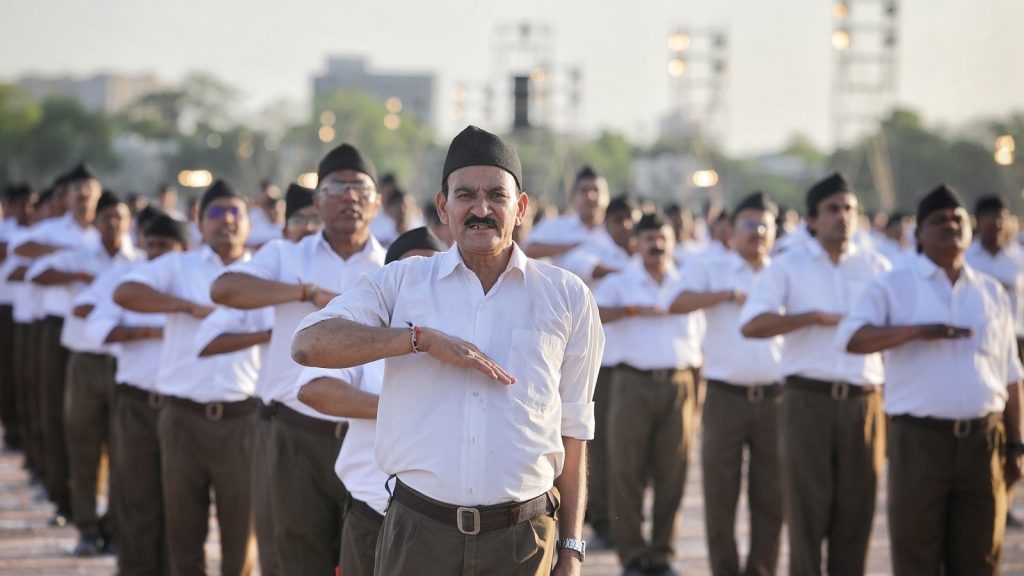
The organization expanded in Bengal through shakhas — local gatherings where volunteers conduct physical exercises, ideological discussions, and community activities. Initially small in number, these shakhas gradually spread into semi-urban and rural areas.
But the RSS did not rely solely on ideological training camps. It built an extensive ecosystem of affiliated organizations involved in education, tribal welfare, labor organizing, student politics, women’s outreach, and religious mobilization.
Among the most important were:
- Vidya Bharati schools
- Vanvasi Kalyan Ashram
- Akhil Bharatiya Vidyarthi Parishad (ABVP)
- Vishva Hindu Parishad (VHP)
- Seva Bharati
- Bharatiya Mazdoor Sangh
These organizations allowed the RSS to enter spaces traditionally dominated by Left unions, secular educational institutions, and local caste networks.
In tribal districts such as Jhargram, Purulia, Bankura, and parts of Alipurduar, RSS-linked welfare organizations became especially active. They ran schools, health camps, and social programs in areas where state presence was weak.
This strategy mirrored the RSS model used in other parts of India: enter marginalized communities through welfare and cultural work, then gradually introduce ideological narratives centered on Hindu unity and nationalism.

The Collapse of the Left Created a Vacuum
The downfall of the Left Front government after 2011 fundamentally altered Bengal’s political landscape.
For decades, the CPI(M) had maintained an extraordinarily disciplined cadre network. Its influence extended from village committees to labor unions and universities. The Left’s organizational structure was deeply embedded in Bengali society.
When Mamata Banerjee defeated the Left Front in 2011, the transition created a massive political vacuum.
Thousands of local Left cadres lost organizational direction. Many became politically homeless. The BJP and RSS moved aggressively to absorb these disillusioned workers.
This was a critical moment.
The RSS already had a grassroots structure in place, though smaller than the Left’s network. It now began expanding rapidly by recruiting former Left activists who possessed local influence, electoral experience, and organizational skills.
Ironically, many former Marxist workers eventually became part of a Hindu nationalist movement they once opposed.
The BJP’s rise in Bengal was therefore not simply about converting TMC supporters. It was also about inheriting portions of the Left’s collapsed organizational machinery.
The Border Narrative and Identity Politics
West Bengal’s geography made it uniquely vulnerable to identity-based mobilization.
The state shares a long and porous border with Bangladesh. Districts such as Malda, Murshidabad, North 24 Parganas, and Nadia experienced decades of migration, smuggling, and demographic change.
The RSS and BJP framed these developments as existential threats to Bengali Hindus.
The narrative was politically potent:
- Illegal infiltration was changing demographics
- Hindu refugees deserved protection
- Border insecurity endangered national security
- The TMC allegedly appeased Muslim voters
- Hindu cultural identity was under threat
This messaging became particularly effective after communal incidents in districts such as Basirhat, Dhulagarh, and Rampurhat.
The RSS amplified localized tensions into broader civilizational narratives. Through WhatsApp networks, neighborhood meetings, religious events, and local campaigns, the organization created a sense of Hindu consolidation across caste lines.
In many regions, especially among Matua communities and refugee populations, these narratives resonated strongly.
The Matua Factor
No discussion of Bengal’s political transformation is complete without understanding the Matua community.
The Matuas are largely Dalit Hindu refugees originating from present-day Bangladesh. Concentrated in districts bordering Bangladesh, they became electorally significant over time.
Historically marginalized, the community had supported various parties, including the Congress and TMC. But the BJP identified the Matuas as crucial to its Bengal expansion.
The RSS worked steadily among Matua populations through social outreach and religious engagement. The BJP then connected citizenship promises to community aspirations.
The Citizenship Amendment Act became a major political tool.
The BJP projected itself as the party that would legally protect Hindu refugees from Bangladesh. The RSS reinforced this message at the grassroots level.
For many Matua families, the issue was not abstract nationalism but documentation, identity, and security. The BJP’s promises gained traction because the RSS had already spent years cultivating community relationships.
From Cultural Nationalism to Bengali Hindu Identity
One of the RSS’s most significant strategic adaptations in Bengal was its attempt to localize Hindutva.
Traditional Hindi-belt Hindutva rhetoric often struggles in Bengal because Bengali identity carries strong linguistic and cultural pride. The RSS therefore modified its messaging.
Instead of presenting Hindutva as northern cultural nationalism, it increasingly framed Bengali icons within a Hindu civilizational narrative.
Figures such as:
- Bankim Chandra Chattopadhyay
- Swami Vivekananda
- Syama Prasad Mookerjee
- Subhas Chandra Bose
were repositioned as symbols of Hindu nationalism or cultural pride.
The BJP and RSS also aggressively celebrated festivals such as Durga Puja, Ram Navami, and Hanuman Jayanti. Processions featuring saffron flags became increasingly visible in districts where such displays were previously uncommon.
This cultural shift was not accidental.
The RSS recognized that Bengal’s politics could not be transformed solely through anti-Muslim rhetoric. It needed a positive Hindu-Bengali identity framework capable of emotionally mobilizing voters without appearing culturally alien.
The Digital Ecosystem and WhatsApp Mobilization
The RSS machine in Bengal was not limited to physical shakhas or local networks. It adapted rapidly to digital politics.
By the late 2010s, WhatsApp groups, Facebook pages, and local digital networks became crucial tools for ideological dissemination.
The BJP’s IT infrastructure worked alongside RSS cadres to circulate:
- Videos of communal incidents
- Historical narratives
- Political propaganda
- Cultural content
- Citizenship-related messaging
- Anti-TMC allegations
Local language communication became especially important.
The RSS ecosystem understood that Bengali voters responded differently from Hindi-speaking audiences. Content was tailored accordingly, often combining emotional storytelling with regional symbolism.
This digital ecosystem helped the BJP bypass traditional Bengali media spaces that were often perceived as hostile to Hindutva politics.
Violence, Polarization and Political Consolidation
Bengal’s political culture has historically been confrontational. Electoral violence, cadre clashes, and territorial political control have long characterized the state.
As the BJP expanded, confrontations between TMC and BJP workers intensified dramatically.
The RSS used these conflicts strategically.
Every attack on BJP or RSS workers was framed as evidence of political persecution. This created a martyrdom narrative that energized cadres and consolidated Hindu support in polarized regions.
The organization’s disciplined structure proved crucial during periods of violence. Unlike temporary campaign workers, RSS volunteers were ideologically committed and organizationally resilient.
This allowed the BJP to maintain booth-level presence even in hostile districts.
Narendra Modi and Amit Shah Accelerate the Expansion
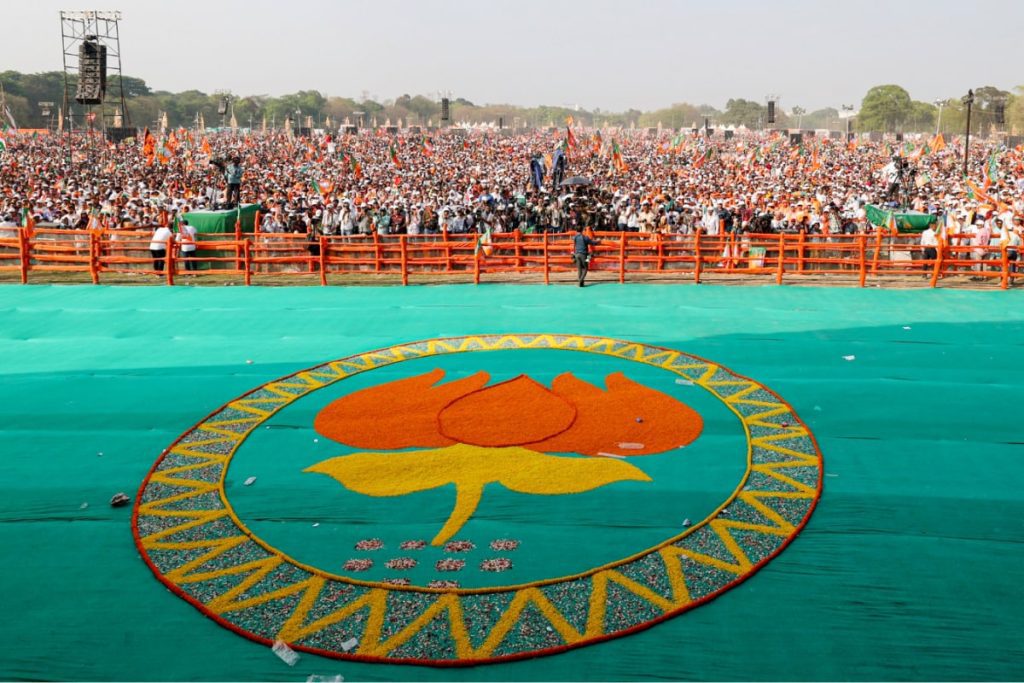
While the RSS laid the foundation, the BJP’s top leadership transformed Bengal into a national political priority after 2014.
Narendra Modi’s image as a strong nationalist leader appealed to sections of urban and semi-urban voters frustrated with corruption and political violence.
Amit Shah approached Bengal as an organizational battlefield.
Under his leadership:
- Booth committees expanded aggressively
- RSS networks integrated with BJP machinery
- Local leaders defected from TMC and Left
- Membership drives intensified
- Religious mobilization increased
The BJP’s vote share rose sharply.
From being politically marginal in Bengal for decades, the BJP emerged as the principal opposition force within a remarkably short period.
The 2019 Lok Sabha Election Breakthrough
The 2019 general election marked the BJP’s true breakthrough in Bengal.
The party won 18 Lok Sabha seats in the state — a dramatic rise that shocked political observers.
This success reflected years of organizational groundwork.
The BJP performed strongly in:
- Border districts
- Tribal belts
- Refugee-heavy regions
- Areas with declining Left influence
The RSS network played a major role in booth management, voter mobilization, and local communication.
For the first time, Bengal appeared politically competitive between TMC and BJP.
Why the RSS Model Worked in Bengal
Several factors explain why the RSS succeeded where many earlier challengers failed.
1. Long-Term Patience
The RSS invested decades in grassroots work without immediate electoral expectations. This created durable social networks.
2. Cadre Discipline
Unlike personality-driven parties, the RSS emphasized organizational discipline and ideological commitment.
3. Local Adaptation
The organization modified Hindutva narratives to suit Bengali cultural sensibilities.
4. Welfare Penetration
Schools, relief work, and tribal outreach created social legitimacy.
5. Exploiting Political Vacuums
The collapse of the Left provided an unprecedented opportunity for expansion.
6. Identity Consolidation
Religious polarization and refugee politics helped unite fragmented Hindu voting blocs.
The Limits of the RSS Expansion
Despite its rise, the RSS-BJP project in Bengal still faces structural challenges.
The BJP has struggled to fully replace the TMC’s deeply entrenched local networks. Mamata Banerjee remains a powerful political figure with strong welfare-based support among women and rural voters.
Additionally, Bengal’s political culture remains distinct from Hindi-belt states. Excessively aggressive Hindutva messaging sometimes triggers backlash among liberal Bengali voters.
The BJP’s organizational growth also exposed internal contradictions:
- Defections created factionalism
- Imported leaders weakened cadre cohesion
- Cultural adaptation remains incomplete
Even after impressive electoral gains, the BJP has not yet achieved total ideological dominance in Bengal.
The Battle for Bengal’s Political Identity
At its core, the struggle between TMC and BJP in Bengal is not merely electoral. It is a battle over the state’s political identity.
The RSS seeks to redefine Bengal through:
- Hindu consolidation
- Nationalist politics
- Cultural revivalism
- Civilizational narratives
Its critics argue that this threatens Bengal’s pluralistic and syncretic traditions.
Supporters, however, believe the RSS restored Hindu political confidence in a state long dominated by Left secularism and minority appeasement politics.
This ideological battle is likely to shape Bengal’s future for years to come.
Conclusion
The BJP’s rise in West Bengal was not a sudden electoral miracle. It was the culmination of decades of organizational preparation led by the RSS.
Long before the BJP became electorally relevant, RSS workers were building schools, running welfare programs, organizing shakhas, cultivating refugee communities, and reshaping cultural narratives. They constructed a parallel social infrastructure that slowly expanded across Bengal’s villages, towns, and border districts.
When political conditions changed — with the decline of the Left and growing dissatisfaction with the TMC — the BJP inherited a ready-made grassroots machine capable of rapid mobilization.
The RSS model in Bengal demonstrates how ideological movements operate beyond elections. It reveals the importance of patient institution-building, local adaptation, and social penetration in modern politics.
Whether one sees this transformation as political revival or ideological polarization, there is little doubt that the RSS fundamentally altered Bengal’s political landscape. The saffron surge did not begin at the ballot box. It began years earlier, quietly, in neighborhood shakhas, refugee colonies, tribal schools, cultural festivals, and local networks that gradually reshaped the ground beneath Bengal politics.
AI Insight
The RSS-BJP expansion in Bengal illustrates a broader transformation in Indian politics where long-term ideological ecosystems increasingly matter more than short-term campaign tactics. Modern electoral success is no longer driven only by charismatic leaders or media messaging; it depends on deep social infrastructure, local narrative control, and sustained grassroots presence. Bengal became a case study in how cultural identity, welfare outreach, digital mobilization, and political polarization can converge to reshape a state once considered politically impenetrable for Hindutva forces. The coming years will determine whether this transformation becomes permanent or whether Bengal’s complex regional identity produces a counter-movement against ideological centralization.